


Mexico Allocates MX$1 Billion to Restore Lerma–Santiago River
 By Eliza Galeana | Junior Journalist & Industry Analyst -
Thu, 01/15/2026 - 11:52
By Eliza Galeana | Junior Journalist & Industry Analyst -
Thu, 01/15/2026 - 11:52
In 2026, the Mexican government will continue its efforts to clean up and restore the Lerma–Santiago river system. Key actions include expanding wastewater treatment capacity, strengthening inspections and enforcement, implementing flood-control works, and advancing socio-environmental restoration projects.
In a joint statement, the Ministry of Environment and Natural Resources (SEMARNAT) and the National Water Commission (CONAGUA) announced that more than MX$1.03 billion (US$75.7 million) will be allocated in 2026 for the recovery of the Lerma–Santiago River, benefiting more than 21 million people. The basin covers over 6 million ha and includes 245 municipalities across the states of Aguascalientes, Guanajuato, Jalisco, State of Mexico, Queretaro, Michoacan, Zacatecas, Nayarit, and Durango.
This year’s investments will focus on increasing wastewater treatment capacity, expanding inspection and enforcement actions, consolidating socio-environmental restoration projects, developing eco-hydrological master plans, executing flood-control works, and strengthening the monitoring of both water quality and quantity throughout the basin.
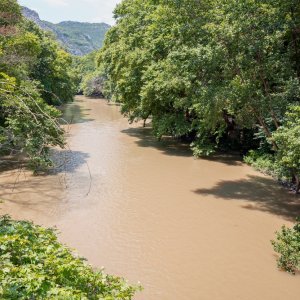
In January, Claudia Gómez, General Coordinator, Lerma–Santiago River Restoration and Sanitation Project, joined by members of community organizations from municipalities in the State of Mexico and state authorities, toured key points along the Lerma River to assess the current condition of the waterway.
Julián Martínez, President, Upper Lerma Communities Organization (COMALAC), explained that the purpose of the tour was to ensure that authorities at the three levels of government become familiar with the critical points that emerge during the rainy season and lead to river overflows, in order to implement actions to prevent harm to local communities.
Gómez noted that these engagements with civil society organizations help refine proposals and define the strategies to be implemented in the region. She also announced that construction of several projects in the upper basin will begin in late February and early March, in municipalities such as Almoloya de Juárez, Texcalyacac, and Ocoyoacac, including the development of an eco-hydrological park.
Among the actions to be intensified, the commissioner highlighted reforestation efforts, as well as the construction and restoration of collectors to channel wastewater to treatment plants. “We want to intervene first in these municipalities, especially through a comprehensive project we call the Eco-Hydrological Park, which aims to ensure that all water, both domestic and industrial, is treated, that riverbanks can be restored, and that an intensive environmental compliance campaign is implemented, along with inspection and enforcement actions in the region’s industries,” she stated.
In 2026, the first interventions in Guanajuato will also begin. Gómez explained that the comprehensive plan will focus primarily on treating industrial discharges from the Salamanca refinery, which are considered one of the main sources of pollution in the river.
She detailed that the project will address the control of domestic, agricultural, and industrial discharges, as well as solid waste management, given that garbage and sedimentation worsen contamination of the river channel. “To prevent waste from reaching rivers, it is critically important to have established sanitary landfills and adequate disposal facilities,” Gómez noted. Moreover, she emphasized that social and environmental actions aimed at communities located in flood-prone areas are also being considered.
In 2025, more than MX$408 million were allocated to treatment infrastructure, ecological restoration, discharge control, and flood protection. During this period, a governance framework was consolidated with the participation of more than 80 institutions across the three levels of government, and agreements were signed with 18 municipalities along the Santiago River to protect federal land.
Regarding the private sector, more than 1,000 companies were called upon to immediately regularize their discharges, and inspection visits were carried out by PROFEPA and CONAGUA, resulting in closures and administrative proceedings. Additionally, PROFEPA opened a Regional Center for Environmental Prevention and Quality in Toluca to provide advisory services, training, and support to industries within the Lerma River basin.
As part of ecological restoration efforts, 847ha of the El Ahogado wetland were protected, and 3,024ha in the Upper Lerma wetlands were prioritized for environmental recovery. Likewise, 955t of solid waste were collected along the riverbanks, 38.5ha were reforested, and floating waste traps were installed to improve the river’s hydraulic capacity and promote circular economy schemes.
In terms of risk prevention, progress has been made in delineating 169 km of federal land and restoring 23.5 km of river channel and embankments, protecting more than 1.5 million people from flooding across various sections of the Lerma–Santiago system.
Construction and rehabilitation are currently underway on six wastewater treatment plants, along with the energy retrofitting of seven additional facilities. In parallel, 17.48km of collectors were rehabilitated and built, benefiting more than one million people by reducing untreated urban discharges into the river.
According to PROFEPA, the Lerma–Santiago River has become one of the most polluted bodies of water in Mexico. For years, untreated wastewater discharges, unregulated extraction, industrial expansion, and uncontrolled urban growth have degraded the basin and put the health of thousands of people at risk.
Studies conducted between 2019 and 2023 by the government of Jalisco show that one in five children in municipalities near the Santiago River suffers from kidney problems. These findings were confirmed by the Civil Hospital of Guadalajara, where physicians warn that the incidence of chronic kidney disease in the region is up to 40% higher than in other parts of the world.
In 2009, a study by Universidad Autónoma de San Luis Potosí, in collaboration with the Jalisco State Water Commission, found traces of lead, arsenic, cadmium, mercury, and benzene, substances responsible for neurological and kidney damage, in 330 children. Subsequent investigations by CONAGUA confirmed that 80% of sampling points in the Lerma Santiago Pacific basin show contamination with heavy metals and bacteria at levels far above regulatory standards.
In this context, at the start of her administration, President Claudia Sheinbaum set the restoration of the basin as a priority, allocating approximately MX$7 billion over a six-year period. These actions are part of Commitment 92 of the 100 commitments made by the president, which pledges the cleanup of the Lerma–Santiago, Tula, and Atoyac rivers, recognized as the most polluted rivers in the country.
You May Like




Most popular








