


WWF Mexico Supports Sheinbaum’s Green Agenda
 By Eliza Galeana | Junior Journalist & Industry Analyst -
Thu, 10/10/2024 - 23:29
By Eliza Galeana | Junior Journalist & Industry Analyst -
Thu, 10/10/2024 - 23:29
WWF Mexico expressed support for the green agenda of the new federal administration led by Claudia Sheinbaum, noting that it aligns with the organization’s sustainability goals. The administration’s focus on environmental restoration and biodiversity integration reflects a shared commitment to addressing climate change and preserving ecosystems.
During the presentation of the Living Planet Report 2024, María José Villanueva, Conservation Director, WWF Mexico, praised the sustainability goals of the new government, noting that they are in line with the country’s international commitments. “I felt excited hearing President Sheinbaum's proposals. I believe it is an agenda closely aligned with what WWF and many other actors have been advocating for... What we hear is an agenda of restoration and peace with nature,” Villanueva said at a press conference. Similarly, Jorge Rickards, Director General, WWF Mexico, expressed agreement with Sheinbaum’s human-centered approach. "I think it is appropriate to focus on people and prioritize their well-being, but we must also balance the agendas," he stressed.
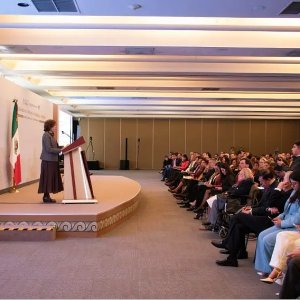
Earlier in October, during her first official presentation to sector workers, Alicia Bárcena, Minister of Environment, outlined the principles that will guide the country’s environmental policy, consistent with the ecological and environmental humanism of the new administration. She explained that the tasks ahead are concrete and encapsulated in a National Environmental Restoration Program summarized by four key topics: restoration, remediation, rivers, and waste.
Regarding the report, the environmental organization warns that the average size of wildlife populations analyzed over a 50-year period has decreased by 73%, with freshwater species being the most affected, showing an 85% decline, followed by terrestrial species at 69%, and marine species at 56%. Additionally, the study indicates that Latin America and the Caribbean have experienced the largest decline globally, with a 95% decrease in monitored populations.
In Latin America and the Caribbean climate change poses a significant threat to wildlife populations. The decline in wildlife populations serves as an early warning indicator of the increased risk of extinction and the potential loss of healthy ecosystems. “The accelerated retreat of the Amazon rainforest is a regional tipping point with significant ecological, social, and economic consequences, including the loss of livelihoods, reduced security and well-being, and loss of lives. This tipping point, for instance, would release tons of carbon into the atmosphere and alter climate patterns globally,” Rickards highlighted.
The degradation of ecosystems and biodiversity loss is not only concerning from an environmental perspective, as it is known to have direct implications for human health. The One Health approach suggests that human activities and stressed ecosystems have created new conditions conducive to the emergence and spread of diseases. It is estimated that around 60% of emerging infectious diseases worldwide come from animals, both wild and domestic. In the last three decades, more than 30 new human pathogens have been detected, 75% of which originated from animals.
In this context, WWF is calling on governments to develop and implement more ambitious national nature and climate plans that include measures to reduce excessive global consumption, halt and reverse both domestic and imported biodiversity loss, and reduce emissions equitably. The report emphasizes that governments and businesses must eliminate activities that negatively impact biodiversity and the climate and redirect funding from harmful practices to those that help achieve global goals.
“Although the situation is alarming, we have not reached the point of no return yet. The decisions and actions taken in the next five years will be critical for the future of life on Earth. We have the power and the opportunity to change our course. We can restore our living planet if we act now,” Rickards concluded.
Progress in Clean Energy Production in Mexico
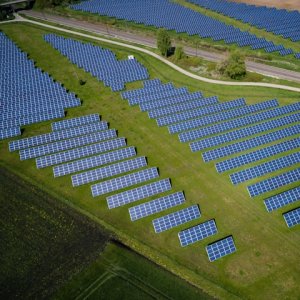
In 2022, the Mexican government committed to increasing clean energy production by 35% by 2024. However, it is expected that this percentage will remain at 30% by the end of the year. Regulo Salinas, President of the Energy Commission, Business Coordinating Council (CCE), pointed out that the delay in meeting this goal is due to a lack of public sector investment and obstacles in granting permits to private companies. According to a study by the Mexican Institute for Competitiveness (IMCO), although clean energy generation in the country increased by 10.3% between 2017 and 2022, it decreased by 1.8% between 2021 and 2022. Furthermore, in 2023, there was an additional reduction of 8.2%, according to figures from the National Electric System Development Program (PRODESEN), published by the Ministry of Energy (SENER).
Despite these challenges, the new government has announced that it will work to ensure that by 2030, 45% of Mexico's electricity comes from clean sources, exceeding the initial goal of 43% in line with the Paris Agreement. This marks a shift in Mexico’s energy policy, which in the last administration favored the use of hydrocarbons. With the recent approval of the energy reform, Luz Elena González, Minister of Energy, clarified that the initiative will not hinder private investment, allowing for up to 46% participation. "We will allow organized participation according to the needs of each region of the country, promoting clean and renewable energy generation, as well as a balanced distribution of benefits," she stated in a press conference.
You May Like





Most popular








