Rethinking Growth: Circularity Could Define Latam's Future



STORY INLINE POST



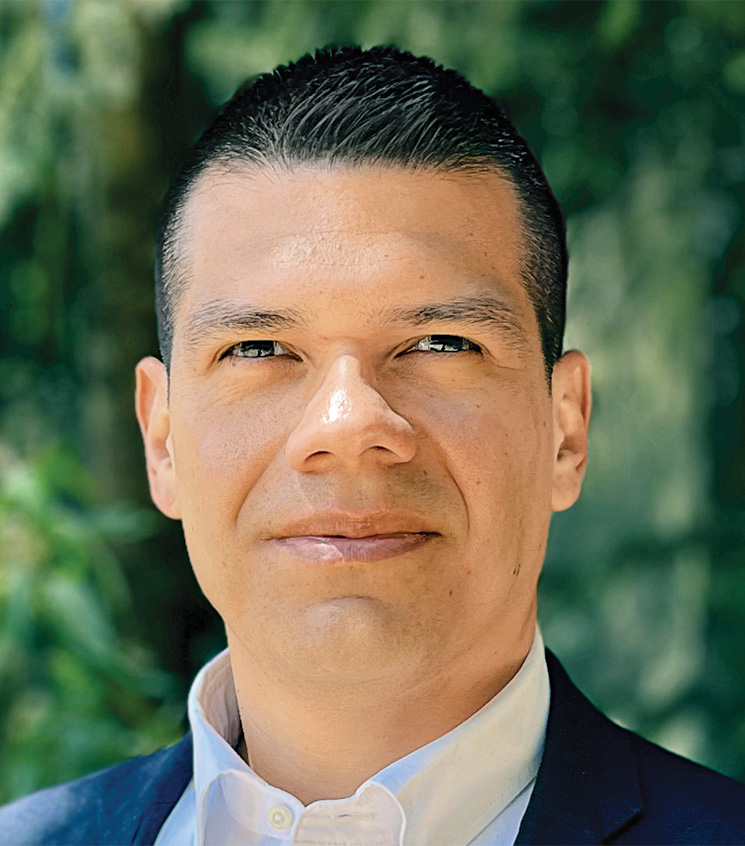
 By Miguel Chavarría | Head of Advisory, LAC and Director, Mexico -
Thu, 01/15/2026 - 06:00
By Miguel Chavarría | Head of Advisory, LAC and Director, Mexico -
Thu, 01/15/2026 - 06:00
As we embark on a new year, full of hopes and new commitments to ourselves and others, some people also use this moment to dream about the future, how we contribute to make it better, and how we can start taking numerous incremental steps to make it a reality.
I personally wonder, what if waste wasn’t a side effect of modern life at all, but a failure of imagination? How could I meet my everyday needs without owning more things, and even reduce my environmental footprint in the process?
I don’t think that the usual linear economy model has ever felt right since “take, make, dispose” leads to environmental degradation and resource scarcity, which unfortunately, we can only expect to grow in line with an increasing population and demand for more products and services. Actually, over 93% of the resources we extract from the Earth are either wasted, lost, or remain unavailable for reuse[1].
This is where circular economy models come in handy, having proven to be feasible, profitable for businesses, and a smarter way of growing.
Circular economy proposes a regenerative model that breaks the link between economic activity and ever‑growing resource extraction by preventing waste from being created in the first place. It emphasizes circulating products and materials through repair, reuse, and high‑quality recycling, while restoring the ecosystems that support them. Over time, the circular economy has moved from an abstract idea to a concrete strategy that organizations are using to strengthen resilience, spark innovation, and create new forms of value.
The Ellen MacArthur Foundation, a leading global voice on circular economy, describes circularity through three main ideas: designing out waste and pollution from the start, keeping products and materials circulating in the economy for as long as possible, and restoring the natural systems on which economic activity depends.
From the European Union’s efforts on circular economy policies to emerging roadmaps in countries such as China and Colombia, public and private actors are steadily shifting away from standard models toward more circular approaches. For Latin America, where many economies still depend heavily on extracting and processing natural resources, adopting circular practices could reshape what it means to be competitive, unlock better-quality employment, and support a more sustainable development trajectory through 2030 and beyond.
Unlike traditional sustainability approaches that focus primarily on reducing impacts, circularity emphasizes system redesign: shifting from end-of-pipe solutions to systemic transformations in production, consumption, and business models.
Circular strategies operate across multiple levels, from product innovation to industrial clusters and regional ecosystems. Some of the most prominent include:
- Design for durability and recyclability: Encouraging products that last longer, can be easily repaired, and whose materials can be recovered after use.
- Resource efficiency and remanufacturing: Using renewable or secondary materials and reintroducing parts or components into production cycles.
- Sharing and service models: Transitioning from ownership to access, for example, product-as-a-service solutions in mobility, fashion, or electronics.
- Industrial symbiosis: Linking companies across sectors so that one’s by-product becomes another’s input.
- Reverse logistics and extended producer responsibility (EPR): Setting up systems that recover materials and products after their initial use.
For companies, circularity is more than a compliance exercise. It is a competitive advantage and innovation driver. Circular business models are reshaping how value is created and captured, including:
- Product life extension models (refurbishing, remanufacturing) that increase margins through secondary markets.
- Resource recovery models that monetize waste streams.
- Product-as-a-service models that encourage long-term customer relationships as well as predictable revenue.
- Circular supply models that rely on renewable energy and recycled inputs, reducing exposure to volatile raw material prices.
The economic case for a circular economy is increasingly clear since studies estimate that shifting to a circular economy could unlock about 4.5 trillion dollars in extra global economic output by 2030[2] while creating millions of new jobs. For businesses in Latin America, facing price volatility, logistical challenges, and growing ESG expectations, circularity offers a path to future-proofing supply chains and enhancing resilience.
Moreover, investors and financial institutions are beginning to recognize circularity as a new frontier for sustainable finance. Instruments such as green bonds, blended finance mechanisms, and circular investment funds are emerging to support companies adopting more regenerative business models.
In Latin America and the Caribbean, circularity is steadily moving from concept to action as we see several countries structuring their national circular economy roadmaps and regional strategies:
- Colombia’s National Circular Economy Strategy: Policy framework launched in 2019, using resource efficiency and closing material, water, and energy loops as drivers of green growth and competitiveness for the country.
- Chile’s Roadmap for a Circular Chile by 2040: National public policy instrument that aims to reduce waste generation per capita by 25% and increase circular business models across different sectors in different regions of the country.
- Mexico’s General Law on Circular Economy bill: This law proposal was presented at the end of last year and aims to regulate public policies and circularity instruments and to define obligations, extended producer responsibility, shared responsibilities, and sanctions, with gradual implementation for enterprises.
Cities are also emerging as drivers of circular transformation. For example, Mexico City’s new waste sorting and collection program, launched under the “Transforma tu Ciudad, Cada Basura en su Lugar” campaign, makes source separation of household and commercial waste mandatory from Jan. 1 2026, requiring all generators to divide their waste into three fractions (organic, recyclable inorganic and non‑recyclable inorganic), each collected on specific days of the week to enable differentiated recycling and treatment. This program represents another important attempt to improve the waste management system of the city, following the Solid Waste Management Program for Mexico City 2016–2020, launched 10 years ago.
If at this point you are wondering whether you can also individually contribute to a broader and long-lasting transformation of the economy into a more circular one, you definitely can by participating in making this program a success. By sorting waste correctly, you contribute to each waste stream getting to the right destination. For example, the organic waste will be used to produce organic compost or charcoal. Meanwhile, all recyclable inorganics will ultimately get to specialized companies to be recycled. The idea is to minimize the waste getting to landfills or, worse, leaking into nature.
The coming five years will be decisive for how deeply circular principles shape the Latin American economy. As carbon markets expand, biodiversity frameworks mature, and new ESG reporting standards take hold (such as IFRS S2 or CSRD alignment), circular practices will increasingly become a prerequisite for competitiveness rather than an optional add-on.
By 2030, circularity is likely to transition from a niche innovation to a mainstream economic policy and business practice. The convergence of three trends will accelerate this transition:
- Regulatory alignment and market access: International buyers and investors will demand circular supply chains.
- Technology integration: Digital tools will make material flows traceable, verifiable, and monetizable.
- Public–private collaboration: Financing mechanisms and partnerships will expand circular ecosystems at scale.
If deployed strategically, circularity could unlock a regional growth engine aligned with climate, nature, and equity goals, positioning Latin America as a global leader in regenerative development.
The transition toward a circular economy is not simply a technical shift but a cultural transformation that redefines how businesses, consumers, and policymakers perceive value. Latin America’s history of resource innovation, combined with its entrepreneurial spirit and biodiversity, provides fertile ground for this evolution.
Every repair café, refill station, product‑as‑a‑service model, and zero‑waste city policy is proof that imagination can be turned into infrastructure, incentives, and habits that close loops instead of opening landfills. If these efforts scale and connect, meeting our everyday needs without generating waste will no longer be a radical question, but the quiet, circular normal of the 21st century.
[1] Circle Economy & Deloitte. (2025). Global circularity rate fell to 6.9%—despite growing recycling. Circularity Gap Report 2025 Update.
[2] World Economic Forum. (2019). Making the $4.5 trillion circular economy opportunity a reality. World Economic Forum.
You May Like



Most popular