


CIMMYT, INIFAP Discuss Climate and Crop Alternatives
Researchers, agribusiness professionals, and government representatives gathered at a recent workshop hosted by the International Maize and Wheat Improvement Center (CIMMYT) to explore opportunities for alternative crops in Mexico in the context of climate change. The National Institute for Forestry, Agriculture and Livestock Research (INIFAP) contributed to the discussion by presenting technical insights and identifying key challenges and strategies.
Dr. Kai Sonder introduced a suitability map for alternative crops across Mexico, providing spatial data to support decision-making. Dr. Mariel Ouorou addressed agronomic challenges related to the introduction of new crops, while Dr. Roland Schafleitner examined the production systems and market potential of vegetables in dryland areas. Dr. Natalia Palacios highlighted sustainable food processing, emphasizing supply chain development and nutritional considerations.
Participants agreed that the most viable alternative crops are those adapted to marginal soils, requiring low inputs and offering multiple by-products. Chickpeas were cited as an example, with uses ranging from flour and forage to animal feed. Other crops of interest included beans, peanuts, amaranth, sorghum, millet, and aromatic herbs.
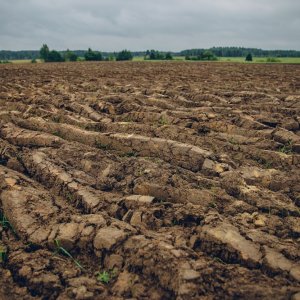
However, several barriers to alternative crop production were identified. These include limited access to high-quality seeds, weak market linkages, low commercial prices, low productivity, inefficient input use, and underutilization of biofertilizers—factors that often lead to soil degradation. To address these challenges, experts recommended early planting using short-cycle varieties, the adoption of conservation agriculture practices, and increased mechanization. Soil sustainability was emphasized as a key priority, with improved water management and the use of organic matter seen as essential to boosting productivity and resilience.
The workshop also underscored the value of flexible technology menus over fixed input packages, allowing producers to tailor practices to local conditions. Attendees called for stronger public policies to support diversified farming systems and the development of commercialization maps to identify market niches. Vegetables were highlighted as a promising diversification option due to their short growth cycles, nutritional value, and water-use efficiency.
You May Like






Most popular








