


Mexico City Advances Sustainability Programs
Mexico City’s Ministry of Environment (SEDEMA) held the third workshop in its participatory process to update the Climate Action Program (PACCM) and the Air Quality Management Program (ProAire) for 2025-2030, with a focus on nature-based solutions such as urban and rural revegetation and the restoration of rivers and water bodies.
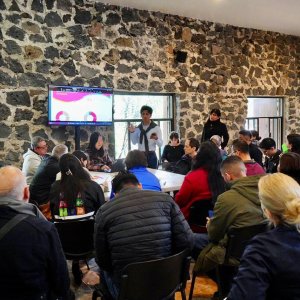
The event brought together about 150 participants from city and federal agencies, borough governments, civil society, academia, international cooperation organizations, and the private sector. The goal is to align climate action with biodiversity conservation and integrate nature-based approaches into both environmental and public health strategies.
Andrea Bizberg, City Adviser, C40 Breathe Cities Program, underscored the value of nature-based solutions in carbon mitigation and in providing co-benefits such as improved air quality, public health, and resilience against flooding and extreme temperatures.
Roberto Castillo, Director General for Policy Coordination and Environmental Culture, SEDEMA highlighted that Mexico City contains 12% of the country’s biodiversity and 2% of global biodiversity. He said the city is committed to expanding green spaces through initiatives including pollinator gardens, urban orchards, and green block programs, developed with community participation.
The workshop also presented the harmonization of three planning instruments: PACCM, ProAire, and the Strategy for the Conservation and Sustainable Use of Biodiversity (ECUSBE). Castillo said the updated PACCM will set higher decarbonization targets, strengthen measurable adaptation policies, and include commitments from the private sector and the public.
Ana Mendívil, Director of Climate Change and Sustainable Projects, SEDEMA, outlined progress in green space expansion and waterway restoration, including the recovery of 1,150ha of conservation land, carbon emission reductions, and the creation of green jobs. Eduardo Olivares, Air Quality Projects Director, SEDEMA, noted the importance of reversing pollution trends and reviewed updates to ProAire measures for the Valley of Mexico Metropolitan Zone.
Laura Antaño Díaz, Biodiversity Conservation Specialist, SEDEMA, emphasized the interconnection between climate action and biodiversity conservation, noting that both PACCM and ECUSBE reinforce each other’s goals.
The workshop concluded with working group sessions to identify priority actions for implementing nature-based solutions in conservation areas, protected zones, green infrastructure, and sustainable agricultural and forestry systems.



Most popular



