


From Concept to Competence: Co-Creating Educational Programs
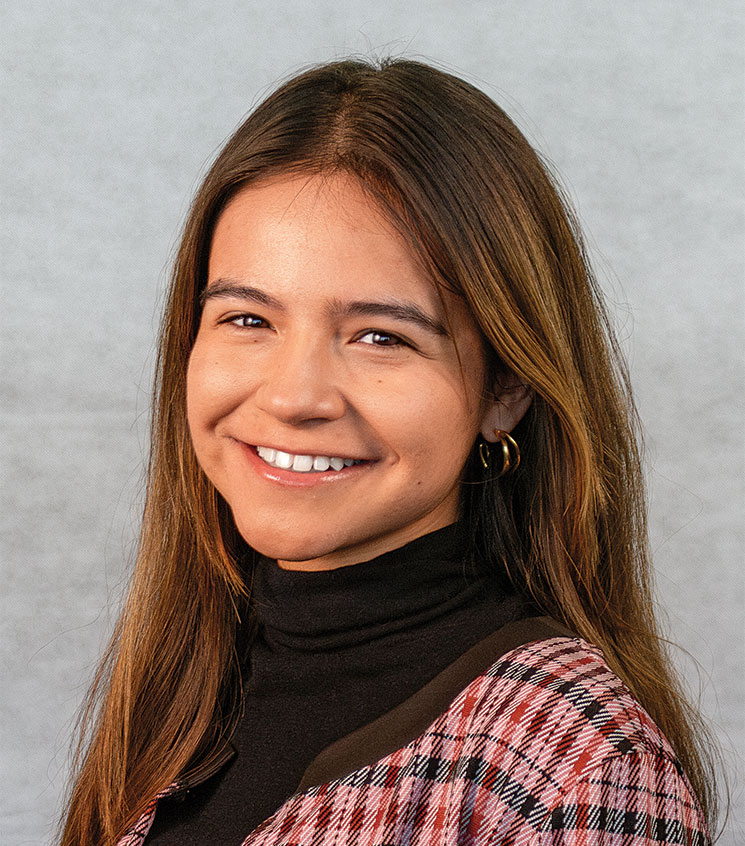 By Sofía Garduño | Journalist & Industry Analyst -
Wed, 05/07/2025 - 12:25
By Sofía Garduño | Journalist & Industry Analyst -
Wed, 05/07/2025 - 12:25
As the digital economy continues to grow, it requires a workforce equipped with problem-solving capabilities, adaptability, and strong collaboration skills. For educational institutions, this landscape represents a call to action.
"The world is changing rapidly. In just a couple of years, half of the skills we know today will have evolved," says Freya Enríquez, Enterprise Experience Manager, Collective Academy.
Across Mexico and Latin America, a persistent gap remains between academic instruction and labor market demands. Moreover, the latest OECD PISA scores (2022) show a sharp decline in learning outcomes, with 66% of Mexican students underperforming in mathematics and over half lacking basic science and reading comprehension skills. This learning loss, combined with historical underinvestment in education and pandemic-driven inequality, is affecting the region’s competitiveness.
"Technology is advancing so fast that education systems risk becoming obsolete if they do not adapt to societal needs," says Erik Porras, National MBA Director at EGADE Business School, Tecnológico de Monterrey. He adds that higher education institutions must compete not just with other universities, but with alternative learning providers and on-demand training platforms.
To meet this challenge, it is necessary to develop flexible curricula and real-world experiences. “We have worked closely with the private sector to understand what companies need and designed collaborative environments accordingly,” says Porras.
This alignment between academic and corporate needs is evident in the growing adoption of dual education models, originally developed in Germany. Siemens, for example, has embraced this model for over seven years. “The magic lies in hands-on experience,” says Juan Carlos Díaz, People and Organization Head, Siemens Mexico, Central America, and the Caribbean. This model allows “participants to work side-by-side with top-level professionals and learn directly from cutting-edge technologies,” he adds.
More than 400 individuals have completed Siemens’ program, which underscores how internships and apprenticeships bridge theory and practice. This is particularly urgent, as ManpowerGroup reports that 70% of employers in Mexico struggle to fill job vacancies due to a lack of qualified talent.
This approach is particularly relevant in regions where some academic programs may lag behind industry demands. The Inter-American Development Bank (IDB) reports that Latin America and the Caribbean face significant challenges related to skills mismatch, in part due to limited adaptation to evolving labor market needs.
Universidad Aeronáutica en Querétaro (UNAQ), for example, was founded in response to industry demands. “We reverse-engineered our programs by mapping corporate processes and building models to support [Bombardier],” says Enrique Sosa, Dean, UNAQ. “There are no one-size-fits-all solutions. Flexibility is essential.”
At the Instituto Politécnico Nacional (IPN), the dual education model has evolved from a vocational tool into a strategy for higher education and postgraduate programs. “Mandatory internships are now a cornerstone of our strategy. They expose students to real-world challenges and help them build skills that improve employability — sometimes even leading to professional degree completion or patent development,” says Armando Oropeza, Director Higher School of Electrical and Mechanical Engineering at Campus Ticoman, IPN.
Incorporating project-based learning, internships, and industry-embedded coursework ensures that students develop not only technical knowledge but also workplace competencies like communication, adaptability, and accountability.
Christian Hernández, Enterprise Latin American Manager, Coursera, explains that AI is accelerating talent development. “We are witnessing a shift. Nine out of 10 learners on Coursera prefer AI-based tutoring to human instructors,” says Hernández.
Education is not a static phase of life but a continuous process. “We must transition to lifelong learning models,” says Sosa. “Upskilling will remain essential, and universities must stay close to industry to address evolving needs.”
However, talent development cannot occur in isolation. “Without ecosystems that offer real opportunities, skills training alone will not be enough,” says Hernández.
You May Like






Most popular








