


Telework Could Become Mandatory During Environmental Emergencies
 By Sofía Garduño | Journalist & Industry Analyst -
Mon, 12/29/2025 - 18:36
By Sofía Garduño | Journalist & Industry Analyst -
Mon, 12/29/2025 - 18:36
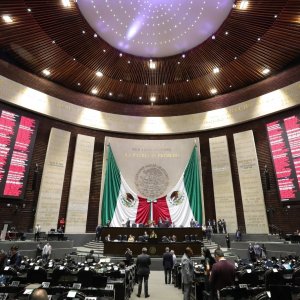
Mexico City’s local Congress approved a legislative measure urging federal lawmakers to amend the Federal Labor Law to require telework during environmental emergencies, when job functions allow, positioning remote work as a preventive public health measure rather than an exceptional response.
The approved opinion proposes adding Article 330-L to the Federal Labor Law to address telework during atmospheric environmental contingencies. The initiative was presented by the Labor, Employment, and Social Welfare Commission and approved by the plenary, marking a step toward integrating environmental risk into labor regulation.
The reform seeks to establish employers’ obligations to implement remote work with staggered schedules during environmental emergencies, provided the nature of the position permits it, says Juan Rubio, Chair, Labor, Employment, and Social Welfare Commission. He emphasizes that the proposal is not intended as a privilege or an additional administrative burden for employers.
Rubio adds that the measure responds to recurring air quality crises affecting Mexico City and other metropolitan areas, arguing that work arrangements should not remain disconnected from environmental realities. He says that remote work should serve as a preventive tool to protect workers’ health, particularly for those exposed to high pollution levels due to where they live or commute.
According to reports from the Megalopolis Environmental Commission (CAMe), Mexico City saw five environmental contingencies between February and April 2025, reports MBN. This marks the highest number of such events recorded in such a short time. In 2024, there were four contingencies during the same period and a total of 11 throughout the ozone season. In contrast, 2023 saw only two contingencies in February and March, and 2022 registered just one in March. In 2021, two contingencies were activated in April. In 2020, the first year of the COVID-19 pandemic, when strict stay-at-home measures were in place in the capital, only one contingency was declared in November.
According to the commission, the proposal prioritizes the right to health during periods of bad air quality without jeopardizing income, job stability, or business continuity. Rubio stresses that the measure is temporary and clearly defined, does not alter existing labor relationships, and does not impose disproportionate obligations on employers.
“Mexico’s largest cities, Monterrey, Guadalajara, and Mexico City, consistently exceed the WHO’s recommended pollution levels. While remote work is not a definitive solution, it is a rapid way to cut emissions and improve air quality without halting economic activity,” says Elvia Estrada, Local Representative, Mexico City’s Congress.
Rubio says the reform aims to prevent risks rather than react after harm occurs, framing dignified employment as one that includes safe working conditions even in the face of environmental threats.
In a separate vote, the Congress approved reforms to Article 70 of Mexico City’s Civil Service Law, updating references from “Distrito Federal” (Federal District) to “Ciudad de México” (Mexico City). The reform, promoted by the Local Public Administration Commission chaired by MORENA Lawmaker Elizabeth Mateos and proposed by PT Legislator Miriam Saldaña, seeks to harmonize legal language with the city’s current administrative structure.
The updated provision maintains that separation from public service may be ordinary or extraordinary and conditions the permanence of trusted public servants on applicable labor laws and administrative responsibility regulations, reinforcing legal certainty within the local public administration framework.
You May Like





Most popular








