


AIFA Profits Rise, Yet Connectivity Limits Growth
 By Teresa De Alba | Jr Journalist & Industry Analyst -
Tue, 06/03/2025 - 16:01
By Teresa De Alba | Jr Journalist & Industry Analyst -
Tue, 06/03/2025 - 16:01
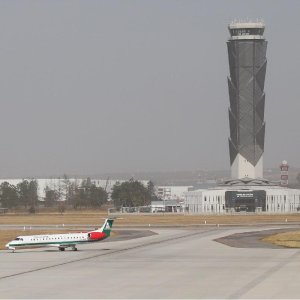
Since its 2022 inauguration, the Felipe Ángeles International Airport (AIFA) has mobilized over 10 million passengers and achieved five consecutive quarters of operating profit. While the airport’s financial performance demonstrates steady growth, its broader market impact remains limited due to unresolved ground connectivity issues.
Regional Vice President for the Americas, International Air Transport Association (IATA), highlighted these challenges at IATA’s 81st Annual General Meeting in India. “The distance from Mexico City and insufficient ground infrastructure discourage passengers. Conditions are not yet optimal,” Cerdá remarked. He also noted the reluctance of international airlines to relocate operations to AIFA, stating, “AICM remains their primary hub due to its established infrastructure and domestic connectivity.”
Cerdá suggested AIFA’s future lies primarily in cargo operations, with the Mexico City International Airport (AICM) continuing as the main passenger hub. He also stressed the urgency of addressing AICM’s structural issues through significant investments.
Calling for stronger collaboration with the Mexican government, Cerdá said, “We need more dialogue and resources to improve connectivity, increase flights, and make air travel more accessible for Mexicans.” Reflecting on the region’s long-term airport strategy, he expressed regret over the cancellation of the Texcoco project. “That plan was the ideal solution. Now, we must focus on enhancing the current airport system,” he concluded.
Positive Financial Results Amid Persistent Expansion Challenges
In 1Q25, AIFA reported an operating profit of 182 million pesos, marking five consecutive profitable quarters. Revenues rose by 44% year-over-year to MX$706 million, driven by higher passenger volumes, expanded commercial revenue streams, and increased demand for domestic flights.
Despite these financial gains, AIFA continues to rely on government subsidies, which rose by 21% year-over-year in 1Q25. Passenger traffic reached 1.6 million during this period, with the majority on domestic routes. International connectivity, however, remains limited.
Since opening, AIFA has transported over 10 million passengers, with annual volumes rising from 912,000 in 2022 to over 6.3 million in 2024. The 1Q25 alone accounted for 1.6 million passengers, signaling continued growth under the leadership of airport director Isidoro Pastor.
Rail Connectivity Delays Impede Full Potential
The Buenavista-AIFA rail line, crucial to improving the airport’s ground access, remains incomplete. Originally scheduled for a July 2025 launch, the project faces significant delays, with unfinished sections and missing infrastructure such as pedestrian bridges and vehicle crossings.
Despite progress on track installation between AIFA and Lechería, other sections remain in disrepair or under construction. Reports from Expansión highlight neglected stations marked by graffiti and debris.
The rail project has encountered multiple setbacks, pushing its expected completion from 2024 to mid-2025. In April 2025, the Ministry of Infrastructure, Communications, and Transportation (SICT) allowed Ferrocarriles Suburbanos de CAF to withdraw from the project, transferring oversight to the Ministry of Defense (SEDENA).
Originally budgeted at MX$20–22 billion, the rail line’s cost has escalated to MX$25.8 billion. Analyst Óscar Solís pointed to insufficient environmental studies and inadequate social management as recurring obstacles. “The lack of thorough planning has delayed progress significantly,” he said.
You May Like






Most popular








