

Experience Counts for Defense and Security

STORY INLINE POST




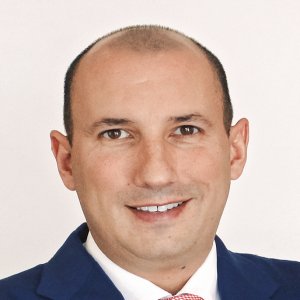
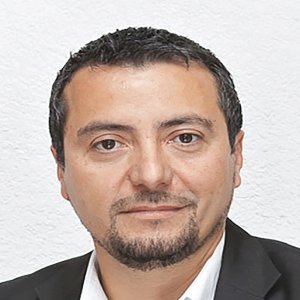

Q: How have you attracted partners and clients such as SEDENA and SEMAR after only four years in the market?
A: Experience is vital at DECSEF, so we hire retired military personnel who are knowledgeable in satellite communications, avionics, aircraft maintenance, air traffic control, radar and electronics. They design original systems, adapt defense technology to Mexican needs and train new civilian generations. Some believe that innovative work of this type is not performed in Mexico but we are proof that innovation is happening. We must communicate this to encourage the investment and demand for services that will push us to keep improving. Regardless of the company’s age, the shareholders and engineers who make up DECSEF have more than 20 years of experience working with systems used in the defense market. We started in consulting and integration services and now produce software.
Q: What security issues are the most pressing for Mexico and the aerospace market?
A: Security intricacies in Mexico are different to those of other countries so it is necessary to develop specific solutions. The local aerospace market has several important issues to address. These include lowering production costs and increasing the quality of aircraft component installation and maintenance. It is also important to adapt technology to specific security issues for Mexico because companies do not normally make large investments in security or defense nor do they develop complex systems for software or hardware.
Technological innovation is an important security issue and we can contribute by integrating and modifying technology items on request. We have been working with SEDENA, SEMAR and the federal police on 20-25 joint projects. These have involved highly educated personnel from several universities, including UNAM and IPN, and have been financially supported by CONACYT.
Q: What specific products have you developed for the civil aviation sector?
A: We are developing software to manage 3-D information for airports because the majority of information including routes and air traffic management is three-dimensional. The goal is to support air controller training through a 3-D system. This technology was developed using Belgian company Luciad’s base software and integrating our knowledge and standards with an eye on minimizing costs. Luciad helped considerably by supporting our business model, allowing us to develop aerospace products for different markets.
We hope to finish this particular product by the end of 2016 to permit training and testing at aviation academies without risk. We also produce software systems that collect aircraft information such as flight time, speed and real time location and visualize it on a 3-D platform. This modern and dynamic system must be designed so that it is easily understood by a novice pilot or air controller and it must be available at an affordable cost. In May 2016, we had a major event for the Ministries of Agriculture (SAGARPA) and Education (SEP), alongside the Federal Electricity Commission (CFE) and PEMEX to display our systems.
Q: How does DECSEF attract its clients and what companies are you working with?
A: Our strategy is to participate in fairs and geospatial events. We are participating in forums related to different sectors such as agroindustry, private aviation, education, oil, energy and disaster relief, particularly in cases where geospatial information is involved. Thanks to FAMEX 2015, for instance, Luciad signed large projects for DECSEF. We also have approached some companies that are working with drones to map areas and generate valuable geospatial information, including Hydra Technologies, a drone manufacturer from Guadalajara, Jalisco, to design the drone’s control system, communication and transmission.
By the end of 2017, we plan to be developing equipment to diagnose and repair electronic avionics systems. Our experience in the last three years has led us to consolidate our company, so we want to start jumping from software to the aerospace computer field.
You May Like


Most popular








