


IATA Raises Concerns Over Slow SAF Production in Aviation
 By Óscar Goytia | Journalist & Industry Analyst -
Fri, 02/07/2025 - 16:28
By Óscar Goytia | Journalist & Industry Analyst -
Fri, 02/07/2025 - 16:28
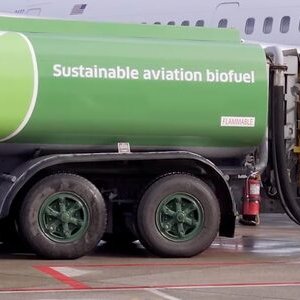
The International Air Transport Association (IATA) has expressed concerns about the slow progress in the production of Sustainable Aviation Fuel (SAF), a key element in the aviation industry's goal of achieving carbon-neutral growth. According to IATA, only 0.3% of global aviation fuel is sustainable, while 11% is renewable.
IATA's data shows that global production of SAF reached 1.3 billion liters, falling short of the expected 1.9 billion liters for 2024. The delay in ramping up production, especially in key US facilities, is now expected to push targets into 2025.
"The volumes of SAF are increasing, but disappointingly slowly. Governments are sending contradictory signals to oil companies, which continue to receive subsidies for fossil fuel exploration and production," stated Willie Walsh, director general, IATA.
Walsh highlighted that government incentives continue to favor fossil fuel production over green alternatives. The International Institute for Sustainable Development estimates that by 2030, more than triple the annual financing needed to transition aviation (around US$570 billion) will be allocated to oil and gas exploration. "The low performance of green energy funds reflects the prioritization of investment fundamentals over environmental, social, and governance (ESG) considerations," Walsh added.
The aviation sector has voiced its concerns about the viability of meeting sustainability targets. Airline industry representatives have pointed out that despite their desire to adopt SAF, the structure of the aviation market makes it challenging for producers to generate quick returns.
"Expectations for SAF profitability must be 'slow and steady, not fast and furious'. But make no mistake: airlines are eager to purchase SAF, and investors who focus on the long-term prospects of decarbonization can generate profits," said Walsh.
The aviation sector has voiced concerns about the viability of meeting sustainability targets. Airline industry representatives have pointed out that despite their desire to adopt SAF, the structure of the aviation market makes it challenging for producers to generate quick returns.
"Expectations for SAF profitability must be 'slow and steady, not fast and furious.' But make no mistake: airlines are eager to purchase SAF, and investors who focus on the long-term prospects of decarbonization can generate profits," said Walsh.
In response to these challenges, airlines worldwide are calling for the removal of fossil fuel production subsidies, suggesting that these funds should instead be redirected to support SAF production.
IATA's analysis further underscores the scale of the challenge ahead. To achieve net-zero emissions by 2050, the industry will need between 3,000 and 6,500 new renewable fuel plants. These plants will also produce renewable diesel and other biofuels. The required annual capital expenditure for building these plants is projected to be approximately US$128 billion in the most optimistic scenario.
"Around 86% of travelers agree that governments should provide production incentives for airlines to access SAF," IATA reported. This sentiment also reflects consumer demand for more sustainable aviation options as air travel continues to rise.
For 2025, SAF production is projected to reach 2.7 billion liters, accounting for just 0.7% of the total fuel used for commercial aviation operations.
In a step toward improving transparency, IATA has introduced a methodology to accurately track and report the emission reductions from SAF usage. The new framework will ensure consistent and transparent reporting of SAF's environmental impact and facilitate the certification and exchange of emission reduction credits within the industry.
"This is a key component of the IATA SAF Registry, which will allow airlines to claim SAF benefits related to their regulatory and voluntary sustainability commitments, regardless of where the fuel is purchased. The transparency of this globally published standard methodology will provide confidence that the registry is robust and fair, preventing double counting," said Marie Owens Thomsen, Senior Vice President for Sustainability and Chief Economist, IATA.
The methodology includes calculations based on emissions associated with fuel purchases, aligning with the Carbon Offsetting and Reduction Scheme for International Aviation (CORSIA) set by the International Civil Aviation Organization (ICAO). It also incorporates optional emissions factors from the tank-to-wake (TTW) or well-to-wake (WTW) lifecycle to meet different regulatory requirements.
You May Like





Most popular








