

Mazatlan: Emerging Gem for Aerospace Development




STORY INLINE POST





 By Óscar Goytia | Journalist & Industry Analyst -
Tue, 07/16/2024 - 08:04
By Óscar Goytia | Journalist & Industry Analyst -
Tue, 07/16/2024 - 08:04
Q: What inspired the creation of MZT Aerospace and what are its main objectives?
A: According to FEMIA, Mexico is among the Top 10 countries in aerospace investment, with major groups manufacturing high-tech components and supporting Maintenance, Repair, and Overhaul (MRO) operations. However, Mexico needs a space where a complete aircraft can be built and flown out of the same industrial facility.
Our group is part of a company called Singular Aircraft, with a laboratory in Barcelona, Spain, developing an aircraft called Flyox I. This aircraft is considered one of the most advanced unmanned aircraft in civilian technology worldwide. Due to its success in the European Union and the interest from large corporations and governments in acquiring it, we found the need to transition manufacturing from a laboratory model to an industrial production model. The European Union’s airspace is saturated, making the necessary experimental flights difficult. We sought a location allowing flights over the Mediterranean Sea, but facilities with these characteristics were hard to find. Thus, we considered moving to another continent and aimed at Mexico, but we could not find a location with the necessary infrastructure. This led us to create an industrial park in Mazatlan, Sinaloa, with a private sea level runway, which had the ideal conditions for testing new technology aircraft, turbines, and engines.
Q: What role does Mazatlan play in Mexico’s aerospace industry?
A: Mazatlan is ideal for continuing R&D on the Flyox I, allowing for experimental flights over the ocean. The park’s strategic location near a cargo port is crucial. Mazatlan has an excellent location due to its maritime, land, and rail connectivity, facilitating access to both sides of the US border and targeting the west and east coasts. By land, it is possible to easily reach the eastern US border through Laredo, Texas, or Nogales, Arizona.
We chose Mazatlan after an exhaustive investigation that considered location, orientation, altitude, winds, and terrain characteristics, among others. It was crucial to be at sea level because we observed during R&D that the equipment reaches its maximum power under these conditions. We also needed segregated airspace to conduct experimental flights. We also considered other complexities, such as the availability of labor, necessary services for the project, and sufficient electrical power, water, treatments, and telecommunications.
Q: How is the park addressing the growing demand for sustainability in the aerospace industry?
A: When we set out to create the most advanced industrial park possible, we enrolled at the USGBC in Washington to gain the Leadership in Energy and Environmental Design (LEED) certification program, known for its strict standards for sustainable buildings. The LEED certification is awarded to buildings that meet rigorous sustainability criteria, such as efficient water use, energy savings, and low carbon emissions. We sent our engineers to Washington, D.C., for training and to obtain this certification. We designed the industrial park with advanced technology, considering every aspect to reduce the carbon footprint. Our project was enthusiastically received by the LEED organization, becoming a global example.
The park will feature advanced telecommunications systems, energy generation, and supply. We will use cogeneration from an existing pipeline that provides natural gas, allowing us to power turbines to generate electricity. We will also incorporate photovoltaic panels and wind energy, taking advantage of constant wind currents throughout the year.
Q: How important is nearshoring for the operations and growth of the park?
A: Nearshoring is crucial for the growth of the industrial park. Since the construction began in January 2021, we have rapidly established infrastructure capable of attracting international and national companies looking to develop and expand their activities in Mexico. The park will significantly impact the economic development of the locality and the nation. Once the park is fully occupied, it is expected to create about 10,000 new direct jobs, improving the quality of life for many people and increasing the demand for high-quality services in the region.
This project will attract international investors and manufacturing opportunities.
Q: What are your long-term plans for MZT Aerospace and how do you envision it evolving over the next decade?
A: In the next decade, we foresee the park evolving into a hub that supports the aerospace and technology sector, stimulating the economic growth in the region. We will focus on creating a collaborative environment that encourages innovation, fosters partnerships, and attracts investment worldwide. By doing so, we aim to establish Mazatlan as a key player in the global aerospace industry, contributing to the development of the local economy, and enhancing the region's reputation as a center of excellence in aerospace technology.
Q: What impact do you anticipate the park will have on regional and international aerospace supply chains?
A: The park will facilitate the integration of local and international suppliers, ensuring an efficient flow of materials and components necessary for aerospace production. This will include specialized logistics and services, such as aircraft exterior painting and interior design, adding value at each stage of the manufacturing process.
By creating a comprehensive environment supporting all facets of the aerospace industry, the park will play a critical role in enhancing supply chain efficiency, fostering innovation, and driving regional and international growth.
Q: How will MZT Aerospace leverage the USMCA corridor to enhance trade and logistics?
A: MZT Aerospace leverages the corridor to improve trade and logistics. The COVID-19 pandemic underscored the strategic importance of logistics for companies worldwide, highlighting the need to avoid disruptions in supply chains. The park emerges as a response to this challenge. Initially conceived for the aerospace industry, the park now diversifies to include the automotive and advanced manufacturing sectors. This expansion aims to capitalize on the park's strategic location, facilitating the integration of regional and global supply chains.
As members of the Federation of the Mexican Aerospace Industry (FEMIA), we are committed to strengthening the national infrastructure to support both established companies and those looking to set up operations in Mexico. This effort seeks to expand the country’s aerospace manufacturing capacity in the country and offer new business and collaboration opportunities for the industry.
Q: How is MZT Aerospace positioned to capitalize on the growing role of unmanned aircraft vehicles (UAV) in the industry?
A: UAVs are set to play a crucial role in the future of the aerospace industry. These drones offer diverse capabilities, from vertical takeoff payloads to conventional cargo planes requiring runways. The flexibility provided by vertical takeoff UAVs simplifies their integration into various industrial environments, reducing the infrastructure needed for their operation.
MZT Aerospace is strategically positioned to capitalize on this emerging trend. We offer an environment conducive to testing and certifying UAS technologies, collaborating closely with the SENEAM and AFAC to develop the necessary infrastructure. This partnership enhances our flight-testing capabilities and promotes Mexico as a regional hub for innovation and certification in aerospace technologies.
A tangible example of this vision is Singular Aircraft's Flyox I, which has a cargo capacity of up to 1.8t. This advanced UAV is initially designed for wildfire fighting missions, using innovative technology such as thermal ball bombs to combat fires efficiently and safely.
Q: What are the key steps you expect to complete by the end of the year to advance MZT Aerospace?
A: Success is measured by the satisfaction of seeing the project progress at this stage. We have dedicated six years of intensive preparation to reach this point, but we understand much is still to be done. By 1Q25, we expect to inaugurate the first stage of MZT Aerospace infrastructure considering all the high-tech services (energy, natural gas, water services, communications, security) prepared to receive the first companies to be installed on an approved “Green Community” certified by the USGBC in Washington. This milestone will include commissioning the experimental flight runway and obtaining the flight permit for Singular Aircraft's Flyox I. These achievements will not only mark the operational start of the park but also open the door to flight demonstrations and international collaborations that will strengthen our position in the aerospace industry.
|
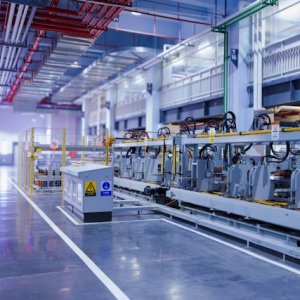
Mazatlan Aerospace Park (MZT Aerospace), located in Sinaloa, focuses on aerospace component manufacturing. It aims to attract multinational companies and create 9,000 jobs to position Sinaloa as a key player in North America's aerospace sector. |
You May Like





Most popular








