Energy Autonomy Drives Development of New Industrial Parks
The expansion of industrial infrastructure in Mexico is increasingly tied to the availability and reliability of energy supply, as the country accelerates the development of new industrial parks under the government’s long-term economic strategy. Currently, Mexico has 103 industrial park projects under development, with expected maturation through 2030 as part of the Plan México agenda. According to estimates from the Mexican Association of Industrial Parks (AMPIP), these new developments will require approximately 2.5GW of installed power generation capacity to meet their operational needs, which adds to that of the country’s existing industrial infrastructure.
Mexico currently has close to 500 operating industrial parks, which collectively will require an additional 13.2GW of electrical capacity. While about 90% of these complexes already have access to basic power supply, projected growth has intensified the debate over the need to strengthen transmission and distribution networks to sustain industrial expansion.
Against this backdrop, energy autonomy is emerging as a strategic pillar for the development of new industrial parks. On-site generation schemes under self-consumption models, which include power plants with capacities of 0.7MW or more, allow developers and operators to reduce pressure on the public grid and use it as backup rather than relying on it as their sole source of electricity.
Greater regulatory certainty for these models was reinforced with the recent publication of the Regulations of the Electricity Sector Law (RLSE). The new framework more clearly defines the conditions for self-consumption, enabling industrial users to take a more active role in generating their own energy and improving energy planning for both new developments and parks already in operation.
Among the most relevant changes is the formal incorporation of the Self-Consumption User figure, which allows individuals or legal entities to cover all or part of their electricity demand with energy generated on site. The regulation also recognizes the Self-Consumption Group, through which two or more users may share energy produced via a private network, even if they do not belong to the same corporate group.
These regulatory advances open the door to a range of operating models for industrial parks. On one hand, they allow for greater operational continuity by combining on-site generation with complementary use of the public grid. On the other, they make island-mode operations feasible, in which industrial complexes function fully autonomously, without a physical connection to transmission or distribution networks.
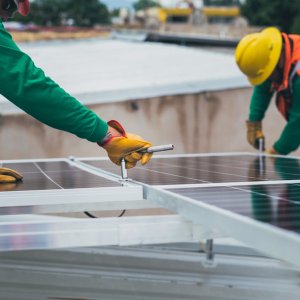
Industrial microgrids are consolidating as a technical solution for locally managing energy generation, consumption and backup. These systems typically integrate on-site generation, primarily from renewable sources such as solar photovoltaic, with battery energy storage systems (BESS) that provide stability and rapid response during demand peaks or supply disruptions. Intelligent control platforms further optimize real-time operation. They also enable productive complexes to manage energy locally through coordinated strategies developed by specialized providers such as Enlight. These systems combine renewable generation, energy storage and advanced monitoring and control technologies to enhance reliability and flexibility.
You May Like







Most popular