

Mexico-Singapore, Twin Gateways for Global Manufacturing: SMF



STORY INLINE POST







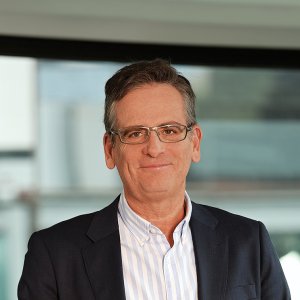
 By Fernando Mares | Journalist & Industry Analyst -
Thu, 01/15/2026 - 16:10
By Fernando Mares | Journalist & Industry Analyst -
Thu, 01/15/2026 - 16:10
Q: What is SMF’s main contribution to Singapore’s economic development today, particularly in supporting national economic plans?
A: SMF’s primary contribution today is its role as the strategic bridge between the government’s high-level economic blueprints and the ground-level execution of approximately 5,000 member companies. We are the lead advocate for the national goal to grow Singapore’s manufacturing added value by 50% by 2030. This ensures that the sector remains the bedrock of the economy, contributing approximately 20% of the GDP.
To achieve this, we drive the SHIP Framework, which is built upon four pillars. First is Sustainability, where we support the Green Plan 2030 by helping SMEs decarbonize their operations. Second is Human Capital, focusing on reskilling the workforce for Industry 4.0 and 5.0 roles. Third is Internationalization, where we assist firms in tapping into regional markets such as the Greater Bay Area and ASEAN, while also expanding into non-traditional markets in Central Europe, Asia, South America, and Africa. Finally, we prioritize Productivity by leveraging AI and robotics to offset rising labor and rental costs.
We serve as the formal voice of the industry. During national budget consultations, we provide critical feedback regarding the significant cost pressures our members face, particularly in relation to rent, electricity, and wages. Our objective is to ensure that government support measures, such as the Corporate Income Tax (CIT) Rebate or SkillsFuture grants, are targeted and effective for the specific needs of manufacturers. Through this constant dialogue, we ensure that the strategic State goals remain aligned with the operational realities of the private sector.
Q: What are the two most important recent initiatives or collaborations SMF has launched, and how are these expected to strategically impact Singapore's manufacturing sector within the next three to five years?
A: We have launched the Chief Sustainability Officer-as-a-Service (CSOaaS) initiative, which is designed to empower SMEs with the essential tools and guidance needed to integrate sustainable practices into their operations. By harnessing collective efforts and shared knowledge, CSOaaS enables SMEs to make substantial contributions to environmental stewardship and sustainable development.
Businesses that engage with this service can be recognized through our Green Excellence framework. We award the Green Excellence for Manufacturing (GEM) Mark to manufacturers and the Green Excellence for Business (GEB) Mark to non-manufacturers. This recognition operates on a three-tiered system: Bronze, Silver, and Gold. These are based on the organization’s sustainability maturity level. Marks are awarded following an independent assessment conducted by competent auditing organizations to ensure the integrity of the process.
On Jan. 17, 2025, we launched the MNC–SME Alliance. Our vision for this alliance is to provide a trusted platform for mutual growth. It serves as a space where multinational corporations (MNCs) can connect with local enterprises (LEs) that have the potential to accelerate their operations. In turn, LEs enhance their own capabilities and workforce skills by meeting the rigorous demands and standards set by MNCs.
We aim to foster more strategic collaborations between these two groups to build a globally competitive ecosystem. By driving innovation, strengthening value chains, and accelerating the adoption of advanced technologies across sectors, we ensure that global and local firms can thrive together.
Q: For Singaporean manufacturers, which sectors in Mexico offer the most attractive opportunities for nearshoring or direct investment?
A: We view Mexico as the prime destination for nearshoring, largely due to USMCA and its strategic proximity to the US market. Within this landscape, we have identified several key sectors where Singaporean expertise aligns with Mexican demand.
First is Advanced Manufacturing and Semiconductors. We see a significant opportunity to support what we call the silicon nearshoring trend, currently driven by the United States. Second is Infrastructure Development; Singaporean companies are particularly keen to participate in projects involving airports and smart city development.
Third, the Automotive and Electric Vehicle (EV) sector is critical. With Mexico being a Top 5 global vehicle exporter, Singaporean firms can provide the essential electronic and battery components required for this transition. Finally, we see great potential in Medical Technology (MedTech), leveraging the large medical device manufacturing clusters already established in Baja California. By focusing on these high-growth areas, we can build a robust bridge for investment between Singapore and Mexico.
Q: What can Mexico learn from Singapore in terms of making manufacturing processes more circular and sustainable, especially regarding greenhouse gas emissions and water stress?
A: Singapore’s transition toward a circular and sustainable manufacturing sector is anchored in a suite of integrated master plans that Mexico could look to as a reference. Central to our approach is the Singapore Green Plan 2030, a national agenda that mandates new industrial investments be best-in-class in energy and carbon efficiency. This ensures that our economic growth remains decoupled from environmental impact. This is complemented by our Manufacturing 2030 vision, which targets a 50% increase in sectoral value-added while embedding sustainability as a core pillar.
Regarding water scarcity, we have developed a closed-loop water cycle. Through the NEWater model, we implement water circularity for industrial use by recycling wastewater for manufacturing, cooling, and cleaning. We manage our water security through what we call the four national taps, which include local catchment water, imported water, NEWater, and desalinated water. This model demonstrates how industrial resilience can be maintained even under extreme water stress.
In terms of carbon management, Singapore was the first country in Southeast Asia to implement a carbon tax. This provides a clear financial incentive for manufacturers to reduce their emissions. To support this transition, we offer the Resource Efficiency Grant for Emissions (REG(E)), which is specifically designed for manufacturing facilities and data centers to undertake major energy and carbon reduction projects.
Q: In which ways can Mexican and Singaporean manufacturing companies structure their collaboration to focus on complementarity, rather than direct competition?
A: We believe the most effective collaboration is structured around a strategic value-chain split that leverages the unique strengths of both nations. In this model, front-end operations are centered around Singapore, focusing on high-value R&D, intellectual property (IP) design, and the manufacturing of precision components. Singapore’s ecosystem is specifically designed to support these capital-intensive and technologically advanced stages of production.
The back-end operations are then positioned in Mexico to take advantage of its industrial scale and geographic location. This involves large-scale assembly and localized last-mile customization specifically tailored for North American consumers. By integrating Singapore’s specialized componentry with Mexico’s robust assembly capabilities and market access, both countries avoid direct competition and instead create a seamless, highly competitive transpacific supply chain.
Q: Mexico produces many STEM graduates but lags in patent generation and R&D commercialization. What is SMF's main strategy for translating academic research and IP from universities into scalable industrial products and processes for SMEs?
A: While SMF is not a research institution, our strategy is to serve as the industrial bridge that connects SMEs with advanced R&D. We do not conduct primary research; instead, we leverage our associated services and industry partnerships to convert IP and academic concepts into market-ready industrial solutions
In 2022, we operationalized this through a Memorandum of Understanding (MoU) signed between the World Intellectual Property Organization (WIPO), SMF, and our associated service unit, the Singapore Innovation and Productivity Institute (SIPI). Through this collaboration, our members gain access to specialized training and the WIPO IP Diagnostics toolkit. These tools allow business owners to assess their company’s IP standing from a commercial perspective, moving beyond protection to using IP as an asset for business growth and international expansion.
Q: What incentives, beyond favorable tariffs, would be most attractive to Singaporean manufacturing companies considering setting up high-value production facilities in Mexico?
A: Singaporean manufacturers can leverage Plan México 2024–2030, which offers aggressive fiscal incentives specifically designed for high-value production and nearshoring. Another key incentive is accelerated depreciation. This allows companies to claim immediate deductions on investments in new fixed assets, such as machinery and equipment, acquired through September 2030. This is highly attractive for capital-intensive industries like semiconductors and automotive parts. Additionally, there are workforce training deductions for the increase in expenses related to worker training and technological innovation. This supports firms in upskilling local talent to meet high-precision manufacturing standards and encourages the development of patents and industrial certifications.
Finally, the modernized IMMEX 4.0 program and Shelter Services provide significant operational advantages. IMMEX 4.0 allows for VAT and duty-free temporary imports of raw materials and machinery. For Singaporean SMEs, shelter services are particularly valuable, as they allow a company to begin operations immediately under a provider's legal umbrella without needing to incorporate a full legal entity, which reduces administrative hurdles.
Q: Following the recent trade mission and the opening of the Singapore Embassy in Mexico City, what is the main program that SMF is planning to launch to connect Singaporean manufacturers with the Mexican market?
A: We are playing a critical enabling role in strengthening business ties through our internationalization programs, which include market access initiatives, knowledge-sharing platforms, and trade missions. We are organizing industry-specific business missions to Mexico to provide high-level networking opportunities with government and industry leaders. These missions are designed to facilitate B2B matchmaking for Singaporean manufacturers with Mexican distributors and partners while offering deep insights into regulatory frameworks and sector-specific investment incentives.
To build market connectivity, we collaborate with partners such as EnterpriseSG, the Singapore-Mexico Chamber of Commerce, and LatAmCham to provide our members with intelligence reports and legal and tax advisory.
We also host industry forums and summits, such as the Manufacturing Day Summit, which focuses on Industry 5.0 and global competitiveness. Furthermore, we support our companies with SkillsFuture grants for upskilling in automation and digitalization, which are critical for the manpower needs of Mexico’s advanced manufacturing sectors.
Finally, we educate our members on how to leverage existing trade agreements to their advantage. We focus on the benefits of the CPTPP and PASFTA for eliminating tariffs and opening access to services and procurement. We also provide guidance on using the Double Tax Avoidance Agreement for tax efficiency and the Bilateral Investment Treaty for investment protection. This comprehensive approach ensures that our manufacturers are fully prepared to navigate and succeed in the Mexican market.
Q: What does SMF seek to achieve regarding its relationship with Mexico and the Latin American region over the next five years?
A: Our objective over the next five years is to promote Mexico and Latin America as the next frontier and as essential new markets for our companies to explore. We believe that positioning Singapore and Mexico as twin gateways will enable companies to tap into two of the world’s most dynamic economic regions: ASEAN and North and Latin America. This allows businesses to effectively diversify risk and build stronger global connections.
Establishing a dual-hub strategy by leveraging Singapore and Mexico is an effective way to build resilient supply chains and access diverse growth markets. Given our strong trade agreements, recent diplomatic upgrades, including the opening of our resident embassy in Mexico City, and our complementary strengths, we expect to see accelerated collaboration. This will, in turn, drive significant growth in trade and investment between our two countries over the coming years.
The Singapore Manufacturing Federation (SMF) is Singapore’s largest organization representing the interests of manufacturing and manufacturing-related industries since 1932. SMF serves the manufacturing community by driving digitalization, innovation-led productivity, business transformation, and internationalization toward enhancing the competitiveness of its member companies.
You May Like



Most popular








