


Mexico’s SICT to Launch New Aviation Policy by Mid-2026
 By Óscar Goytia | Journalist & Industry Analyst -
Wed, 06/11/2025 - 17:51
By Óscar Goytia | Journalist & Industry Analyst -
Wed, 06/11/2025 - 17:51
Mexico’s Ministry of Infrastructure, Communications and Transport (SICT) confirmed it will present a new national aviation policy by the first half of 2026. The policy will rest on six strategic pillars designed to align Mexico’s aviation sector with emerging technologies, international standards, and long-term development goals.
“There are certain aspects of the aviation policy that must be updated and strengthened, considering technological advances in systems such as drones and sustainable fuels. We need to study the new regulations and adapt to current conditions,” said Jesús Esteva, Director, SICT, during the 60th anniversary of Airports and Auxiliary Services (ASA).
The development of the new policy is being led by the Federal Civil Aviation Agency (AFAC). “This policy is not just a list of aspirations. It is an institutional platform that aligns the Mexican state's efforts in six strategic areas.” said Miguel Vallín, Director General, AFAC. He added that the framework is designed to guide the industry through 2040.
These six strategic areas include:
Operational Safety and International Standards
Vallín highlighted the importance of adopting technologies such as ADS-B, GNSS, PBN, WAAS, and weather radar systems, alongside comprehensive training for technical and operational staff. “We must also establish robust and continuous defenses against cybersecurity threats targeting critical aviation infrastructure,” he added.
Economic Development and Connectivity
The policy seeks to fund airport expansions and modernization, boost regional aviation in underserved areas, and foster a competitive, balanced aviation ecosystem. “Investment decisions must ensure the sector remains economically competitive,” Vallín noted.
Sustainability
Mexico plans to adopt the CORSIA carbon offsetting program and tackle challenges related to the availability, production, and pricing of sustainable aviation fuel (SAF). “We aim to implement policies and incentives that promote SAF use while maintaining airline competitiveness,” Vallín said.
Aviation Human Capital
Addressing the shortage of qualified pilots and technicians, the policy includes measures to standardize training across aviation schools and digitize licensing processes. “Continuous and effective oversight of workforce competencies is critical,” Vallín stressed.
Resilience and Crisis Management
AFAC proposes a rapid response framework to ensure operational continuity during natural disasters or economic crises. “Financial contingency plans must be in place to support airlines and airports during significant disruptions,” Vallín explained.
Aviation Governance
The strategy will streamline administrative procedures and improve public aviation services by ensuring sufficient technical and human resources aligned with regulatory priorities. It also fosters collaborative governance to minimize conflicts and redundancies. “Our goal is to ensure smooth, efficient implementation,” Vallín said.
In tandem with the policy, SICT plans to strengthen key government bodies such as AFAC, SENEAM, and ASA. “We are committed to reinforcing these institutions as part of this new framework,” Esteva confirmed.
On sustainability, Esteva announced that Mexico’s first flight powered by sustainable aviation fuel is slated for late 2025. Carlos Manuel Merino Campos, ASA’s director, noted that the initial SAF supply will be imported for blending purposes. “While initial supply will fall short of demand, this gap is expected to close over the next 25 years,” Merino said.
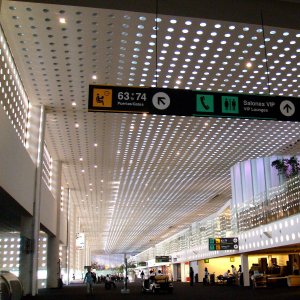
Regarding infrastructure, Vallín underscored that Mexico City International Airport (AICM) cannot increase its operations until critical upgrades are completed. “Since 2019, the airport has been operating at full capacity. Without improvements, maintaining passenger service quality will be challenging,” he concluded.
You May Like



Most popular








