


US Lifts Temporary Airspace Restrictions over the Caribbean
 By Teresa De Alba | Jr Journalist & Industry Analyst -
Wed, 01/07/2026 - 10:05
By Teresa De Alba | Jr Journalist & Industry Analyst -
Wed, 01/07/2026 - 10:05
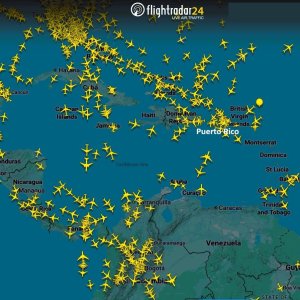
The United States has lifted temporary airspace restrictions over parts of the Caribbean, restoring normal flight operations after a brief suspension tied to security assessments, according to the US Department of Transportation. The decision, announced Jan. 4 by Transportation Secretary Sean Duffy, directly affects commercial airlines, airports, and passengers across the region.
In a statement posted on social media, Duffy said the restrictions imposed had been terminated and that airlines had been formally notified. “The temporary airspace restrictions are lifted, and normal flight operations will resume,” Duffy says. He adds that affected travelers should “contact their airline directly for the latest flight information.”
US officials say the restrictions were introduced as a precautionary measure amid heightened security concerns in the Caribbean. The decision followed a recent large-scale military operation in Venezuela, involving about 150 US aircraft, including jets, helicopters, and drones. Authorities say the goal was to reduce potential risks to civilian aviation while security agencies conducted evaluations. One official says the measures were taken “to protect passengers and flight crews during a period of elevated regional risk.” The heightened caution came less than a year after an American Eagle flight collided with a US Army helicopter while approaching Reagan National Airport in Washington.
International media reports that the suspension disrupted aviation networks across multiple Caribbean destinations. Hundreds of flights were canceled or diverted, leaving thousands of passengers stranded or facing extended delays. Several major carriers temporarily halted services to affected airports while safety reviews were underway, according to airline notices issued during the period.
With the airspace reopened, airlines have begun reinstating routes and rebuilding schedules. Industry sources say the recovery will be gradual, as aircraft and crews are repositioned and airports clear backlogs created by the disruption. Some delays and residual cancellations are expected in the near term, particularly on high-traffic routes linking the Caribbean with the United States.
US officials say the decision to lift the restrictions followed updated risk evaluations and coordination among transportation, aviation, and security agencies. “Passenger safety remains the top priority,” Duffy says, noting that authorities will continue to monitor regional conditions. Officials added that similar restrictions could be reimposed if security assessments indicate renewed risks to civilian aviation.
For airlines and airport operators, the episode underscores the operational and financial impact of short-notice airspace closures. Industry analysts say the rapid suspension and reopening highlighted the need for contingency planning, clear communication with passengers, and coordination with regulators during security-driven disruptions.
Key US carriers say they were preparing to resume Caribbean operations by Jan. 4, after airspace restrictions were lifted. United Airlines, American Airlines, Spirit Airlines, and Delta Air Lines confirmed plans to restart flights as authorities cleared the region, according to Reuters. American Airlines added more than 3,700 extra seats to and from the region in addition to restoring scheduled service. The carrier said it was operating extra flights and using larger aircraft, including widebodies, “to add as much lift as possible” to help customers affected by the FAA-mandated closure.
Flight disruption data showed significant operational impact across the Caribbean and the United States. Puerto Rico’s San Juan Luis Muñoz Marín International Airport recorded about 400 inbound and outbound flight cancellations on Jan. 3, according to FlightAware. Cyril E. King Airport in St. Thomas and Queen Beatrix International Airport in Aruba each reported around 100 cancellations. In the United States, Miami International Airport was the most affected, with more than 100 flights canceled and over 400 delays, reflecting its role as the busiest US hub for Caribbean traffic.
The Department of Transportation says it will continue to work with airlines and international partners to ensure the safe and orderly flow of air traffic across the Caribbean as operations return to normal.


Most popular








