IFAD Links Trade Barriers to Rising Food Inflation in Mexico
 By Eliza Galeana | Junior Journalist & Industry Analyst -
Mon, 07/21/2025 - 13:04
By Eliza Galeana | Junior Journalist & Industry Analyst -
Mon, 07/21/2025 - 13:04
The UN International Fund for Agricultural Development (IFAD) warns that tariff uncertainty and trade barriers are fueling food inflation in Mexico. The agency also highlights the need to protect small farmers and strengthen rural economies through investment in sustainable agriculture, a goal it supports with projects aimed at boosting resilience and integrating value chains in the country.
Álvaro Lario, IFAD President, stressed that international dynamics are already reflected in price increases for products such as cocoa and coffee. According to data from INEGI, roasted coffee posted the highest food-related inflation in June, with a 23.78% annual increase, its highest rate since March 1998. Moreover, instant coffee followed with a 16.70% annual inflation, while liquid chocolate rose by 14.37%.
Lario warned that the tariffs imposed by President Trump on Mexico’s agri-food industry will have short and medium-term consequences, as it remains unclear how long they will last. This uncertainty affects value chains and complicates investment planning.
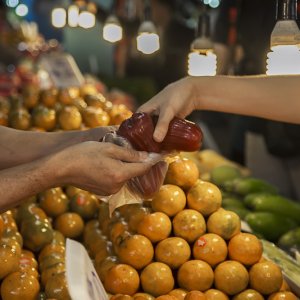
The latest measure is a 17.09% tariff on Mexican tomato exports to the United States, which took effect on July 14, 2025, as reported by MBN. The United States buys 99% of Mexico’s tomato exports, making this a high-stakes move. Experts warn it could jeopardize up to 50,000 US jobs in border states like Arizona and Texas and heavily impact Mexico’s tomato market. Additionally, President Trump has threatened to impose a 30% tariff on Mexican products starting Aug. 1.
To navigate this situation, Lario emphasized that Mexico’s government must focus not only on countering US trade actions but also on protecting small farmers and rural communities. “It is important to create opportunities not just for self-consumption but also for the domestic market, integrating value chains and having a clear investment strategy,” he said.
The UN representative noted that Mexican government investment could be channeled, for example, into storage infrastructure or rural and secondary roads. He also pointed out that Mexico, despite being an upper-middle-income country, faces significant inequality, with rural poverty at 48.8%, compared to 32.2% in urban areas.
During his visit to Mexico, Lario met with Alicia Bárcena, Minister of Environment and Natural Resources (SEMARNAT), and Julio Berdegué, Minister of Agriculture and Rural Development (SADER). He stressed that investing in small producers and sustainable food systems is key to strengthening food sovereignty. “We are committed to supporting the Mexican government’s efforts to boost local agricultural production and improve market access for producers,” he said.
IFAD’s current projects in Mexico align with national policies aimed at fostering rural economic growth and climate resilience. The Cuenca Balsas (Balsas Baisin) project, for instance, supports rural communities engaged mainly in sustainable forest resource management. The initiative promotes processing, storage, and marketing to add value, create jobs, and increase income. It also addresses climate change through watershed forest restoration, payment for environmental services, and the formation of community fire brigades.
The organization also backs the Agribiomex project, led by SADER, which aims to conserve biodiversity and promote sustainable agriculture. The project seeks to curb deforestation linked to livestock farming and agricultural expansion. By the end of the project, sustainable farming practices are expected to be implemented on 900,000ha.
IFAD highlighted that Cuenca Balsas is the first project by a Mexican federal entity to receive financing from the Green Climate Fund, while Agribiomex is the first project directly implemented by SADER with resources from the Global Environment Facility. Since its founding in 1977, IFAD has turned every dollar contributed by its 180 member states, including Mexico, into six dollars of on-the-ground investment, the entity underscored.
Since 1980, IFAD’s partnership with Mexico has led to the implementation of 12 rural development projects, with total investments of US$500 million, including its own financing and that of other institutions. These projects have supported job creation, income generation, and community empowerment.
You May Like





Most popular