


Julio Berdegué Appointed New Ministry of Agriculture
 By Eliza Galeana | Junior Journalist & Industry Analyst -
Fri, 06/21/2024 - 15:19
By Eliza Galeana | Junior Journalist & Industry Analyst -
Fri, 06/21/2024 - 15:19
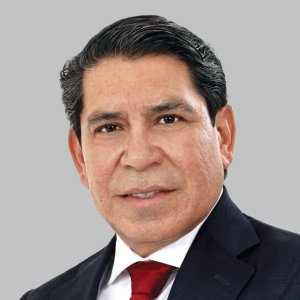
Julio Berdegué, the appointed Ministry of Agriculture for the 2024-2030 term, has an extensive professional background in organizations such as FAO and the International Corn and Wheat Improvement Center (CIMMYT). His administration’s priorities include ensuring the well-being of rural communities, attending the water crisis, and sustainable food production.
This week, president-elect Claudia Sheinbaum introduced six members of her cabinet, who will join her in governing the country during her upcoming administration. Among them is Julio Berdegué, the new head of the Ministry of Agriculture and Rural Development (SADER). Berdegué began his academic career in the University of Tucson, Arizona, where he earned a Bachelor's degree in Agricultural Sciences. He later obtained a Master's degree in Agronomy from the University of California and a Ph.D. in Social Sciences from Wageningen University in the Netherlands. Additionally, he is a Ph.D. candidate in Genetics at the University of California.
A highlight of his professional career is his role as Deputy Director General and Regional Representative of FAO for Latin America and the Caribbean, which he held from 2017 to 2022. In this role, he worked on eradicating hunger and inequality in the region, with a special focus on vulnerable groups such as women and migrants. To address these issues, Berdegué believes that large-scale transformation is needed, not just isolated projects. “We need territorial cohesion policies that promote equal opportunities between regions, fiscal policies that limit extreme wealth accumulation, and policies against gender and ethnic inequality,” he stated during a press conference in 2017.
Berdegué has worked in some of the most important national and regional organizations dedicated to rural development, including the Inter-American Institute for Cooperation on Agriculture (IICA); the International Fund for Agricultural Development (IFAD); CIMMYT, where he was president from 2008 to 2011; the International Institute for Environment and Development (IIED); and the Latin American Center for Rural Development in Chile. Berdegué also served as coordinator of the Food Sovereignty and Rural Development section in “Dialogues for Transformation” during Sheinbaum’s presidential campaign. This initiative aimed to include scientists, businesspeople, and specialists in forming MORENA’s national project.
Following his recent appointment, Berdegué emphasized that the guiding principle of SADER will be food sovereignty, with a particular focus on the national production of white corn. This gives continuity to President López Obradors restrictive policy for the importation of genetically modified corn. “Dr. Sheinbaum has made a commitment to all Mexicans that white corn, the heart of our national diet, will be produced entirely by Mexican farmers and free of GMOs during her administration,” he assured.
Other essential topics for the soon-to-be agriculture minister are the well-being of rural communities, the water crisis, and the strengthening of agricultural production. “The president-elect has set three major priorities for us. First, addressing rural populations living in poverty and extreme poverty; second, generating solutions for the water crisis. This is not a matter of whether it rains or not; it is a deep structural problem that we must face with solutions. Finally, the production of healthy, nutritious, safe, and wholesome food,” Berdegué highlighted during an interview with López-Dóriga for Radio Fórmula.
The official affirmed that Mexico must make a tremendous effort to tackle climate change, which has severely impacted the country with floods and droughts in the past years. “We need a profound transformation in agriculture, livestock, and fisheries. Regarding water, we must adjust to a new reality, as it will become increasingly scarce due to climate change. We must work toward equitable, efficient, and just access to water, adapted to our country’s circumstances,” commented Berdegué after leaving the Interactive Museum of Economics, where Sheinbaum’s cabinet presentation event took place.
You May Like



Most popular








