


Navigating Challenges, Opportunities: Agri-Food Industry in 2023
 By Eliza Galeana | Junior Journalist & Industry Analyst -
Mon, 01/01/2024 - 07:00
By Eliza Galeana | Junior Journalist & Industry Analyst -
Mon, 01/01/2024 - 07:00
In 2023, the Mexican agrifood industry was marked by escalating tensions with the US due to the GMO corn ban, triggering a dispute panel request and economic uncertainty. Meanwhile, Brazil emerged as a key trading partner for Mexico, experiencing a 61.2% surge in food exports to the latter country. Moreover, food inflation surged, fueled by geopolitical conflicts and adverse climate conditions, including drought.
The battle against transgenic corn has been ongoing for years, originating in 2020 when President López Obrador issued a decree prohibiting the production and importation of GMO corn, along with a ban on the use of glyphosate herbicides by 2024. In December 2022, in response to the looming threat of legal actions from the neighboring government, the president proposed to extend the ban's deadline until 2025, a year later than initially anticipated. However, in January of this year, officials from the United States emphasized that Mexico's plan to postpone the ban was still insufficient to meet the country’s needs.
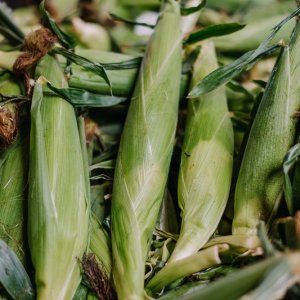
On Feb. 13, 2023, a second decree was issued, with the aim of establishing clear objectives and eliminating any possible imprecisions that could lead to misinterpretations. The revised decree overrides the original one, allowing the use of GMO yellow corn for animal feed and in the cosmetic, paper, and textile industries. However, the ban stands for corn intended for human consumption. The Ministry of Economy emphasized that this measure has no adverse effects on trade agreements, as Mexico is fully self-sufficient in non-genetically modified white corn.
In response to these changes, the United States said it was disappointed with the Mexican Government's decision, arguing that the decree was not grounded on scientific evidence. In the past, the Mexican government had repeatedly invited its neighbor country to work together on scientific research regarding the potential negative effects of GM corn on animal and human health. Nonetheless, the United States denied this request and made it clear it will not participate in new scientific studies with Mexico.
Given the inability to reach an agreement, in June, the United States requested formal trade consultations with Mexico under the USMCA, arguing that the country’s policy on transgenics appeared to be inconsistent with its obligations outlined in the treaty. After 75 days of formal consultations, which failed to resolve the parties' differences over corn, the US Trade Representative Office (USTR) requested a dispute settlement panel on Aug. 17, 2023. In October, Raquel Buenrostro, Economy Minister pointed out that the final resolution of the panel will most likely be announced in March 2024.
In the past, USMCA dispute panels have been resolved in favor of plaintiffs. In 2022, the US won the dispute over Canadian dairy quotas, while Mexico and Canada prevailed in the automotive rules of origin case against the US. Regarding the GMO corn panel, there are divergent opinions, however. Specialists from the Confederation of Industrial Chambers (CONCAMIN) suggest Mexico might lose due to insufficient evidence on the grain's health risks. This could result in tariffs on the food sector, impacting the Mexican economy.
On the other hand, a study by UNAM asserts that Mexico can maintain its ban on GMO corn imports if it has legitimate concerns about public health or the environment. Likewise, US farmers echoing Mexico's stance argue against promoting transgenic corn exports, seeing it as supporting multinational seed corporations rather than producers. Whatever the outcome may be, President López Obrador pledged to abide by the panel's results. "We will agree with the resolution that is issued once we present evidence and everything is discussed,” he said during a morning conference in August.
Agricultural Trade Surge in 2023
Entering 2023, Mexico’s agri-food trade balance registered a surplus of US$955 million, according to SADER. Between January-February 2023, agricultural and agro-industrial exports amounted to US$8.3 billion. By July the figures had gone up to US$31.4 billion, reflecting a 5.16% yearly increase. By October, Mexico’s agri-food trade balance registered a surplus of US$6.27 billion, with beer, tequila, and avocado ranking as the top three selling products at US$5.09 billion, US$3.8 billion, and US$2.5 billion, respectively.
Brazil stood out as a crucial agrifood partner for Mexico over the year. Following a significant 61.2% year-on-year increase in food exports from Brazil in 2022 boosted by the Mexican government’s Package Against Inflation and Need (PACIC), the two countries collaborated in January to expand market opportunities for producers. After successful negotiations, Mexico approved the import of pork and pork-derived products from Brazil in February. However, heightened meat imports led to a trade deficit of US$1.5 billion for the Mexican industry in the first half of 2023.
From January to July 2023, Brazil exported 119t of beef, 6,525t of pork and pork-derived products, and nearly 95,554t of poultry meat to Mexico. Local producers voiced concerns about being left unprotected as foreign products dominated the market. In response to protests, Mexico recently suspended pork imports from Brazil, a move criticized as protectionist by the Brazilian Association of Animal Protein (ABPA).
Mexico's agriculture sector experienced significant benefits through diverse trade connections with different countries, besides Brazil. In 2022, the United States, Mexico's primary trading partner, continued to be the top destination for Mexican agri-food products, contributing to gains exceeding US$40 billion. US exports to Mexico also rose by 11.7%. Moreover, Mexico further strengthened its global trade presence through bilateral agreements with Argentina, Japan, France, Belize, Iraq, Qatar, Uruguay, Indonesia, and the United Arab Emirates, enhancing global trade dynamics for the sector.
Food Inflation: Ongoing Hurdle
While trade advances, the country has been battling with global inflationary trends. In January 2023, the government introduced PACIC III, expanding the basic food basket to include 100 additional products, with the program set to remain in effect until December 2023. In this context, the Small Traders Commercial Alliance (ANPEC) remained skeptical regarding the program's effectiveness, citing previous unfavorable outcomes.
In February 2023, the price of eggs skyrocketed, even triggering a series of egg smuggling events across the Mexican border with the United States. In Mexico, prices climbed above MX$50/kg, due to a product shortage driven by an outbreak of avian influenza in the US, Europe and Japan. PROFECO, however, reassured the public that elevated prices were merely a result of seasonality, as chickens lay fewer eggs during winter. Nonetheless, in June, ANPEC issued a warning that the price of eggs remained elevated, surpassing MX$65/kg in some states. The increase in prices was attributed to hoarding and price speculation within the supply chain, as explained by the Agricultural Markets Advisory Group (GCMA)
In August, food inflation saw an annual rise of 4.16% according to the National Council for the Evaluation of Social Development Policies (CONEVAL) price index. GCMA reported that prices of animal proteins had grown over the past year with beef, sausage and chicken meat prices ticking up by 2%.
In November, general food prices experienced a year-on-year price increase of 6.78%, reported INEGI. In this regard, Banxico highlighted that it has minimal influence on the performance of food prices, given their volatility and association with external factors such as climatic phenomena.
At the global scale, food prices experienced fluctuations throughout the year, primarily influenced by extreme climatic conditions and geopolitical conflicts. A World Bank report underscored that food inflation surpasses general inflation in 80% of the world's countries, significantly impacting vulnerable regions like Africa, South and Central Asia, and Latin America.
Drought Takes Toll on Mexico's Agriculture Sector
Mexico has been no stranger to extreme climatic conditions. By the beginning of 2023, 80% of the country had experienced the impact of insufficient rainfall, according to the National Meteorological Service (SMN). A study conducted by the National Water Commission (CONAGUA) highlighted that the states of Queretaro, Aguascalientes, Mexico City, Guanajuato, Jalisco, and Nuevo Leon were the most affected by drought conditions.
To reverse this situation, the Mexican government launched a cloud seeding program in March. By July, the final phase of the project was executed, covering 62 municipalities in the northern region of the country. According to the National Arid Zones Commission (CONAZA), cloud seeding projects have demonstrated effectiveness, with a notable average increase of 45.1% in excess rainfall in 2021. However, the scientific community remains cautious, emphasizing that cloud seeding is not a solution to drought.
The agriculture sector is particularly vulnerable to drought, considering that this industry accounts for 70% of global water use. Moreover, in Mexico, about 73% of the crops depend solely on rainfall. In October, SADER reported that approximately 502,550.14ha of farmland had been affected by this climate phenomenon since the beginning of the year. In this context, the National Agricultural Council (CNA), recognized that 2023 had been the driest year for Mexico's agricultural sector since 1957.
With this problem in mind, SADER launched a pilot project consisting of digital monitoring systems to provide information on soil moisture and nutrient content. In its initial phase, this initiative will benefit 4,000 farmers and cover 13,000ha of grain fields, stressed Victor Villalobos, Ministry of Agriculture, during his participation at the High-Level Ministerial Dialogue on the establishment of water-resilient food systems held at COP28.
For 2024, CNA predicts a rise in prices for essential food items, including sugar, beans, corn, and meat, as a direct result of drought. However, the group assured that there's no need to be concerned about food shortages, since food products can be easily imported from countries like the United States, if needed.
You May Like





Most popular








