


Canada, China Reach Preliminary Deal to Ease EV Tariffs
 By Teresa De Alba | Jr Journalist & Industry Analyst -
Fri, 01/16/2026 - 13:38
By Teresa De Alba | Jr Journalist & Industry Analyst -
Fri, 01/16/2026 - 13:38
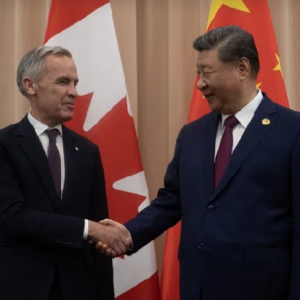
Canada and China have reached a preliminary trade agreement to ease tariffs on electric vehicles and canola, Canadian Prime Minister Mark Carney said, outlining early steps to reduce trade frictions between the two countries. The announcement followed meetings in Beijing between Carney and senior Chinese officials, including President Xi Jinping, and marked the first visit by a Canadian prime minister to China since 2017.
Under the initial framework, Canada will allow the import of up to 49,000 Chinese-made electric vehicles subject to a 6.1% most-favored-nation tariff. Carney did not specify a timeline for the measure. “This represents a return to pre-friction levels, but within an agreement that promises much more for Canadians,” he told reporters in Beijing.
The revised tariff contrasts with the 100% duty imposed by Canada on Chinese electric vehicles in 2024, following similar measures taken by the United States. In 2023, China exported 41,678 electric vehicles to Canada, according to trade data cited by Carney. The earlier tariff was introduced amid concerns that Chinese manufacturers benefit from state subsidies that distort global competition.
Carney said the new approach reflects a broader strategy to develop Canada’s domestic electric vehicle industry while maintaining access to global supply chains. “For Canada to build a competitive electric vehicle sector, we will need to learn from innovative partners, access their supply chains, and expand domestic demand,” he said.
The agreement also addresses canola, one of Canada’s key agricultural exports, which has faced trade barriers in China in recent years. While Carney did not provide details on tariff adjustments for canola, he said both governments committed to removing obstacles and restoring more predictable market access.
Beyond tariffs, Carney highlighted potential cooperation in clean energy, particularly in energy storage and low-carbon power generation. He said Canada is seeking a deeper partnership with China to support investment flows and industrial development. According to Carney, the electric vehicle arrangement could lead to “considerable” Chinese investment in Canada’s automotive sector, supporting jobs and manufacturing capacity.
Carney added that closer cooperation would also advance Canada’s climate objectives, saying the policy direction is intended to “create solid career paths in Canada and accelerate our transition toward a net-zero emissions future."
You May Like




Most popular








