Olinia to Debut During FIFA World Cup: Sheinbaum
The Mexican government’s EV project Olinia will enter a decisive phase in 2026, as authorities prepare to unveil pilot models and define the regulatory framework needed for market entry, states President Claudia Sheinbaum. The project, led by federal institutions, aims to introduce small EVs focused on short-distance urban mobility, with an official presentation scheduled for June 2026.
Sheinbaum says she intends to use an Olinia vehicle during the opening of the 2026 FIFA World Cup. “We are going to arrive in one or several Olinia vehicles so we can show them to the world,” she states.
According to government information, a pilot fleet of Olinia vehicles is expected to be introduced in June 2026. The project is being developed by the Ministry of Science, Humanities, Technology, and Innovation, along with the Instituto Tecnológico de México, the Instituto Politécnico Nacional, and the Universidad Nacional Autónoma de México (UNAM).
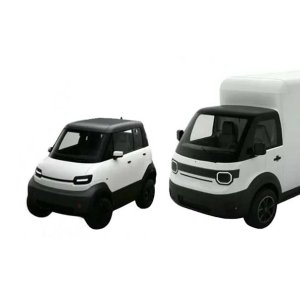
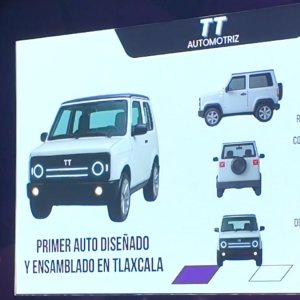
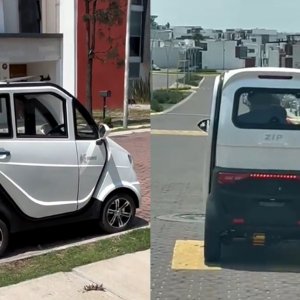
Sheinbaum describes Olinia as a “minivehicle” designed for neighborhood-level mobility, with a maximum speed of up to 50km/h. The project includes two main models: one for passengers and another for work-related uses such as last-mile deliveries. “It is focused on neighborhood mobility,” says Sheinbaum. The vehicle is being developed in Puebla by about 70 professors and researchers. The broader academic effort includes over 200 specialists.
Industry specialists say Olinia is targeting a segment not covered by traditional automotive manufacturing in Mexico, which ranks as the world’s sixth-largest producer of light vehicles. “It is not going to replace cars, but rather mototaxis and very local mobility,” says Eric Ramírez, Latin America and Caribbean Director, Urban Science, to Expansión. “It is for short distances with very small capacity.”
Olinia is expected to compete primarily with imported electric motorcycles and scooters, mainly from China, which have expanded rapidly in Mexico. These vehicles currently face import tariffs of between 0% and 15%, though the rate is set to rise to 35% starting Jan. 1.
Authorities have said Olinia vehicles could be priced between MX$90,000 (US$5,000) and MX$150,000 (US$8,333), though no official pricing has been announced.
Sheinbaum says that Olinia was not conceived to compete with EV manufacturers such as Tesla, but as a project focused on everyday urban mobility for short city trips. She says safety and accessibility are priorities in Olinia’s design. The vehicle is expected to produce little noise, release zero polluting emissions, and use a charging system compatible with conventional electrical outlets. The government is also working to ensure operating costs are lower than those of a gasoline-powered car and even lower than a motorcycle.
Regulation remains a key challenge. “One of the first things we are doing in Olinia is defining normatively what a minivehicle is,” says Roberto Capuano, Project Coordinator, Olinia. He added that authorities are working with the Ministry of Economy to create a category that ensures safety standards, though no timeline has been set.
You May Like




Most popular