

Padilla: Infrastructure, Professionalism Needed for Growth


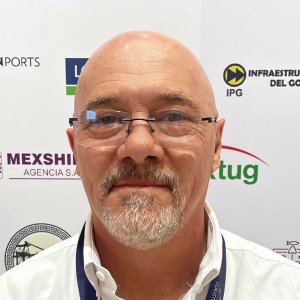
 By Reneé Lerma | Journalist & Industry Analyst -
Wed, 01/03/2024 - 17:05
By Reneé Lerma | Journalist & Industry Analyst -
Wed, 01/03/2024 - 17:05
Q: What are the most significant challenges the automotive and logistics industries are facing and how do you help to address them?
A: The port provides import and export services for virtually all automotive brands. We are primarily focused on productivity and service efficiency. We do not want cargo to stay at the port; we want it to flow. It is essential to manage cargo flow efficiently. Lázaro Cárdenas Port experiences several high-demand periods, especially in October with the arrival of ships and preparations for the holiday season. We must ensure that the flow of inbound and outbound cargo is balanced to prevent bottlenecks. The Port Community focuses on solving problems when issues arise. For example, we recently experienced electrical failures and implemented contingency plans to avoid them in the future.
Growth demands more infrastructure and greater professionalism in the transportation sector, both among operators and entrepreneurs. We are reaching agreements with local universities and schools to professionalize our operators. We are also developing a plan in collaboration with the federal and state governments to spread awareness of the port's importance in Guanajuato. We are working on effective communication to address problems quickly. Coordination among different stakeholders is essential to overcome challenges and avoid discrediting the port.
The Lázaro Cardenas Port Community is based on collaborative management of the port community to solve problems and improve efficiency. We work together to complement each other and overcome obstacles without placing blame. We have a logistics committee that meets regularly to address issues and monitor their resolution. Our relationship with customs authorities is good and we work together to solve problems within our capabilities. Our goal is to manage cargo efficiently and to proactively resolve issues for the benefit of the port community.
Q: How does the community address challenges caused by emerging trends such as nearshoring, which is expected to generate additional demand?
A: The Lázaro Cárdenas Port is observing greater interest in logistics infrastructure investment as a result of nearshoring, specifically in the construction of storage yards outside the port to meet the needs of transporters and port services. La Palma Island, which is under the port's administration, is being developed to establish warehouses to separate cargo. This process has been underway since November 2023 and is attracting investors interested in creating cargo-handling infrastructure.
Port terminals are taking steps to meet the growing demand associated with nearshoring. APM Terminals, for example, has announced a new investment phase to increase its storage and cargo processing capacity. Hutchison Port Holdings is also considering similar steps to increase capacity and acquire more machinery.
We are not seeing a direct focus on manufacturing investment. However, we are discussing with the state government and other stakeholders the possibility of establishing local industrial parks in Michoacan. The goal is to encourage investment in the region.
Q: How is the increase in demand affecting port operations and investment decisions?
A: The limited availability of equipment to increase transport capacity, such as trailers, is a challenge. Demand has outpaced supply, leading to delays in equipment acquisition. We are also seeing changes in company ownership, raising questions about future investments and equipment acquisitions in 2024. Plans are in motion to bring in more machinery and equipment, especially the equipment used in rail transport, due to the increase in demand we experienced recently.
Investments are also underway for vehicle storage yards but this process takes time, as it can take several months for these areas to be fully operational. The response to this growing demand is not immediate and requires careful planning.
Q: What collaborations are you developing among the industry, government and academia to expand the port’s capabilities?
A: We have identified a need to establish more partnerships with universities. We have partnerships with the state government, which is helping us to train truck operators. The Universidad Politécnica de Lázaro Cárdenas has invested in machinery, including crane and truck operator simulators, and it is about to sign an agreement to use these simulators. We are working together with a private institute to offer simulation practice sessions. We recently launched a technical course focused on professionalizing truck operators, which is the first of its kind. We also have agreements with some customs agencies to train their personnel in foreign trade.
There is still a long way to go and a great deal of work to be done because the port is experiencing exceptional growth. While we have always maintained double-digit growth, this year, we are seeing exponential growth in cargo imports. Therefore, we need to intensify our efforts to establish strong partnerships with public and private institutions, as well as allocate more resources for personnel training. We are also facing a shortage of skilled labor, leading us to consider attracting talent from other regions.
Q: What are the objectives and goals that your organization has set for the rest of 2023 and the next year?
A: The numbers are really encouraging, as the port experienced significant growth in all aspects. In terms of import containers, we will likely reach the 1 million container mark if we continue working with the same dedication. Our current focus is on improving operational efficiency. We established key performance indicators to measure our productivity, such as the cargo dwell time at the port and container processing time. The average dwell time is about 12 to 13 days, which is above our previous quality benchmark of seven days. We are averaging 3.5 hours in container processing time, which is slightly over our previous quality benchmark of 2.5 hours. We are working hard to reduce these times in the coming year. To achieve this, we have identified bottlenecks that require investments in infrastructure and systems. The integration of blockchain technology is one of the areas we plan to address.
Most popular








