

Bring Holiday Retail Cheer Into the New Year





 By Sergio Thome | Regional General Manager - Latin America -
Tue, 11/04/2025 - 07:00
By Sergio Thome | Regional General Manager - Latin America -
Tue, 11/04/2025 - 07:00
As the days get shorter and the air gets colder, shoppers and retailers have their sights set on the holiday shopping season. For consumers, the goal is to find the right gift at the right price, creating memories that will last a lifetime. For retailers, though, the stakes are a bit higher.
Traditionally, the holiday season represents a make-or-break time for retail businesses, with the late-year rush offering a last chance to move metrics toward their fiscal year targets. It’s also a chance to lay the foundation for future success, as Sensormatic Solutions research suggests that 77% of retailers who overperform during the holidays will continue to lead their categories throughout the following year.
Here's what retailers need to know to get it right this year.
Traffic Patterns Are Changing
Black Friday has become ingrained in Latin American retail markets over the past decade, with the annual shopping holiday topping Brazil’s busiest days list in 2022, 2023 and 2024. In 2024, the number of Black Friday transactions in Brazil increased by 76% year-over-year. The fourth Friday in November has also become a fixture in Costa Rica and Colombia’s retail calendars during this time. However, changing consumer preferences and the timing of this year’s holidays may change that this year.
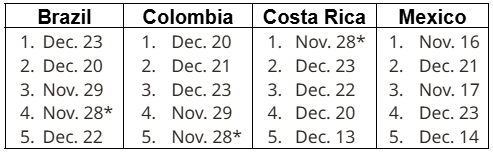
While Black Friday (Nov. 28) will still be important across the region, only Costa Rican retailers are expected to see the late-November date top their peak days. In both Brazil and Colombia, Nov. 29 — the day after Black Friday — is expected to be the peak of November traffic. In Mexico, Buen Fin will be the main driver of holiday traffic, as in years past.
The week leading up to Christmas Day will be a major driver of holiday shopping traffic across the region this year. In Brazil, Colombia, Costa Rica and Mexico, Tuesday, Dec. 23 ranks among the Top 5 busiest shopping days with Dec. 20, 21 and 22 making appearances on several of the countries’ Top 5 lists as well.
Price Is the Priority
Given the current global economic landscape, deals and promotions are likely to shape holiday shopping behavior more significantly this year. A recent report on consumer spending in Mexico found that the majority of shoppers have high levels of concern about their personal finances. Though more than half (52%) are optimistic about their financial futures, the present is marked by volatility and the rising cost of living, which will no doubt affect shopping habits in November and December.
That’s not to say that holiday shoppers won’t be spending. Projections show that spending throughout the holiday season will be on par with 2024 revenue. However, with economic anxieties coloring decisions, shoppers are likely to be more selective when choosing where and when to spend. Innova’s research indicates that quality, sustainability, and necessity are the key factors that influence purchasing decisions in Mexico.
Omnichannel Offers Big Opportunities
Customers are focused on price and convenience, which is driving increased interest in online orders, but not necessarily traditional e-commerce. Buy online, pickup in-store (BOPIS) and curbside pickup options have emerged as favorites among shoppers in Latin America and the United States this year, as these alternatives allow shoppers the ease of online ordering with the immediacy of in-store shopping. BOPIS also offers shoppers the ability to compare prices across stores and helps them resist the temptation to spend more than they intended, a benefit noted by American back-to-school shoppers earlier this year.
Even so, increased pickups this holiday season offer retailers a significant opportunity for tailored promotions, strategic upselling, and customer interaction. Retailers that streamline pickups, anticipate needs, and prioritize accurate fulfillment of online orders will likely see the fruits of their hard work in the form of increased revenue and customer loyalty.
Knowing what’s to come is only the first step toward preparing for it. To effectively navigate the upcoming rush, retailers need to look within their own operations for opportunities to improve both front- and back-end practices in ways that align with their customers’ preferences.
End-to-end analytics systems become increasingly vital in this environment. Utilizing RFID tags, IoT devices, and sophisticated AI models allows retailers to track:
- Customer behavior and sentiment. Understanding shoppers’ expectations and actions.
- Traffic patterns and wait times. Insight into when and where people are shopping.
- Supply chain and inventory. What products are on shelves and in stock (or, equally importantly, what products are not).
- Waste, shrink and bottlenecks. Understanding total retail loss from source to storefront.
- Trends and changes over time. The way shopper patterns evolve from day to day, week to week during the holiday season and beyond.
These data points come together to provide a comprehensive picture of how each decision impacts the rest of the enterprise, guiding more precise and informed holiday planning. Real-time capabilities also enable the level of agility necessary to keep up with changes and unexpected disruptions.
The holiday season undoubtedly challenges retailers, as more traffic, sales, and promotions mean more chances for crowds, out-of-stocks, customer dissatisfaction, and more. However, these features also make the final weeks of the year a valuable opportunity to set a brand apart from the rest. While technology can’t do it all, it can make the work of this busy time simpler, providing retailers with actionable insights to use as a guide to delivering holiday cheer that sets the tone for a successful new year.


Most popular








