

Sustainability, Community Engagement for a Better Future



STORY INLINE POST





 By Perla Velasco | Journalist & Industry Analyst -
Wed, 09/27/2023 - 14:40
By Perla Velasco | Journalist & Industry Analyst -
Wed, 09/27/2023 - 14:40
Q: How does FEMSA contribute to the economic development of Mexico and help its communities?
A: FEMSA’s business model not only focuses on maximizing shareholder value but also seeks to make a positive impact to the community. All our business units focus on developing ethical business practices. FEMSA has about 50,000 suppliers across all its business units. Thus, we seek to have a close and positive relationship throughout the value chain, both upstream with suppliers and downstream with customers. To achieve this, we established our Strategic Sustainability Framework, which clearly defines the priority topics for the company.
Q: How do you ensure that your other brands, such as OXXO, also incorporate these socially conscious strategies?
A: All our businesses are aligned to the same sustainability strategy based on three fundamental axes: Our Planet, Our Community and Our People. These axes have a foundation based on Governance, Ethics and Values. Our Planet has three priority areas: the first is climate action, the second is circular economy and the third is water management. Our Community axis prioritizes community well-being, economic development and sustainable sourcing, seeking to impact the value chain. We firmly believe that the collaborative work between our operations and suppliers brings great benefits to communities and the environment.
Our People are a fundamental element of our business. We are committed to the integral development of our employees and to having respectful, collaborative and inclusive work environments. We have three priority themes in this area: inclusion and diversity, integral well-being and human and labor rights.
Q: How can large companies like FEMSA help SMEs, which sometimes need a great deal of guidance from bigger companies?
A: Large companies have an important role to play in seeking collaboration with our suppliers and especially with SMEs. FEMSA has a Sustainable Sourcing Committee, which develops different mechanisms to communicate and share our practices and objectives with suppliers. We provide them with detailed information on concepts such as the circular economy or the concept of climate change. Our Comparte newsletter, distributed to all FEMSA suppliers, addresses these issues in "The Sustainable Sourcing Corner" section. If suppliers are informed about our activities, they can join us in some initiatives. The more they participate, the more we will be able to make a difference in our environment and communities.
Q: How does FEMSA communicate its strategy to the public and to smaller companies?
A: Our annual report goes into great detail about our performance on sustainability, reporting all information on sustainability variables following the Global Reporting Initiative (GRI) standards. These standards seek to homologate reporting related to emissions, water consumption, renewable energy and waste.
Additionally, our website’s sustainability section also provides detailed information about our strategy, goals and the status of our initiatives. So far, the Comparte newsletter has reached 12,000 to 13,000 suppliers, informing them of our initiatives and priorities.
Q: What are your goals for the coming year and what are FEMSA’s sustainability goals?
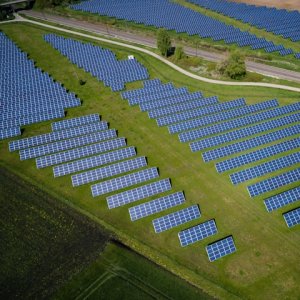
A: We have several corporate goals, one of them targeting renewable energy. Climate change is a global issue and its effects are becoming clearer around the world, impacting agriculture, mobility and people's daily lives. One of our corporate goals is to use clean renewable energy that does not require the burning of fossil fuels. About 58% of our energy consumption currently comes from renewable sources but we want to achieve an 85% rate by 2030. We use wind farms and photovoltaic solar panels in Mexico, Argentina, Guatemala and many other countries. We seek to promote the use of renewable energy both in our operations and in our value chain by, for example, presenting financing options for solar panel installation to our small retailer customers. We are also working with suppliers, helping them to seek alternative financing and technical support to install these systems.
We also have a zero operational waste-to landfill goal. Landfills generate CO2 and cause health and labor problems for communities, as children sometimes scavenge on them. For this reason, we have a goal of zero operational waste to landfill by 2030, which currently stands at 70%. We also have an ambitious goal in the area of equity and inclusion, as we seek to have 40% female participation in executive positions by 2030. We have reached 29% female participation and our goal is to ensure that all our businesses have the right processes in place to provide greater equity in decision-making, ensuring that women have equal opportunities to advance.
Q: How do you expect environmental, social and governance (ESG) issues to evolve in Mexico?
A: In Mexico, there is great willingness to work collaboratively to address these issues. There are many challenges, and it is not enough for just one person or one company to contribute; the country requires the participation of many. ESG issues are becoming more relevant in the country and more companies are participating in addressing them. The consumer recognizes the importance of these issues and can influence decision-making when buying products and services.
Society recognizes the importance of these issues and FEMSA will continue to support the integral well-being of people and healthy and responsible habits. We are optimistic about the future.
You May Like






Most popular








