

Bridges, Not Silos: Lubricating a Country’s Innovation Engine


STORY INLINE POST




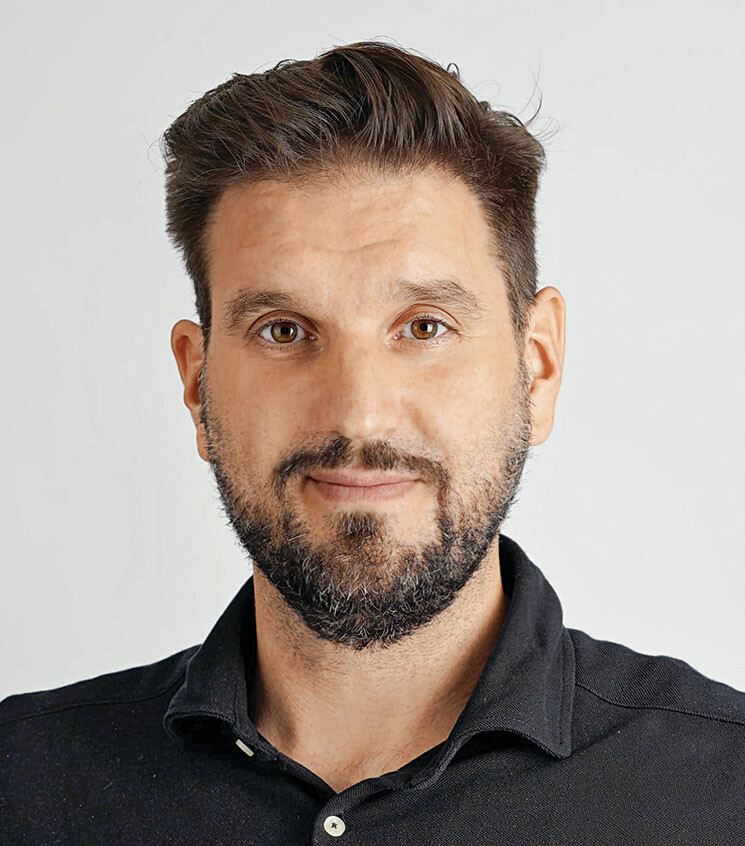 By Daniel Pandza | Community Innovation Catalyst -
Thu, 05/01/2025 - 07:30
By Daniel Pandza | Community Innovation Catalyst -
Thu, 05/01/2025 - 07:30
What if the real challenge to innovation in Mexico isn't a lack of ideas or talent, but friction?
In these VUCA times — volatile, uncertain, complex, and ambiguous — we often look for new technologies, new models, or new tools to drive progress. But what if what’s really holding us back is harder to see? Invisible forces like internal silos, rigid hierarchies, or disjointed efforts between people who should be working together.
Over the past year, I’ve had the privilege of reconnecting with innovation leaders across Mexico. After spending nearly a decade immersed in the culture of Interlub Group, where I now serve as global director of innovation partnerships, I’ve had a front-row seat to what innovation looks like when it’s led by an unconventional CEO and a values-driven organization. But that deep immersion also limited my exposure to how innovation practices were evolving beyond our walls.
That changed, thanks to a movement sparked by Cristian Granados at EGADE Business School.
Cristian — professor, researcher, connector — didn’t just create another network. He brought together over 100 innovation leaders from across industries and regions under the umbrella of the EGADE Innovation Community. What sets this community apart is not just who is involved, but how its members show up.
The most valuable leaders don’t just present slide decks or share KPIs. They share experiences. They bring real challenges to the table. They listen. And they do something we’re not used to seeing enough of in corporate Mexico: they learn from each other.
For example, in a recent session, a colleague from the consumer goods sector shared how, after recognizing that their early innovation efforts amounted to “innovation theater,” their team found a more meaningful way to align their innovation strategy with their actual growth and differentiation goals. The impact of that strategic reset has been dramatic.
In another session, someone from the energy sector shared their struggle: they didn’t have an attractive career path for highly technical R&D talent. That gap made it hard to retain key people — an insight that instantly resonated across industries. What made the conversation powerful was not just the problem, but the simple, actionable solution they implemented. It was the kind of idea that sparks immediate reflection: “Why aren’t we doing that too?”
These exchanges made something very clear: The next frontier of innovation isn’t technical, it’s relational.
That insight helped me articulate a framework that can be used to create valuable innovation partnerships within and beyond organizational boundaries. At Interlub, we call it the NETWORK Lubricants model. Inspired by the world of lubrication, where reducing friction and wear enables complex systems to run smoothly, this framework offers a way to reduce relational and structural resistance in how organizations collaborate and innovate.
Here’s a quick look at the seven principles:
-
Nurture Self-Awareness
Understand your strengths, blind spots, and where your value lies, not just for your organization, but for your network. -
Explore Stakeholder Networks
Map the internal and external actors who shape your innovation environment. Identify blockers, accelerators, and potential collaborators. -
Transform Value Propositions
Communicate your capabilities not as a list of assets, but as contributions to shared outcomes. -
Weave Strategic Relationships
Build trust intentionally, especially with those in different functions, sectors, or industries. Make time to cultivate connection. -
Optimize Timing and Engagement
Know when to push and when to pause. The best ideas can fail without the right moment and context. -
Reflect and Adjust
Innovation is not linear. Take time to review what’s working, learn from missteps, and recalibrate. -
Katalyze Momentum
Systems don’t sustain themselves. Build habits, communities, and rituals that keep collaboration alive and purposeful.
This isn’t a theoretical exercise. It’s a mindset that transforms how people relate across departments, hierarchies, and companies. When applied intentionally, it reduces friction, builds trust, and accelerates impact.
I want to take a moment to thank and celebrate the individuals who are making this shift tangible: Gaby Prado and Pedro Puente (Prolec Labs), Adrián Ortiz and Silvia Rebollar (John Deere), Carlos Flores (Wayra), Paulina Medina and Juan Carlos Costales (Cemex Ventures), Mónica Campos (Nestlé), Eduardo Lira (Metalsa), Mario Saldaña (Tec de Monterrey), César Páramo (AGA del Centro), Andrés Monsanto (Xignux) — and so many more.
Together, you are not just building networks. You are lubricating the innovation engine of a country.
So here’s my invitation to fellow leaders, entrepreneurs, and changemakers:
Be generous with what you’ve mastered.
Be humble about what you’re still figuring out.
And most of all, be willing to connect, not just compete.
Because sharing without fear isn’t naïve.
It’s what conscious leadership looks like in complex times.
Most popular








