

The MX$1 Billion Discrepancy in Mexico’s DG Solar Projects



STORY INLINE POST








 By Ian de la Garza | CEO -
Tue, 04/09/2024 - 12:30
By Ian de la Garza | CEO -
Tue, 04/09/2024 - 12:30
Within the commercial and industrial sectors of Mexico, a critical gap in solar project performance is undercutting the viability of renewable energy transitions. Although expected to deliver steady returns, these projects are falling short, with real-world outputs veering off by 15-25% from initial projections. This whitepaper, leveraging the expertise from NREL System Adviser Model and Raptor Maps, scrutinizes the causes of this disparity and suggests strategic solutions, aiming to strengthen solar investments for long lasting success.
Introduction
The adoption of solar energy in Mexico’s commercial and industrial sectors implies great progress toward sustainability. However, a significant performance gap reduces its total potential. Analyses and insights from sources like kWh Analytics, NREL, Solar Data, and Raptor Maps reveal a pattern of underperformance compared to projections, emphasizing the need for more accurate energy generation projections, management, and comprehensive warranties.
Core Challenges
1. Complexity of Performance Variables
When people think about solar panels, they focus on the simplicity and reliability of the solar module. However, they overlook the complexity of the whole system and the interplay of variables, many of which are difficult to predict accurately. As mentioned in the book by James Gleick, Chaos: Making a New Science, “In a world of chaos, where slight differences in initial conditions can lead to vastly different outcomes, prediction becomes a very tricky business.”
From environmental factors to technical specifications of the Balance of System (BOS), these variables introduce a level of uncertainty that current simulation programs like Helioscope and PV Syst struggle to capture. This complexity needs both communication to users of the problem to raise awareness and the development of more sophisticated tools capable of accounting for the dynamic and interconnected nature of these variables.
2. Misalignment of Interests
There exists a fundamental misalignment between the short-term goals of solar panel sellers and the long-term expectations of end-users. Solar panel sellers’ responsibility ends at year 0 when they successfully install the system. On the other hand, the investment will be as good as the savings generated throughout the lifetime of the project, which is beyond 30 years.
This misalignment is exacerbated by the aforementioned industry’s systemic overestimation bias, where optimistic production assumptions are often unmet by nearly a quarter of the projected values. Aligning the interests of all stakeholders through transparent communication and equitable risk-sharing mechanisms is essential for setting realistic expectations and achieving mutual long-term goals.
3. Operations and Maintenance (O&M)
Investments in O&M are key in maintaining and enhancing system performance over time. Various articles from PV Magazine USA, based on data from the sources mentioned above, highlight how underinvestment in O&M can lead to significant performance deficits. Effective O&M involves more than basic cleaning and inverter checks; it includes comprehensive preventive maintenance designed to optimize system output and efficiency. These activities include:
- Inspection and Servicing of electrical, mounting, and devices beyond the inverters and beyond the solar power system itself (electrical transformers).
- Monitoring and Analysis to determine underperformance causes.
- Thermal Imaging and Electroluminescence to identify hidden problems.
- Weather-Related Maintenance such as cleaning devices in dusty areas.
- Vegetation Management to prevent shading.
- Software Updates and calibration to grid variations.

Stakeholders must recognize O&M as a critical factor in project success, warranting structured investment. This is particularly pivotal when examining the implications for a specific scenario like a 500 kWp solar PV system. The cost-benefit analysis between basic and comprehensive Operations and Maintenance (O&M) scenarios reveals the financial impact of each approach.
In the basic O&M scenario, assuming annual costs are 0.5% of the initial cost and an efficiency loss of 1% per year, the system's efficiency would drop to 80% over 20 years, leading to significant revenue loss from reduced electricity production. On the other hand, in the comprehensive O&M scenario, with annual costs at 1% of the initial cost and a reduced efficiency loss of 0.25% per year, the efficiency after 20 years would be 95%. With an average displaced energy price of $2.5 pesos per kWh, the comprehensive scenario results in MXN $11.25 million less in revenue loss over time, despite higher O&M costs.
Economic Implications
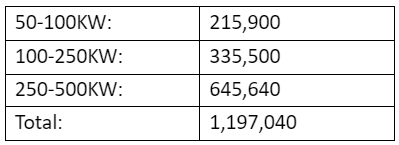
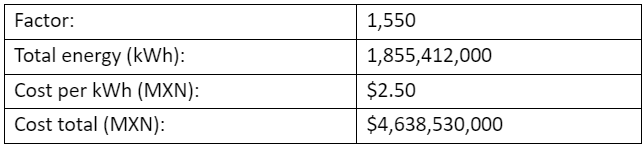
The economic ramifications of solar project underperformance are pronounced in Mexico, where the industry estimates nearly MXN $1 billion (US$60 million)) in annual losses. This shocking figure underscores the acute impact on both the commercial and industrial sectors. Such shortfalls can erode the financial foundations of solar investments, leading to poorer ROI indicators.
Installed DG capacity in Mexico 2024:
Energy and cost data:
Potential financial impact of energy losses per year:
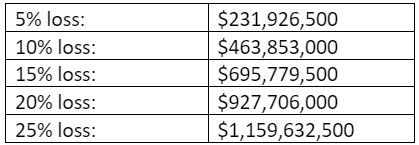
These shortfalls are not isolated incidents but are indicative of a systemic challenge within the industry that requires immediate attention and action. The Mexican case is part of a global pattern of underperformance. It's notable that global solar project underperformance has nearly doubled since 2019, contributing to about US$2.5 billion in global industry losses. This is according to Raptor Maps, which provides insights into the financial and operational impact of solar system anomalies.
Mitigating these losses is key for maintaining the integrity of the distributed solar market. By addressing the discrepancy between projected and actual performance, the industry can maximize its financial returns. A concerted effort toward optimizing O&M practices, improving estimation methodologies, aligning incentives, and establishing more solid warranties can pave the way for a more economically viable and reliable solar future for all.
Recommendations
- Develop Enhanced Simulation Tools: Advocate for the development of advanced and AI projection software that accurately models the complex variables affecting system performance. Advanced analytics and AI significantly enhance the accuracy of solar energy projections and simulations by learning from historical data and identifying complex patterns. For instance, Vistra's deployment of AI across 67 power-generation units improved efficiency by 1%, leading to over $23 million in savings and a reduction of about 1.6 million tons of carbon emissions annually. A deep-learning study demonstrated that a hybrid CNN and LSTM model with an attention mechanism could optimize solar forecasting, resulting in a 30% operational efficiency improvement, equivalent to US$175,000 yearly savings. The World Economic Forum acknowledges AI's role in accelerating the energy transition, highlighting its potential to optimize energy generation and distribution for sustainability and efficiency. These examples highlight AI's transformative potential in solar energy, offering economic and environmental benefits while enhancing reliability and sustainability in solar energy systems.
- Foster Stakeholder Alignment: Promote initiatives that align the interests of stakeholders, ensuring transparent communication and the pursuit of shared, long-term sustainability goals. For instance, Finsolar, a Mexican solar financing startup, offers the ExpandSolar model, which defines solar performance projections in monetary terms. This guarantees that Finsolar's operating team is continually optimizing the system through previously mentioned techniques. Consequently, this strategy often results in surplus energy that can significantly offset the costs of project financing, thereby increasing cash flow for customers both in the short and long term.
- Prioritize Investment in O&M: Emphasize the importance of comprehensive O&M services as a cornerstone of system performance, advocating for structured investment in maintenance programs.
Conclusion
This whitepaper sheds light on a substantial economic hurdle facing Mexico's distributed generation (DG) solar projects, highlighted by a staggering MXN$1 billion performance gap. Drawing from the expertise of the NREL and Raptor Maps, it charts a course for overcoming this challenge. The suggested roadmap includes the adoption of better simulation tools, the alignment of interests among key players, and an emphasis on prioritizing comprehensive operations and maintenance investments. These strategic measures are essential for increasing the resilience of solar investments. They aim to secure a future where the solar industry in Mexico, and in other regions, can thrive economically and sustain its growth, delivering enhanced financial outcomes and increased confidence for all stakeholders involved.
Acknowledgements
The creation of this whitepaper would not have been possible without the valuable contributions and support of several individuals and organizations. We would like to express our sincere gratitude to the following:
First and foremost, we extend our thanks to the National Renewable Energy Laboratory (NREL) and their System Advisor Model (SAM) team for providing the foundational data and insights that informed our analysis. Their extensive research and modeling tools have been instrumental in understanding the performance dynamics of solar projects.
We also owe a debt of gratitude to Raptor Maps for their comprehensive aerial inspection data and analytics. Their cutting-edge technology and expertise in identifying solar system anomalies have shed light on the operational challenges faced by the industry.
Furthermore, we would like to acknowledge the contributions of kWh Analytics, Solar Data, and various industry experts who have shared their knowledge and experiences, helping us to paint a comprehensive picture of the solar performance landscape in Mexico.
A special thanks goes to Guillermo Sanchez, Jason Potts, Hiram Strauss and Fernando Paniagua at Finsolar for their dedication and hard work in bringing this whitepaper to fruition.
This whitepaper is a testament to the collective efforts and expertise of all those involved, and we are grateful for their contributions in advancing the cause of sustainable energy in Mexico and beyond.
About the Author
Ian De la Garza Couturier is a seasoned professional with over a decade of experience in the renewable energy sector. Currently serving as the CEO at Finsolar, a leading solar energy company in Mexico, Ian brings a wealth of expertise in solar project development, financing, and operations.
Throughout his career, Ian has held leadership roles at prominent organizations such as Finsolar, Zitrone Energy and Econologika. His deep understanding of the solar industry, combined with his strong background in business administration and finance, has enabled him to drive successful renewable energy projects across Mexico.
Ian holds a Master of Business Administration (MBA) from IPADE Business School and a bachelor’s degree in business administration from Universidad Anáhuac. His education, coupled with his extensive practical experience, has equipped him with the skills to navigate the complex landscape of solar energy development and deliver impactful solutions.
As a thought leader in the field, Ian has been invited to speak at various industry conferences and events, sharing his insights on the challenges and opportunities in Mexico's solar energy market. His contributions have been instrumental in shaping the discourse on sustainable energy solutions in the region.
With a passion for driving the transition to clean energy, Ian continues to be at the forefront of efforts to optimize solar project performance and enhance the economic viability of distributed generation solar projects in Mexico and beyond.
You May Like


Most popular








