

The City Is Not There



STORY INLINE POST

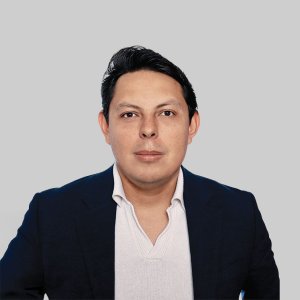
 By Federico de Arteaga | Head of Project -
Tue, 11/21/2023 - 11:00
By Federico de Arteaga | Head of Project -
Tue, 11/21/2023 - 11:00
For many years I´ve been looking for cities; to find the thread of Theseus to understand them, to look for that city on a human scale where all opportunities are possible and where each individual can be found and where each collective has its place.
Nowhere have I found it. Luckily. What I have found is that the city is not in intelligence, nor in the sum of clichés that prevail in communication. The city is not the abstraction of planners, urbanists, architects and theorists. Every city has a history from its foundation, from its vocation, its culture, its people and its personality.
To what extent are the cities that are named the cities that they are? To what extent is Mexico City the city that tourists and visitors imagine? Is it the city of those who live on the periphery and take two hours to get to work? Is Mexico still Tenochtitlán?
From my experience, I believe that we need to find the possible and liveable city, the one that is in permanent tension. Cities are living organisms, with economies and diseconomies of scale, which look and feel different, which attract or repel. Cities are also made up of geographical networks, digital, information and port infrastructures, with a collective social life and space for individuality.
Cities have squares and thresholds, they have a language and forms of government and unspoken agreements that are their culture and their colors. And cities are always seen from one's own perspective, from one's own life experience. Not everything in the city is qualitative or can be measured and compared. It is true that there is a science of cities; one can make urban analyses, calculate carrying capacities, the Gross Domestic Product (80% is already produced in cities), their demography, their tourism and their scale. But that is not all. There are also satieties.
What can happen in that city? Not everything. What does that city do for the country? Is it resilient, possible, dynamic, accessible, safe, desirable? Which cities are we talking about? Clearly there are megacities, but few. What we are beginning to notice are clusters of medium-sized cities. Translocal learning players. We are in Latin America, a system of municipalities, of small and medium-sized cities with some megacities.
Is it the classical city, the Muslim city, the medieval city, the technological camp or the generic city? Thinkers, such as Jacobs, Mumford, Glaeser, Koolhaas, Sudjic, Gehry, Sennett, and McLuhan, have looked at cities through different lenses, from the Greek polis to the desert megalopolis, without finding it.
Therefore, the city is not there, it is — in reality — nowhere. Except in the hearts of the women and men who live it, dream it, build it, give it a human scale, digitalize it, order it, do business in it and educate themselves in it. The city is a culture in search of a place. To perceive the tension between different visions in the reading of a city, between the technological and the non-technological, between governance and a citizenry eager for interaction, is the way to see the city for what it is: a complex, simultaneous system of learning, of culture in relation to other systems.
Cities are increasingly more important than countries themselves. The city will continue to be a social construction, of citizenship, complex and a product of its time and culture. Of its people, who will continue to seek their life between the polis and the necropolis. And between these, urban life, the person, with its rights and obligations, its sieges and its mysteries.
The city is not alone in its primary vocation, nor in its language, in the foreigner, nor in mobility. Even less in technology; nor in Trojan horses. It is not in the public space, in the ports, nor on the edges or in the slums; nor in solitude and silence, neither in its gastronomy, nor in its sustainability or in its trees. There is an invisible part and there is governance, there are mayors and spurious forms, algorithms and privatized spaces, fires and bonfires, birds and stones, but the city is still not there.
Francisco de Quevedo was a visionary when he said:
"You seek Rome in Rome, O pilgrim! And in Rome itself, Rome you do not find.... ."
We do not know if the city is in everyone's perception. As Marco Polo told Kublai Khan: The more he lost himself in unknown quarters of distant cities, the more he understood the cities he had passed through to get there. Cities are also cities in relation to each other.
Many have constructed models of cities in their minds so that people are not there either, so that they do not quite belong there either. It is clear that the barbarians are not at the gates of the city, we barbarians are inside.
Are you ready to set yourself up for success in 2024? Join us at Mexico Business Summit 2023, the must-attend B2B conference for Mexico’s business leaders!
Taking place on Nov. 28-30, 2023, at Expo Santa Fe in Mexico City, this high-level multi-industry conference offers unmatched opportunities to get inside perspectives on key industry trends, access actionable business intelligence, generate pre-qualified leads and identify new opportunities in a unique cross-industry networking environment.
Mexico Business News offers you an exclusive MX$2,000 ticket discount by using this code: MBS2023MBN2000.
Don't miss this opportunity and get your tickets here: https://mexicobusiness.events/MBS/2023

Most popular








