


Mexico, Chile Present Plan to Regenerate Social Housing Complexes
Mexico and Chile unveiled findings and proposals from a two-year collaboration (2022-2024) to address the deterioration of social housing complexes. The initiative focuses on creating a national urban and social regeneration strategy, targeting abandoned homes and neglected public spaces.
The project, funded by the Mexico-Chile Cooperation Fund and managed by the Mexican Agency for International Development Cooperation (AMEXCID), was implemented by the Development Research Institute (IRD). Mexican entities involved include the Ministry of Agrarian, Territorial, and Urban Development (SEDATU), the National Workers’ Housing Fund Institute (INFONAVIT), and the National Housing Commission (CONAVI). Chile’s Ministry of Housing and Urban Development (MINVU) also participated.
Findings point to significant challenges, such as a shift from widespread housing abandonment to irregular occupations, limited access to basic services, lack of security, and weak social cohesion. Proposals include diversifying housing solutions, re-urbanizing complexes with improved infrastructure and services, strengthening governance and financing, prioritizing areas based on technical and social criteria, involving communities in regeneration efforts, and ensuring long-term maintenance and management.
The document notes that for regeneration to be viable and sustainable, it cannot be limited to housing alone. It emphasizes the need for re-urbanizing these spaces by providing what was missing at the time of their construction: services, facilities, and adequate connections to their surroundings and nearby urban areas.“No action should be taken in housing matters without simultaneously addressing the deficit of basic urban services,” reads the document.
The document suggests that regeneration Master Plans should not simply be a collection of multidisciplinary investments without prioritization. Instead, they require a robust urban planning component based on a multi-scalar spatial restructuring proposal, both internally and externally. Citing examples like Chile's Bajos de Mena Master Plan, the document emphasizes the need for multidisciplinary teams, including social sciences, legal, and urban design professionals. It also highlights the importance of involving residents early in the planning process, not just during consultations to validate proposals.
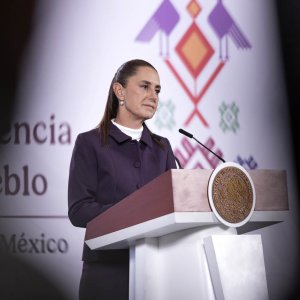
The report highlights that 2024 presented a favorable context for implementation, with housing designated as a key policy priority by Claudia Sheinbaum’s administration.
You May Like







Most popular








