


Sheinbaum Launches Regional Economic Development Council
 By Adriana Alarcón | Journalist & Industry Analyst -
Wed, 11/27/2024 - 15:00
By Adriana Alarcón | Journalist & Industry Analyst -
Wed, 11/27/2024 - 15:00
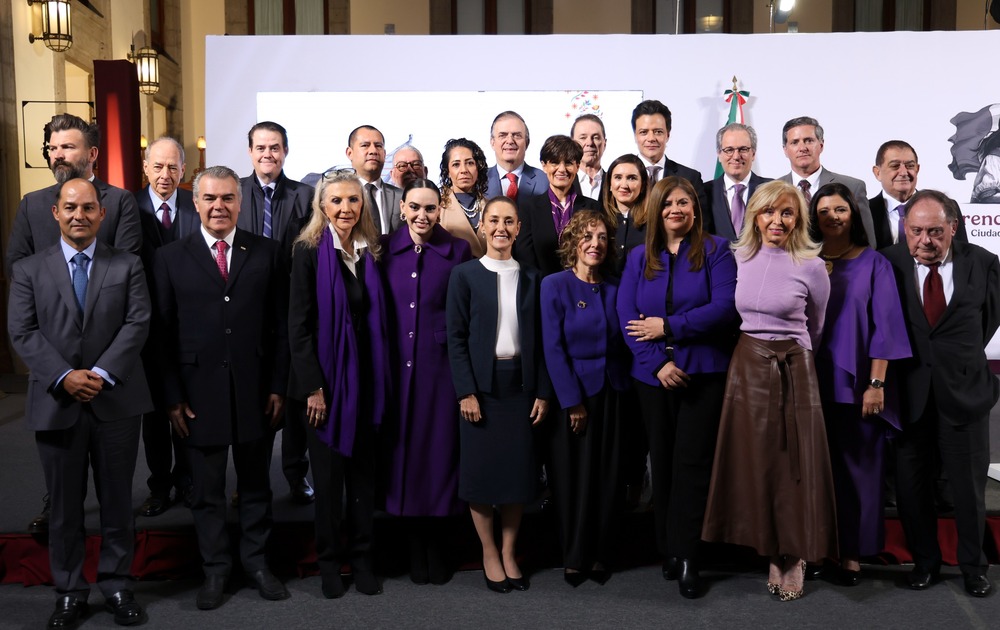
President Claudia Sheinbaum and Altagracia Gómez, Coordinator of the Business Advisory Council for the Mexican Government, have signed an agreement to establish the Regional Economic Development and Nearshoring/Relocalization Advisory Council (CADERR). The Council aims to drive Mexico’s national nearshoring strategy, solidify private-sector investments, create jobs, and promote comprehensive development.
The Council builds on dialogues initiated a year ago, underscoring the need for an industrial policy to harness Mexico’s unique position in global nearshoring trends. It envisions a collaborative effort among the government, academia, and private sector to align public policies, prioritize sectors, and develop strategic infrastructure. This body will include 15 renowned business leaders, federal ministries, chambers, associations, and universities.
In September, private associations had called for Mexico to strengthen its open trade policy and manufacturing sector. The country, they argued, lacks a coherent industrial policy that ensures full incorporation into global supply chains. Experts have called for a comprehensive policy that fosters innovation, develops infrastructure, promotes digitalization, and emphasizes environmental sustainability — key areas essential for boosting competitiveness on the global stage.
The council is tasked with implementing Mexico’s nearshoring strategy through:
-
Proposing Industrial Policies: Developing projects and mixed investment schemes to enhance industrial corridors and regional growth hubs.
-
Fostering Local Supply Chains: Strengthening SMEs through training, financing, and direct commercialization initiatives like the Plan C for SMEs.
-
Promoting Sustainability: Enhancing and showcasing sustainable practices.
-
Boosting Investment and Exports: Working to increase capital inflows and trade.
-
Advancing Education and Skills: Doubling dual-education programs, certifications, and technical careers.
-
Encouraging Innovation: Increasing patent registrations.
-
Streamlining Permits: Reducing investment lead times by 50% through digitalization and simplification of permits and procedures.
-
Expanding Development Banking Programs: Facilitating credit access for SMEs, suppliers, and exporters, with the Ministry of Finance as a key ally.
-
Revisiting Trade Tariffs: Proposing tariffs on finished products, components, and raw materials to support local and regional suppliers, aligning trade and fiscal policies.
-
Tracking Private Investments: Acting as a liaison between the federal government and economic sectors to monitor the progress of private investment projects.
The council consists of 15 business leaders and a coordinator appointed by the president. It will meet quarterly. The council members are:
-
Gina Díez Barroso Azcárraga, President and CEO, Diarq Holding, representing the real estate and higher education sectors.
-
Blanca Treviño de Vega, President and CEO, Softtek, in the IT sector.
-
Myriam Guadalupe de la Vega, President and CEO, Almacenes Distribuidores de la Frontera, focusing on border economic development.
-
Maria Elena Gallego, President and CEO, Grupo Collectron International Management, covering electronics, semiconductors, aerospace, and medical devices.
-
Concepción Miranda, CEO, Miraplastek, in the automotive and autoparts sector, focusing on supply chain development for Tier 1, 2, and 3 suppliers.
-
Tamara Caballero, CEO, Multiva, and the first woman to lead a bank in Mexico, specializing in infrastructure.
-
Ana María Macías, CEO, MAJA Consulting Group, with over 25 years of experience in risk analysis in the hydrocarbons and energy sector.
-
Rodrigo Herrera Aspra, Founder, Genomma Lab, in the pharmaceutical sector.
-
Antonio del Valle Perochena, Chairman of the Board, KALUZ.
-
José Chapur Zahoul, President, The Palace Company.
-
Eduardo Tricio Haro, Chairman, Grupo Lala and the Nuplen Industrial Group, for agribusiness.
-
Raúl Gutiérrez, Chairman of the Board, Grupo DEACERO.
-
Juan Domingo Beckmann, CEO, José Cuervo.
-
Armando Garza Sada, Former Chairman of Alfa.
-
Altagracia Gómez Sierra, Chairwoman, Promotora Empresarial de Occidente (PEO).
National Nearshoring Strategy
The nearshoring strategy, known as Plan Mexico, focuses on: public policy, emphasizing training, collaboration, and public-private co-investments; strategic sectors; prioritizing industries such as energy, aerospace, IT, electromobility, automotive, textiles, pharmaceuticals, and semiconductors; and critical infrastructure, strengthening ports, airports, railways, border crossings, and utilities to support investments.
“This is not just another council; it is the backbone of a comprehensive national plan. It incorporates regional economic hubs, 100 identified industrial parks, and the necessary infrastructure. This is a unique opportunity for Mexico to strengthen its supply chains, increase exports with added value, and achieve sustainable development,” says Sheinbaum.
You May Like








Most popular








