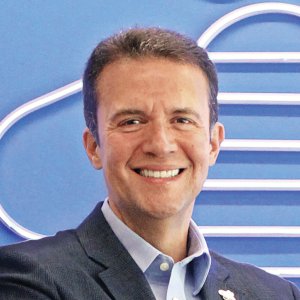
Alicia Bárcena to Represent Mexico at Davos Forum
Mexican President Claudia Sheinbaum said Environment and Natural Resources Minister Alicia Bárcena will represent the federal government at the World Economic Forum in Davos, Switzerland, where she will present Mexico’s economic and sustainable development priorities.
Speaking during her Jan. 14 morning press conference, Sheinbaum said Bárcena will outline the economic model promoted by the administration, with a focus on development, sustainability and growth tied to social well-being. “She will explain the vision of Mexico’s development model and our approach to sustainability and inclusive growth,” Sheinbaum said.
The World Economic Forum’s annual meeting in Davos brings together government officials, business leaders and international organizations to discuss global economic trends, climate policy and geopolitical challenges. Sheinbaum said Bárcena will be accompanied by business leader Altagracia Gómez, who serves as coordinator of the presidency’s economic advisory group. Gómez has played a role in bridging dialogue between the government and the private sector on investment, industrial policy and economic planning.
President Sheinbaum framed the participation as part of Mexico’s broader engagement with international forums to communicate its policy direction, particularly with respect to sustainability. Bárcena’s participation at Davos follows a number of international engagements undertaken by the minister in 2025.
In August of last year, Bárcena chaired the “Ministerial Reunion of Latin America and the Caribbean for the Implementation of Regional Climate Action,” which gathered representatives from 22 countries across the region to coordinate a unified climate agenda ahead of the COP30 summit. The 19-point declaration issued at the close of the summit emphasized just mechanisms for climate finance and implementation, urging developed nations to assume greater responsibility for the energy transition.
In September, she led a SEMARNAT delegation participating in NYC Climate Week, which engaged in high-level talks on adaptation, mangrove protection, climate finance, the green economy, and industrial decarbonization. She also held bilateral meetings with counterparts from the European Union, the United Kingdom, Germany, and the United States, focusing on sustainability, energy security, water resilience, and circular economy initiatives.
A month later, Bárcena delivered a keynote address at Mexico’s first-ever Climate Week (México por el Clima - Semana de Acción), held at the Papalote Museo del Niño in Mexico City. The event drew over 10,000 attendees over three days and featured 200 organizations and stakeholders from government, business, civil society and academia. During her speech, Bárcena outlined the country’s updated Nationally Determined Contribution (NDC 3.0), which is structured around five elements: mitigation, adaptation, losses and damages, implementation of methods and enabling conditions, and transversal themes.
In early November, Bárcena played a protagonistic role at the G7 Environment Ministers’ Meeting held on Oct. 30-31 in Toronto, Canada. At the summit, which marked the G7’s 50th anniversary, she called for stronger multilateral cooperation and alignment between climate policies, finance and implementation to achieve global sustainability goals. On the sidelines of the meeting, Bárcena held bilateral discussions with Julie Dabrusin, Canada’s Minister of Environment and Climate Change; Carsten Schneider, Germany’s Federal Minister for the Environment, Nature Conservation and Nuclear Safety; and Fatih Birol, Executive Director of the International Energy Agency.
Finally, Bárcena represented Mexico during the COP30 summit, held from November 10-21 in Belem, Brazil. At the summit, the minister presented Mexico’s finalized NDC 3.0, which was the result of months of dialogue with academia, civil society, industry leaders and marginalized groups. During negotiations, Mexico joined nations such as Brazil, the UK and Colombia in backing a formal roadmap for the phase out of fossil fuels.
You May Like




Most popular