

The Development of Trucking Brokerages in Mexico




STORY INLINE POST







 By Antonio Tejedo | VP investor Relations -
Wed, 06/19/2024 - 10:00
By Antonio Tejedo | VP investor Relations -
Wed, 06/19/2024 - 10:00
For the past decades, the trucking brokerage business model in the United States has proven to be very successful. This method of connection between shippers and truckers had its origin with the Motor Carrier Act of 1980, which basically changed the regulation of the transportation industry by allowing much more flexibility in pricing, which led to a significantly more competitive landscape. Since then, brokerage has continued to evolve and drive the transportation industry in the United States.
Today, it is estimated that 35% to 40% of total loads in the United States are moved using brokers, and there is still a great deal of potential to be unleashed by using this transportation model. There are hundreds of platforms and marketplaces through which clients are able to publish their loads, and both transportation companies and owner-operators can apply to carry such freight. We have seen the rise and fall of some players that attempted to create large brokerage platforms and failed, mainly due to a lack of understanding and perhaps even overfunding.
This method is so developed that the U.S. government provides mechanisms and systems that ensure both the service quality and payment efficiency. Such technology, regulation, and other features, such as rankings, ratings and factoring services, enable an efficient interaction between the parties involved, thus ensuring the quality of the service rendered and the swiftness of payment, which are most valued by trucking companies and owner-operators.
Over the past 40-plus years, the trucking brokerage business in the United States has implemented appropriate technology, more efficient processes, and improved the certainty of the services, thus becoming an attractive option for thousands of truckers and transportation companies; the list of benefits goes on and on. This is the best role model for the development of the brokerage industry south of the U.S. border.
In Mexico, however, this method of connecting clients with transportation companies has not had the same penetration, and there are many areas of opportunity to be addressed to properly develop the trucking brokerage market in the country.
Trucking is the most favored mode of transportation in Mexico. It is a mature industry that is essential to the economy. The sector carries more than 56% of the country’s total freight and contributes almost 4% of GDP. Furthermore, it is estimated that approximately 70% of the trade between Mexico and the United States is conducted by truck, thus the increased need to link Mexican transportation demands with brokers. The sector also generates several million direct and indirect jobs.
The nearshoring trend has boosted manufacturing activity in Mexico over the past few years, which demands logistics services that include different formats of trucking services. Such increased demand will continue to drive the growth of road cargo in the coming years, as nearshoring has still to further penetrate the country. Most important is that this phenomenon be transformational for the country, so that the expansion in both logistics and transportation will be sustainable over the long-term.
In terms of market size, currently there are approximately 660,000 trucks registered with the Mexican Transportation Ministry. The market represented more than US$93 billion in 2023. Of registered trucks, it is estimated that less than 1% are registered under a brokerage scheme.
There are some players already operating in the freight brokerage space, but some lack the capital to finance state-of-the-art technological platforms, others struggle to gain clients, while others have balance sheet constraints to properly run working capital cycles. All those features are key to becoming a relevant player in the brokerage arena.
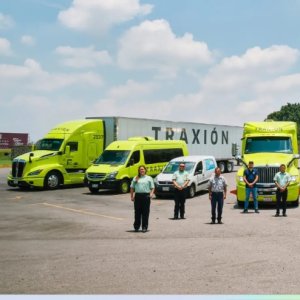
To tackle such an attractive opportunity, in 2021 TRAXIÓN introduced TRAXPORTA, a digital freight broker with the aim to increase the cargo capacity of the company with significantly lower capital expenditures. The sheer size of TRAXION’s operating infrastructure, together with its commercial muscle, high tech-enabled IT platforms and strong balance sheet were the strongest competitive advantages and represent the largest barriers for growth and expansion for other players.
In less than three years, the platform has grown significantly, becoming the largest and most important freight broker in Mexico, with a tremendous expansion potential. In 2023, TRAXIÓN acquired BBA Logistics, a freight broker based in the United States, with the aim of integrating its operations with those of TRAXPORTA, thus ensuring door-to-door service into U.S. destinations.
We believe that such a model has a formidable value-creation opportunity in the coming years, but many challenges must be overcome to achieve higher levels of penetration and development. The key is the use of modern technologies, and proper talent to leverage our commercial muscle.
Among such challenges are service reliability for the client, and payment certainty for the transportation company. At TRAXION, management has understood such shortcomings of the industry, and created an ecosystem where the company provides a high-tech transportation management system for third-party truckers, together with a fast-payment mechanism. Furthermore, there is a thorough and diligent certification process to ensure that such third parties have the capability to render a high-quality service, in line with TRAXION’s policies.
The company has also been working to create a sense of belonging with transportation companies, which will strengthen loyalty toward this program. Such initiatives include logistics support, TMS, faster payments, discounts in fuel and spare parts.
We believe that this business has a tremendous value creation potential and want to take advantage of being a first mover in this space, to continue to grow, expand and maintain our position as the largest and most relevant freight broker in Mexico.
You May Like






Most popular








