

Sustainability Within Transportation, Logistics and Mobility



STORY INLINE POST







 By Antonio Tejedo | VP investor Relations -
Wed, 01/29/2025 - 18:00
By Antonio Tejedo | VP investor Relations -
Wed, 01/29/2025 - 18:00
Sustainability has gained considerably more relevance in recent years, especially in the transportation, logistics, and mobility sectors. Environmental, social and governance factors are among the top priorities within corporate boardrooms, with management teams increasing their attention to the issue, as clients, suppliers, investors, and other stakeholders demand higher transparency, disclosure, and commitment.
Such matters have created an increased awareness, especially among international investors that aim to allocate resources to publicly-traded companies. As a result, such enterprises have had to adjust their strategies, focus, disclosure, and attention to be able to continue to capture capital from the most important investors in the world.
In Mexico, companies, investors, and other market participants have implemented strong strategies and guidelines to align with the most advanced in the world. For example, Mexican pension funds started by creating their own questionnaires, but most recently, there has been a homologation process, so that information and disclosure are the same for all.
Shifting gears, the three main factors that integrate such a sustainability strategy – environmental, social and governance – have shaped the strategies that many companies have implemented over the past few years. The transportation industry is focusing increasingly on emissions reduction and more female participation, both within management and boards, since there is a perception in the sector that the business is dominated or exclusive to men.
In the environmental arena, the use of artificial intelligence is expected to shape 2025 in terms of sustainability. AI has been utilized within the transportation, logistics, and mobility industries on many fronts. For example, route optimization software, fleet maintenance controls, warehouse management systems, freight brokerage, and other applications are among the most common; they are the “low hanging fruit” AI uses to become more eco-friendly, which ultimately helps to decrease greenhouse gas emissions, one of the most important environmental metrics for companies in our sector.
Moreover, in social terms, transportation companies across the globe have the potential to contribute tremendously and promote a positive impact within their communities. Transportation, logistics, and mobility are the most essential and basic elements of any economy, and even a minuscule change for good could have an enormous impact in social terms. Better, efficient transportation can transform the lives of millions of people, both personally and professionally. Improved logistics could reduce prices of consumer staples and a wide range of products to make life easier, just to name a quick example.
On the governance front, the main topics that have been addressed within the transportation, logistics, and mobility industry in recent years have to do with including much more female participation on boards, and in management and operational positions, together with increased levels of transparency and disclosure across the companies. This has resulted mainly from the extremely low participation of women in operational positions, which has always been a challenge, and is mainly due to a perception that such jobs are exclusively for men.
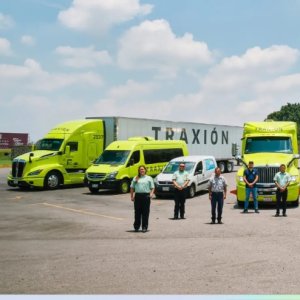
At TRAXIÓN, as the leading transportation, logistics and mobility company in Mexico, we are committed to spearheading projects to properly face the changes and requirements of today’s society.
For example, in terms of gender equality, the company implemented a firm-wide initiative to be more inclusive in its operational positions, setting a target of at least 30% of women by 2023.
In three of its trucking subsidiaries, TRAXIÓN created training programs for female associates with no previous experience, with fruitful results. Moreover, restrooms and dormitories were built exclusively for women, with all the features for comfortable use.
Within the people mobility division, and in alliance with Volkswagen and the Association of Women Operators, TRAXIÓN developed a training and learning program that resulted in more than 25 female bus drivers who are currently operating with a new client.
As a result of these efforts, TRAXIÓN was presented with the “Special Diversity and Inclusion Award” during the 2024 edition of the Transportation Awards conference.
Finally, TRAXIÓN has three women on its board of directors, all with outstanding careers in fields that make them an excellent fit with TRAXION’s business lines and who contribute enormously to the modern approach of tech-enabled ecosystems with which the company has operated for a long time. This is indeed a tremendous achievement for Mexican standards.
Moving on, in terms of emissions, the company seeks to mitigate its environmental impact and its contribution to climate change by offering resource-efficient transportation and logistics solutions. To achieve such goals, TRAXIÓN constantly renews its fleet and carries out exhaustive maintenance programs to always keep its units in optimal condition.
The company also promotes the use of state-of-the-art technology in processes, fleets, and warehouses. This includes the latest telemetry systems, which allow the monitoring of fuel consumption and driving habits, which have significant direct impacts on our fuel performance. As a result, TRAXIÓN constantly trains its operators in fuel-efficient driving, and their compensation is partially linked to adequate fuel performance. Finally, there is a close collaboration with suppliers to conduct trials on more eco-friendly engines, technologies, and fuels.
The implementation of such initiatives has resulted in continuous improvements in the fleet’́s fuel efficiency, which directly leads to lower carbon dioxide emissions, the main greenhouse gas that contributes to global warming and climate change. In addition, TRAXIÓN operates a fleet that boasts the latest-model engines, which further reduce overall emissions.
As a result, in 2024, all of TRAXIÓN’s business units in the Mobility of Cargo Segment, Auto Express Frontera Norte, SID Carga, Transportadora Egoba, Autotransportes El Bisonte, and Muebles y Mudanzas (MYM) were awarded the "Good Environmental Performance" and "Excellent Environmental Performance" by the Mexican Ministry of the Environment and Natural Resources’ (SEMARNAT) voluntary Clean Transportation program. They were recognized for having jointly reduced 60,000 tons of carbon dioxide (CO2), equivalent to 10% of TRAXION's Scope 1 and 2 emissions, due to the aforementioned efficiency strategies and actions.
There is still a long road ahead in Mexico to further develop initiatives and keep up with metrics in sustainability matters. There are still many infrastructure and technological challenges to be overcome for companies to evolve into more sustainable organizations. The more positive side is that many have already implemented strong ESG strategies, and others are in varying stages of implementation.
Technology, commitment, awareness and collaboration are going to shape the sustainability landscape of Mexico within the next five years.
You May Like


Most popular








