


Energy Transition in the Mining Industry
 By Fernando Mares | Journalist & Industry Analyst -
Thu, 08/21/2025 - 16:02
By Fernando Mares | Journalist & Industry Analyst -
Thu, 08/21/2025 - 16:02
Facing the dual challenge of rising energy prices and the complexities of operating in remote locations, Mexico's mining companies are shifting to a model of active energy management, integrating efficiency, self-generation, and new technologies to secure long-term viability.
For mining operations, where energy represents over 30% of a company’s OPEX, as noted by Aggreko, efficient management is paramount. To counter market volatility, especially in remote areas, miners use tools like long-term Power Purchase Agreements (PPAs) to secure stable prices and reduce risks from fossil fuel price fluctuations. Furthermore, experts note that migrating to mobile and sustainable energy can yield savings of 30 to 50%.
In off-grid locations, self-generation is the most effective solution. The declining costs of solar technology have made on-site photovoltaic projects economically viable. These are increasingly paired with Battery Energy Storage Systems (BESS), which allow mines to store low-cost solar energy generated during the day for use during peak demand hours or at night, thereby optimizing costs and ensuring operational continuity. As noted by industry experts, the remote and isolated nature of mining demands a reliable energy supply that can operate permanently in island mode, as a complement to the grid, or as a backup system.
Within this strategy, the electrification of equipment and fleets plays a dual role. Beyond the reduction in greenhouse gas emissions, this transition offers significant health and safety benefits for workers through the elimination of diesel emissions, reduced heat, and lower noise and vibration levels. These improvements lead to direct operational savings by reducing the need for extensive ventilation and cooling underground. While the initial capital expenditure is significant, the long-term financial case is compelling; according to industry estimates, the total cost of ownership for EVs is now approximately 17% below that of traditional internal combustion engines.
Furthermore, as technology becomes more efficient, productivity can be enhanced through faster acceleration and loading times, with artificial intelligence also helping to boost greater efficiencies.
Regulation and Infrastructure: Opportunities and Hurdles
While large-scale projects face a complex permitting process, the government has shown support for self-generation, with recent proposals aiming to raise the capacity limit for permit-exempt DG projects. Structuring a successful long-term energy supply contract like a PPA requires careful navigation of various factors. Foremost among these is ensuring price certainty through a fixed or predictable tariff that insulates the operation from market volatility.
Equally important are strong supply guarantees that clearly define energy availability and penalties for non-compliance. Furthermore, these contracts must proactively manage regulatory risk by incorporating "change in law" clauses to address future policy shifts. Finally, securing all necessary interconnection and transmission permits, often requiring close collaboration with CFE.
The hybrid model is becoming the industry standard to balance reliability and profitability. It addresses the primary challenge of balancing sustainability, energy security, and economic competitiveness by combining a renewable PPA, grid backup, and on-site BESS to manage peaks and guarantee supply.
Beyond Established Solutions: Advanced Technologies
Looking beyond established solutions, the industry is adopting technologies like microgrids. A microgrid integrates local generation, storage, and consumption into an intelligent system that can operate connected to the grid or in isolation, maximizing resilience and giving the mine full control of its energy supply.
Energy storage is a key enabler of this transition, allowing for renewables integration. For mobile fleets and heavy equipment, the immediate focus is on replacing traditional diesel. In addition to using natural gas as a cleaner bridge fuel, many companies are adopting biofuels, such as renewable diesel (HVO), as a solution that significantly cuts the carbon footprint of existing fleets without requiring major engine modifications.
Looking further ahead toward deep decarbonization, the industry is exploring the potential of green hydrogen. Produced via electrolysis powered by renewable energy, it is seen as the leading long-term solution for achieving zero-emission heavy-haul trucking. Alongside hydrogen, other derivatives like green ammonia are also being explored as potential clean energy carriers for the future. While their implementation is still in the early stages, these advanced fuels are part of the long-term strategic roadmap for companies to transition to cleaner operations.
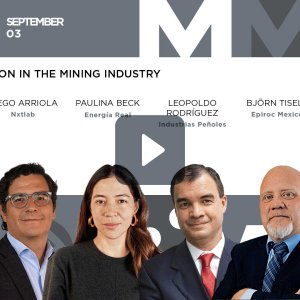
Follow our MMF CDMX 2025 tag and don’t miss our coverage leading to Mexico Mining Forum CDMX 2025 on Sept. 3, 2025.
Interested in staying ahead in the mining landscape? Mexico Mining Forum CDMX 2025 offers exclusive insights from leading industry experts and government officials on the key trends, risks, and opportunities fueling Mexico’s mining sector. Discover how supply chain innovations, workforce development, and sustainability strategies can strengthen your competitive edge.
Register now to secure your place and position your business at the forefront of this dynamic market: https://mexicobusiness.events/mining/2025/09
You May Like




Most popular








