ICMM Updates Indigenous Peoples Statement
 By Paloma Duran | Journalist and Industry Analyst -
Wed, 08/14/2024 - 14:52
By Paloma Duran | Journalist and Industry Analyst -
Wed, 08/14/2024 - 14:52
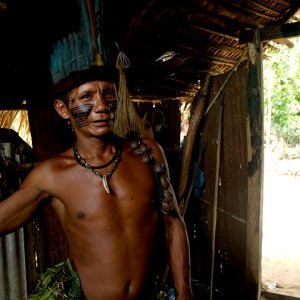
On Aug. 8, International Day of the World’s Indigenous Peoples, the International Council on Mining and Metals (ICMM) reaffirmed its commitment to respecting the rights of Indigenous communities by updating its Indigenous Peoples and Mining Position Statement. The updated framework includes specific commitments to securing agreements from Indigenous peoples and assessing the impacts of mining on their rights.
The revised statement highlights the responsibility of mining companies to uphold Indigenous rights, regardless of whether the state requires free, prior, and informed consent before approving projects that are in or near Indigenous lands, territories, and resources. It also outlines the procedures companies will follow if they cannot reach an agreement with Indigenous communities, even if projects have state authorization to proceed.
“While there are many positive examples of respectful and enduring partnerships that have advanced the social and economic development of Indigenous Peoples, we acknowledge that mining activities have at times harmed their rights. We remain committed to improving how we develop, operate, and close mines to better align with Indigenous development aspirations and respect their right to participate in decisions that impact them,” said Rohitesh Dhawan, CEO and President, ICMM.
Experts have noted the significance of this update, particularly given that the University of Queensland estimates that 54% of critical mineral mining projects are located on or near Indigenous lands. The update also addresses the growing challenges to Indigenous rights and lifestyles posed by climate change, environmental degradation, and industrial activities.
The Case of Mexico
Mexico recognizes the indigenous peoples' right to a fair and transparent consultation, as outlined in Art. 2, Section B of the Constitution and as per the International Labour Organization's (ILO) Convention 169. Despite this, legal experts believe that Mexico is not yet prepared to implement indigenous consultations due to a lack of necessary mechanisms. "Firstly, there is no regulatory law for Constitutional Art. 2. This means that while the constitution establishes the right, it does not provide the mechanisms needed to apply this law,” Alberto Vazquez, Founding Partner, Tête à Tête Abogados told MBN.
According to 2023’s Mining Law reform, in the case of plots located in territories of indigenous or Afro-Mexican peoples or communities, the Ministry of Economy (SE), for the granting of mining concession or assignment, shall request the competent authority to carry out the consultation to obtain the consent of these communities and shall participate in the process within the scope of its powers. The consultation shall be conducted before the granting of the concession title and simultaneously with the one required for the environmental impact statement, in which information on the social impact study shall be provided. However, Vázquez emphasizes that the Mexican legal framework also lacks the mechanism to determine who can be considered an indigenous person.
You May Like




Most popular