

The New Iron Age: Sustainable Metallurgy in the Green Future



STORY INLINE POST





 By Heidi Virta | Business Finland Director -
Wed, 10/29/2025 - 08:00
By Heidi Virta | Business Finland Director -
Wed, 10/29/2025 - 08:00
Industrial metals have always been the backbone of modern economies. They shape our infrastructure, enable technology, and power industries. Yet, in recent decades, many countries have turned their backs on mining and metal processing, often driven by legitimate environmental concerns. Now, however, we are entering a new era, one where sustainability and industrial progress must go hand in hand.
The global energy transition is accelerating. As we build the technologies needed for a greener planet — solar panels, wind turbines, batteries, and electric vehicles — the demand for metals is surging. Extracting and processing these materials responsibly is becoming not only an economic imperative but also an environmental one.
Rethinking Where Metals Are Made
Industrial metals are heavy, and the minerals from which they are extracted are even heavier. Transporting them across continents for processing — sometimes more than ten thousand kilometers away — requires enormous amounts of energy and cost. History has shown that processing minerals in the countries where they are extracted generates long-term prosperity. It creates jobs, supports industrial ecosystems, and strengthens local economies.
Latin America, with its vast mineral wealth, is particularly well positioned for this new industrial wave. While copper deposits in Chile, Peru, Argentina, and Mexico are well known, it is often forgotten that Brazil, Peru, Chile, and Mexico also possess significant iron ore reserves. As the world moves toward cleaner technologies, these countries could play a key role in shaping the next chapter of sustainable metallurgy.
From Environmental Concern to Environmental Opportunity
Over the past 20 years, environmental goals and carbon emission targets have led many policymakers to shy away from heavy industries like iron and steel production. But paradoxically, the green transition is increasing — not reducing — the need for mining, smelting, and refining.
The challenge is no longer whether we mine and process metals, but how we do it. The focus must shift toward technologies that enable low-carbon, circular, and efficient metal production. Avoiding mining altogether only delays progress and deepens dependence on unsustainable supply chains.
Finland’s Experience: Clean Technologies for a Greener Industry
Finland offers an example of how advanced technology and environmental values can coexist in heavy industry. For more than 70 years, Finnish engineers have been developing methods to make metal production cleaner and more efficient.
One remarkable innovation is flash smelting, a technology invented in Finland that revolutionized copper production. In this process, powdered copper concentrate — often rich in sulfur — is ignited without using fossil fuels. The sulfur itself fuels the reaction, generating intense heat that separates copper from other substances.
While this reaction produces toxic gases, Finnish engineers found a way to transform these emissions into valuable byproducts. The sulfur dioxide generated is captured and converted into sulfuric acid, a key ingredient in fertilizer production. The excess heat, instead of being wasted, is used to generate electricity and power the smelting process. What could have been a polluting cycle thus becomes a virtuous one, producing metal, energy, and materials for agriculture at the same time.
Over the decades, Finland has refined this process to an exceptional level of efficiency. Today, Finnish companies can proudly claim to produce some of the cleanest copper in the world.
Applying Decades of Expertise to Iron
Encouraged by success in copper, Finnish engineers have extended their expertise to iron production, a sector long seen as difficult to decarbonize. Traditional ironmaking relies on coal as a reducing agent, generating significant CO₂ emissions.
Through continuous innovation, Finland has achieved a breakthrough in Direct Reduction Iron (DRI) technology, which replaces coal with methane from biomass or natural gas. This approach has reduced the energy cost of iron production by more than 50% and enables production without coal.
In addition, the new systems are compact, modular, and easy to build, allowing flexible deployment close to mining sites. This opens new opportunities for collaboration with resource-rich regions such as Latin America.
A New Frontier for Sustainable Metallurgy
The combination of advanced Finnish technology and Latin America’s mineral wealth can create a powerful partnership. By processing metals closer to where they are mined — using clean and efficient technologies — we can reduce global emissions, strengthen local economies, and ensure that the benefits of industrial development are shared more equitably.
Latin America has the talent, the resources, and the momentum to lead in this field. Together with countries like Finland, it can set new global standards for sustainable metal production.
Building a Future as Strong as Iron
The “Iron Age” of today is not about the unchecked industrialization of the past. It is about building a smarter, cleaner, and more human-centered industrial future—one that respects both people and the planet.
Every ton of metal produced responsibly brings us closer to a world where prosperity does not come at the expense of the environment. The challenge before us is not only technical but also moral: to prove that sustainability and industry can, indeed, reinforce each other.
The future of metallurgy is bright — and solid as iron.
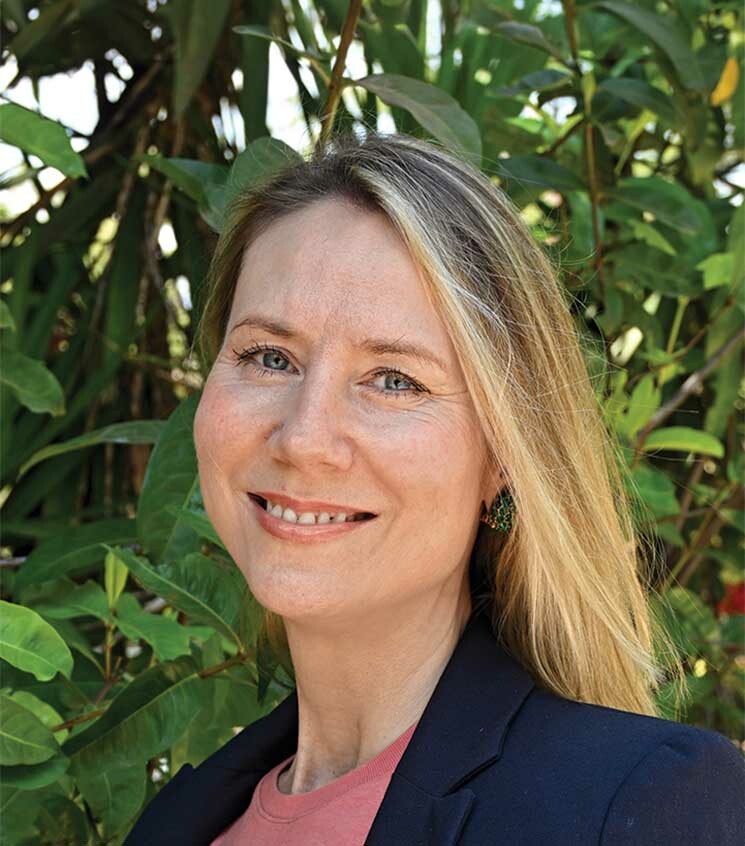
In addition to her role as director for Latin America at Business Finland, Heidi Virta is also the author of "How to Be Happier and Worry Less."
You May Like


Most popular








