


Norway Pauses Deep-Sea Mining Until 2029
 By Paloma Duran | Journalist and Industry Analyst -
Mon, 12/08/2025 - 11:33
By Paloma Duran | Journalist and Industry Analyst -
Mon, 12/08/2025 - 11:33
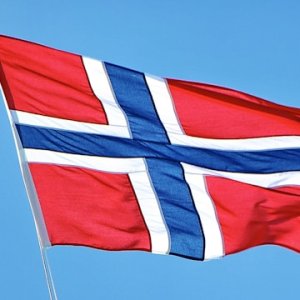
Norway has decided to halt deep-sea mining after the ruling Labor Party reached an agreement with the opposition Socialist left Party to secure approval of its latest budget. Under the deal, no new deep-sea mining licenses will be issued in Norwegian territorial waters until 2029.
The move reverses Norway’s plan announced 18 months ago, to grant exploration permits this year, according to BMO Capital Markets. Earlier proposals had identified 386 offshore blocks, covering roughly 38% of the 280,000km2 approved by Parliament for exploration. Last year, at least two companies submitted license applications, and the government had promoted Arctic deep-sea mining to strengthen Europe’s supply of critical minerals such as copper, nickel, manganese, and rare earth elements. However, commercial mining operations were not expected to start before 2030.
Global Developments in Deep-Sea Mining
The United States is taking a more proactive approach to deep-sea mining. In April, President Donald Trump issued an executive order to fast-track offshore mining, aiming to reduce reliance on foreign mineral supply chains. Shortly thereafter, deep-sea explorer The Metals Company (TMC) filed applications for a commercial recovery permit and two exploration licences under US seabed mining regulations.
Meanwhile, other countries, including Japan and the Cook Islands, are also pursuing deep-sea mining within their 200-nautical-mile territorial waters. In May, the United States began negotiations with the Cook Islands to collaborate on seabed mineral exploration in its Exclusive Economic Zone (EEZ), just months after the Cook Islands signed a similar partnership with China.
Lockheed Martin is also exploring partnerships with mining companies to activate its long-dormant seabed mining licenses in the Pacific’s Clarion-Clipperton Zone, rich in nickel, cobalt, copper, and manganese.
Mexico’s Evolving Position on Deep-Sea Mining
Mexico has not yet engaged in marine mining but holds significant potential, ranking 12th globally for marine area and located near prolific seabed mineral regions. An early signatory and ratifier of the United Nations Convention on the Law of the Sea (UNCLOS), Mexico has been active in International Seabed Authority (ISA) discussions. Santiago Suárez, Partner, SLM, told MBN that Mexico’s stance on deep-sea mining has evolved: while it initially supported accelerating the ISA’s regulatory processes in July 2023, by November 2023 it joined 25 other nations in calling for a moratorium on seabed mining.
Through a joint statement from the Ministry of Environment and Natural Resources and the Ministry of Foreign Affairs, Mexico urged other countries to suspend seabed mining in national jurisdictions and the high seas until adequate environmental impact studies are completed. The country also announced it will not endorse international licenses until these conditions are met but remains open to collaborating with the ISA once regulations are established, likely adjusting its position within a framework of international legal certainty.
Suárez explained that at the national level, Art. 27 of the Mexican Constitution recognizes state sovereignty over the continental shelf for extractive purposes, without limiting activities in territorial waters or the exclusive economic zone. However, the 2023 reform to the Mining Law introduced restrictions on marine mining, including a ban on exploration and extraction in the seabed of the exclusive economic zone.
“Despite the above normative hurdles, Mexico has great potential to become a leader in this emerging industry. Its long history in the mining sector, its strategic location close to polymetallic nodule deposits in the Pacific Ocean and its active participation in the ISA and UNCLOS are just some of the factors that give it some advantage to benefit from the fruits of an eventual international regulatory framework,” said Suárez.
You May Like






Most popular








