


US Eyes Mining Deal With Cook Islands Amid China Competition
 By Paloma Duran | Journalist and Industry Analyst -
Thu, 08/07/2025 - 15:06
By Paloma Duran | Journalist and Industry Analyst -
Thu, 08/07/2025 - 15:06
The United States has entered discussions with the Cook Islands, an autonomous territory in free association with New Zealand, to collaborate on seabed mineral exploration and development. This move comes just months after the Cook Islands signed agreements with China that included seabed mining cooperation.
According to the US State Department, the new deal focuses on mapping the Cook Islands' Exclusive Economic Zone (EEZ), which it described as a “high-potential” area for deep-sea mineral resources. This initiative is part of a broader US geopolitical strategy. In April, President Donald Trump signed an executive order to fast-track deep-sea mining licenses, framing it as a "new gold rush" aimed at countering China’s growing maritime influence. The order marked a shift from the United States’ traditional deference to the UN Convention on the Law of the Sea (UNCLOS), a treaty the United States has never ratified but generally follows.
Earlier this year, the Cook Islands entered a five-year strategic partnership with China that includes cooperation on seabed mining, education, infrastructure, fisheries, and disaster response. The decision was made without consulting New Zealand, prompting Wellington to suspend millions in financial support in June over concerns about a breach of their shared responsibilities in foreign and security policy.
Legal experts have warned that bypassing global frameworks could lead to legal and diplomatic backlash and encourage other nations to make unilateral maritime claims.
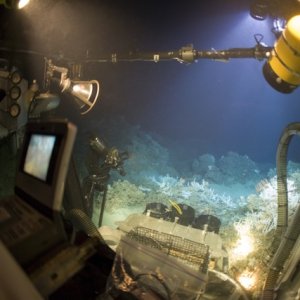
Meanwhile, The Metals Company, a US subsidiary of a Canadian firm, submitted the first-ever application to mine the seabed under an existing US law shortly after the executive order was issued. Supporters argue that seabed mining has a smaller environmental footprint than land-based extraction. However, critics contend that the risks are still largely unknown, as much of the deep ocean remains unexplored. Disturbing these ecosystems could result in long-term ecological consequences.
You May Like



Most popular








