

Mechanical Integrity in HPHT Wells: Effect of Thermal Expansion






 By David Gustavo Garrido Amaya | Drilling Design Engineer -
Tue, 08/12/2025 - 13:30
By David Gustavo Garrido Amaya | Drilling Design Engineer -
Tue, 08/12/2025 - 13:30
High-pressure, high-temperature (HPHT) wells represent one of the greatest challenges in modern petroleum engineering. These extreme environments challenge not only technology but also human creativity and ingenuity to ensure safe and productive operations. One of the most critical phenomena in these conditions is annular pressure buildup (APB), a thermo-hydraulic effect that can compromise well integrity.
What Is APB and Why Is It Important?
When fluids confined in the annular spaces of a well experience a temperature increase due to heat transfer from the reservoir, they expand. This phenomenon, known as thermal expansion, generates a particularly critical pressure increase in the first hours of production, when thermal variations are most pronounced. This can lead to catastrophic failures such as pipe collapse and bursting; casing failure due to combined stresses; lifting of head and surface control connections; and/or environmental hazards.
Strategies to Mitigate APB
The challenge lies in predicting and mitigating this pressure increase to avoid operational and environmental risks.
To address this phenomenon, several innovative strategies can be implemented. Some of these strategies are:
-
Effective cementing: Ensure cementing to the surface to eliminate confined annular spaces.
-
Annular fluid selection: Use fluids with low coefficients of thermal expansion. For example, synthetic foams or highly compressible fluids.
-
Pressure relief valves: Incorporate controlled relief systems at critical points, such as relief valves or rupture discs.
Case Study: Well B-1 in the Gulf of Mexico
In field B, located in the southern Gulf of Mexico, the thermal and mechanical behavior of an HPHT well was evaluated throughout its production life. The analysis was carried out using Wellcat software, an advanced tool that evaluates critical scenarios, such as thermal expansion of fluids confined in annulus spaces, providing detailed pressure and temperature profiles.
This well, with a reservoir pressure of 8,960 psi and a bottomhole temperature of 167°C, presented a critical pressure buildup scenario in the 9 5/8" casing annulus, reaching a pressure surge of 9,119 psi.
Analysis Results
The model revealed that the confined annular spaces, especially in the 9 5/8" TR, experienced a significant pressure increase due to heat buildup. This phenomenon compromised previously established design factors, jeopardizing the mechanical integrity of the well.
Furthermore, the 13 3/8" TR showed vulnerability to bursting, while the 9 5/8" TR presented a risk of collapse. In both cases, the VonMises envelopes indicated that the loads exceeded permissible limits, which could result in catastrophic structural failure.
A Successful Redesign
The redesign of well B-1 included the implementation of a Tie-Back seccion, ensuring complete cementing of the 9 5/8" TR and eliminating the confined annulus. This, along with the incorporation of best practices, helped us guarantee the mechanical integrity of the well. This approach allowed us to maintain safety factors even in the most critical scenarios, significantly reducing the risk of structural failure.
Redesign Benefits
Elimination of confined annular spaces: Pressure buildup in vulnerable sections was prevented.
Ensuring good cementing at the production packer level: This redesign ensured good cementing behind the production packer.
Increased operational safety: The well could operate safely even under extreme pressure and temperature conditions.
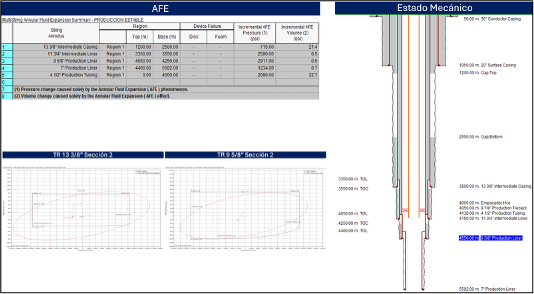
Figure 1. Result of the redesign of well B-1.
Conclusion
Thermal expansion of fluids in HPHT wells is a technical challenge that requires innovative solutions and a multifaceted approach. Implementing strategies such as annular pressure control with appropriate technologies, the use of specialized fluids, and advanced modeling are key to ensuring safety and efficiency in oil-field operations. This case not only highlights the importance of engineering in problem-solving, but also the commitment to safety and sustainability in the energy industry, ensuring successful hydrocarbon exploitation in extreme environments.
Most popular








