


PEMEX 3Q25 Crude Output Falls 6.6%, Debt Rises to US$100 Billion
 By Andrea Valeria Díaz Tolivia | Journalist & Industry Analyst -
Tue, 10/28/2025 - 10:58
By Andrea Valeria Díaz Tolivia | Journalist & Industry Analyst -
Tue, 10/28/2025 - 10:58
Mexico’s state-owned oil company PEMEX reported continued operational and financial pressure in its 3Q25 results, with crude production down 6.6% year-on-year to 1.65MMb/d. The company noted gains in natural gas output and steady refining activity, as well as ongoing government-backed efforts to stabilize payments and strengthen its balance sheet. However, financial debt rose to US$100.3 billion, and supplier obligations increased 20% from the previous quarter to MX$518 billion, highlighting persistent liquidity strains.
Third-quarter revenues fell 11.1% year-on-year to MX$378.9 billion, driven by lower export volumes and softer international crude prices. The cost of sales declined 10.3% to MX$341.6 billion, aided by reduced product purchases for resale, the elimination of extraction and exploration duties, and smaller inventory adjustments. Gross profit reached MX$37 billion, while a foreign exchange gain of MX$33.4 billion helped offset lower sales and financial impairments.
Tax and royalty payments totaled MX$47.7 billion, compared to a credit of MX$6 billion a year earlier, when PEMEX benefited from a temporary 100% fiscal stimulus on shared utility rights payments.
The NOC’s total financial debt stood at US$100.3 billion at the end of September, a 2.7% increase over the previous quarter due to short-term financing operations according to PEMEX. Converted at the prevailing exchange rate, total debt reached MX$1.84 trillion. Supplier debt, however, climbed sharply, up 20% quarter-on-quarter to MX$518 billion, or MX$87 billion higher than in 2Q25, despite the company’s ongoing efforts to normalize payments through its government-backed financing program.
Despite the increase in debt, PEMEX narrowed its 3Q25 net loss by 62% to MX$61.2 billion from MX$161.5 billion a year earlier, supported by lower sales costs, improved asset performance, and a favorable exchange rate. EBITDA stood at MX$58.4 billion, down by MX$27 billion from the prior year, reflecting lower revenues and continued operational constraints.
Government Support and Financing Strategy
The company continued to advance its Integral Capitalization and Financing Strategy, developed jointly with the Finance and Energy ministries under its 2025–2035 Strategic Plan. Key elements include a US$11.3 billion repo transaction using US Treasury bonds as collateral, the MX$250 billion Investment Financing Program 2025, which began paying suppliers in September, and a bond repurchase initiative worth up to US$9.9 billion.
PEMEX expects these measures to reduce short-term debt by about 32% and overall financial debt by roughly 10% by the end of 2025, while achieving zero net borrowing and stabilizing supplier payments before the close of the current administration.
Capital Expenditure and Budget Execution
Pemex executed MX$110.6 billion in capital investments as of September, equivalent to 83% of its MX$133.5 billion annual CAPEX target. The company also spent 82%, or MX$182.6 billion, of its MX$223.7 billion investment budget for the fiscal year, focusing on hydrocarbon extraction and refinery upgrades. This represents an almost 40% reduction in investments compared with the same period in 2024, where the NOC had already invested around MX$224 billion.
Funds have been directed to accelerate new field developments to offset declines from mature assets and to advance the Refinery Rehabilitation Plan aimed at improving operational reliability and crude processing capacity.
Capital contributions in the third quarter included MX$1.9 billion for the Olmeca refinery in Dos Bocas, MX$1.8 billion for fertilizer subsidiaries, and MX$190 million for the Gasolinas Bienestar project.
Production and Operations
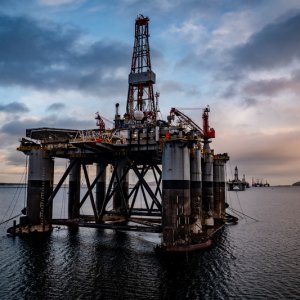
PEMEX’s total crude oil output stood at 1.648MMb/d, representing a 6.6% decrease being 116Mb/d below 3Q24 levels. About 64% of these hydrocarbons were sourced from offshore and 36% from onshore operations. The company attributed the decline to natural field depletion and delays in offshore infrastructure installations. The Ku-Maloob-Zaap, Cantarell, and Abkatún-Pol Chuc complexes accounted for 68% of total national production.
Natural gas output averaged 3.73Bcf/d, down 19MMcf/d year-on-year, partially offset by new wells at the Ixachi field and the start of production at Bakté. Non-associated gas output rose 5.8% year-on-year to 110MMcf/d.
Crude processing reached an average of 1.009MMb/d, up 4.8% compared to the same period last year, supported by steady operations across the National Refining System (SNR) and the partial start-up of two processing trains at the Olmeca refinery. Olmeca accounted for 16% of total crude processed in the quarter, ranking as the third most active refinery after Tula and Salina Cruz.
Petroleum products production rose 7.6% to 1.001Mb/d, with high-value distillates (gasoline, diesel, jet fuel) making up 62% of total output.
Gas processing averaged 2.23Bc/d, down slightly due to lower availability at Cactus, Ciudad PEMEX, and Burgos according to the NOC. Dry gas production reached 1.747Bcf/d, a 29MMcf/d decline from the prior year.
Exploration and Reserves
PEMEX completed 16 development wells and four exploratory wells in 3Q25, fewer than in the same period of 2024. However, new exploration findings in the Marina Sur and Terrestre Sur assets revealed promising preliminary 3P reserves totaling 140MMboe.
The Xomili-1 well, currently under evaluation, yielded 35° API crude with an estimated 12MMboe, while Iklum-1A produced 45° API gas condensate with 111MMboe, the largest contributor. The Bakté-1DEL well added an estimated 17MMboe, strengthening PEMEX’s reserve base and production outlook.
Environmental and Safety Performance
PEMEX reported a 15.4% increase in CO₂ emissions and a 25% rise in methane emissions, largely attributed to flaring during gas processing and new well operations. Sulfur oxide emissions remained stable.
Despite the environmental challenges, industrial safety indicators improved. The accident frequency rate declined 17% to 0.29 per million man-hours, while accident severity dropped 44% year-on-year. Energy consumption fell 4.2%, and the company invested MX$639 million in 85 social programs across 12 states, aligned with the UN Sustainable Development Goals.
PEMEX also intensified employee training on ethics, transparency, and compliance, with about 2,000 workers participating during the quarter.
You May Like



Most popular








