


A 360° Look at Mexico’s Electoral Process
 By Adriana Alarcón | Journalist & Industry Analyst -
Mon, 06/03/2024 - 14:20
By Adriana Alarcón | Journalist & Industry Analyst -
Mon, 06/03/2024 - 14:20
Yesterday, Mexico celebrated one of its most significant electoral events to date, as millions took to the polls to make their voices heard and chose the political party that will lead the country for the next six years. Undeterred by weather, distance, or circumstance, voters included those Mexicans living abroad and even those incarcerated.
While votes are still being counted, the 2024 Preliminary Electoral Results Program (PREP) gives a virtual victory for the presidency to MORENA’s Candidate Claudia Sheinbaum. If confirmed, she would become the first female president in Mexico's history. According to the PREP, with 92.88% of the votes counted, a total of 55 million Mexicans voted, representing 60% of the electorate.
During the June 2 elections, voters also filled over 20,000 positions of public office. Among the positions up for grabs were those in the executive and legislative branches, including the presidency, senate seats, federal deputy positions, and various local offices. As part of the process, the INE appointed 49,748 Electoral Supervisors and Assistants.
While some in the media called these “largest elections in Mexico’s history," their true impact becomes palpable when observing the diverse range of actors involved, including incarcerated individuals. The event, however, was also marked by controversy surrounding the voter registry.
Polling Station Officials: Key Players in the Electoral Process
Polling station officials are key actors in the electoral process. According to the INE's guidelines, over 1.5 million citizens are required to facilitate this process. While the selection process, based on birth months and surnames, has its quirks, the responsibility entrusted to these officials is paramount. Divided into roles such as president, secretaries, and scrutineers, these officials undergo training to ensure the smooth functioning of the elections. There are four types of polling stations: basic, contiguous, extraordinary, and special. Party representatives and electoral observers are also present.
In December 2023, it was determined that citizens born in March and April, with surnames starting with the letter “A,” would be the primary pool for polling station officials on June 2. However, due to a lack of citizen participation, it became necessary to consider others outside this initial selection criterion.
This was my case. My last name starts with "A," but my birthday is in September. Despite this, INE personnel visited my home to ask me to work as a polling station official. Citizens have the right to decline, but I chose to participate because I felt it was important to be part of the electoral process.
To become a polling station official, a position that can be accepted or declined, those interested undergo a brief induction, receive instructional materials, and later undergo a two-hour training session that includes an election simulation to familiarize us with the electoral package and our specific duties.
During my training, the tension was palpable among officials as they prepared to prevent potential errors in what is touted as the largest elections in history. From first-time volunteers to seniors eager to partake in democracy, each brings a sense of duty to the table.
On election day, people were lining up to cast their votes one hour before the polling station opened. According to several voters, the turnout was extremely high, unprecedented in my area, with about 71% participation. Young people voting for the first time, elderly individuals, and people with mobility limitations were all seen making an effort to vote. Children were also happily watching their parents vote.
There were no incidents at my polling station during the elections. However, on June 1, Miguel Patiño, Executive Director of Electoral Organization, INE, reported that some polling stations could not be opened due to various risks. "We have 170,179 approved polling stations, but 222 of these stations were determined not to be installed," says Patiño.
Claudia Suárez, Acting Head of the Executive Ministry, INE, stated that the Executive Directorate of Electoral Organization (DEOE) reported the installation of 99.85% of the approved polling stations nationwide, on June 2. Suárez also says that 5,089 incidents were reported during the elections, such as people trying to vote without an ID or not being on the voter list. Of these, 71.58% were resolved satisfactorily.
After the official closing of the polling stations nationwide, the SIJE updated that a further 23 approved stations were not installed. Additionally, 29 stations were permanently closed during the voting process.
These closures occurred in the following districts: two in District 07 of Mexicali, Baja California, due to document theft; one in District 04 of Tulancingo, Hidalgo, due to violence stemming from a lack of ballots at a special station; one in District 07 of Cuautitlan Izcalli, State of Mexico, due to destruction of documents and electoral materials; 10 in District 10 of Zitacuaro, Michoacan, due to gunfire at the start of the vote count.
Other incidents included one in District 11 of Guadalupe, Nuevo Leon, due to intimidation by representatives of the Movimiento Ciudadano party; two in District 02 of Cuitaculco, Puebla, due to the presence of an armed group; seven in District 02 of San Juan del Rio, Queretaro, due to gunfire; and five in District 18 of Zongolica, Veracruz, due to destruction of documents and electoral materials.

Special Polling Stations
The INE set up 1,200 special polling stations across the country, each with 1,000 ballots. These special stations were meant for Mexicans who were away from their registered address or in another state. However, only 1,000 ballots were available at each special station, as reported by Forbes.
The institute also announced the installation of electronic polling stations, with a total of 301 electronic ballot boxes distributed as follows: Mexico City would have 44 special polling stations using 132 electronic ballot boxes; Nuevo Leon would have 27 special polling stations with 81 electronic ballot boxes; and there would be 23 locations abroad with 88 electronic ballot boxes.
“I arrived at 7:40 am, and by 11 am, they told us there were no more ballots. While we were in line, several people counted, and I was around number 722. I was not worried about getting my turn, but suddenly there were no more ballots. I could not vote. I looked into it and found all voting stations were the same. Many people could not vote, and my voting station was supposed to be electronic,” says Raymundo Carballo, a voter to MBN.
Elections Abroad
The Mexican Institute Abroad estimates there are 12.03 million Mexicans living outside the country, though not all are of voting age, of which about 97.33% reside in the United States. In 2005, the electoral law was modified to allow Mexicans residing abroad to vote in presidential elections.
MBN reports that during a press conference on April 22, Minister of Foreign Affairs (SRE) Alicia Bárcena addressed the issue of voting for Mexicans residing abroad in the 2024 elections, particularly focusing on irregularities in the process. Bárcena highlighted INE’s commitment to regularize as many cases as possible before the May 5 deadline. She mentioned alternative voting options, including electronic voting from consulates at 20 designated polling stations in the United States (located in Atlanta, Chicago, Dallas, Fresno, Houston, Los Angeles, New Brunswick, New York, Oklahoma, Orlando, Phoenix, Raleigh, Sacramento, San Bernardino, San Diego, San Francisco, San Jose, Santa Ana, Seattle, Washington D.C.). Three other electronic polling stations would be installed in the rest of the world: one in Paris, France; one in Montreal, Canada; and one in Madrid, Spain. The polling stations had 1,500 additional ballots beyond the nominal number registered at these locations.
There were 227,112 eligible Mexican voters traveling abroad for the 2024 elections, with 23% opting for postal voting, 70% for electronic, and 7% for in-person voting. The INE guarantees that Mexicans residing abroad can vote through various modalities: electronic internet voting, postal voting, or in-person voting.
INE Councilor Beatriz Zavala revealed a preliminary participation of over 180,000 votes in various modalities, while INE Councilor Arturo Castillo Loza mentioned that 39,590 postal ballots have been received. For internet electronic voting, 135,331 votes have been recorded so far, with a participation rate of 89.03%, surpassing the total votes received in 2018 by 37,000. Regarding in-person voting, Castillo mentioned: "These numbers are preliminary, but according to consular reports, we have received about 5,755 votes, in total, there have been 180,676 votes from Mexicans residing abroad.”
The Challenge of Voting Presencial Abroad
The Mexican Embassy in Madrid became a focal point of controversy on voting day. The embassy expected 1,989 registered voters and an additional 1,500 unregistered voters who could use special booths. Some individuals had been waiting since the day before, while others arrived as early as 6 a.m.
Despite their early arrival, even registered voters found themselves still in line after more than 10 hours. The crowd murmured that the delay was not due to a shortage of ballots but rather failures in the electronic voting machines, which significantly slowed the process. The lack of movement in the lines made voters frustrated and angry, leading to protests in front of the embassy with shouts of "We want to vote!" and "Fraud!"
"At 4 p.m., only about 400 people had voted. The organization of the elections in Madrid was very poor; the embassy did not foresee that such a large number of Mexicans would want to vote," Karen Hernández, a voter in Madrid, told MBN.
In response to the growing unrest, the INE decided to extend the voting hours at the Madrid consulate until 2:00 a.m. local time, equivalent to 6:00 p.m. in Mexico. However, it was reported that many people abandoned the line throughout the day due to the lack of progress and the extreme heat, which caused dehydration among those waiting. In addition, many people in the line were unable to vote, as they ran out of spaces for the unregistered.
The Challenge of Postal Voting
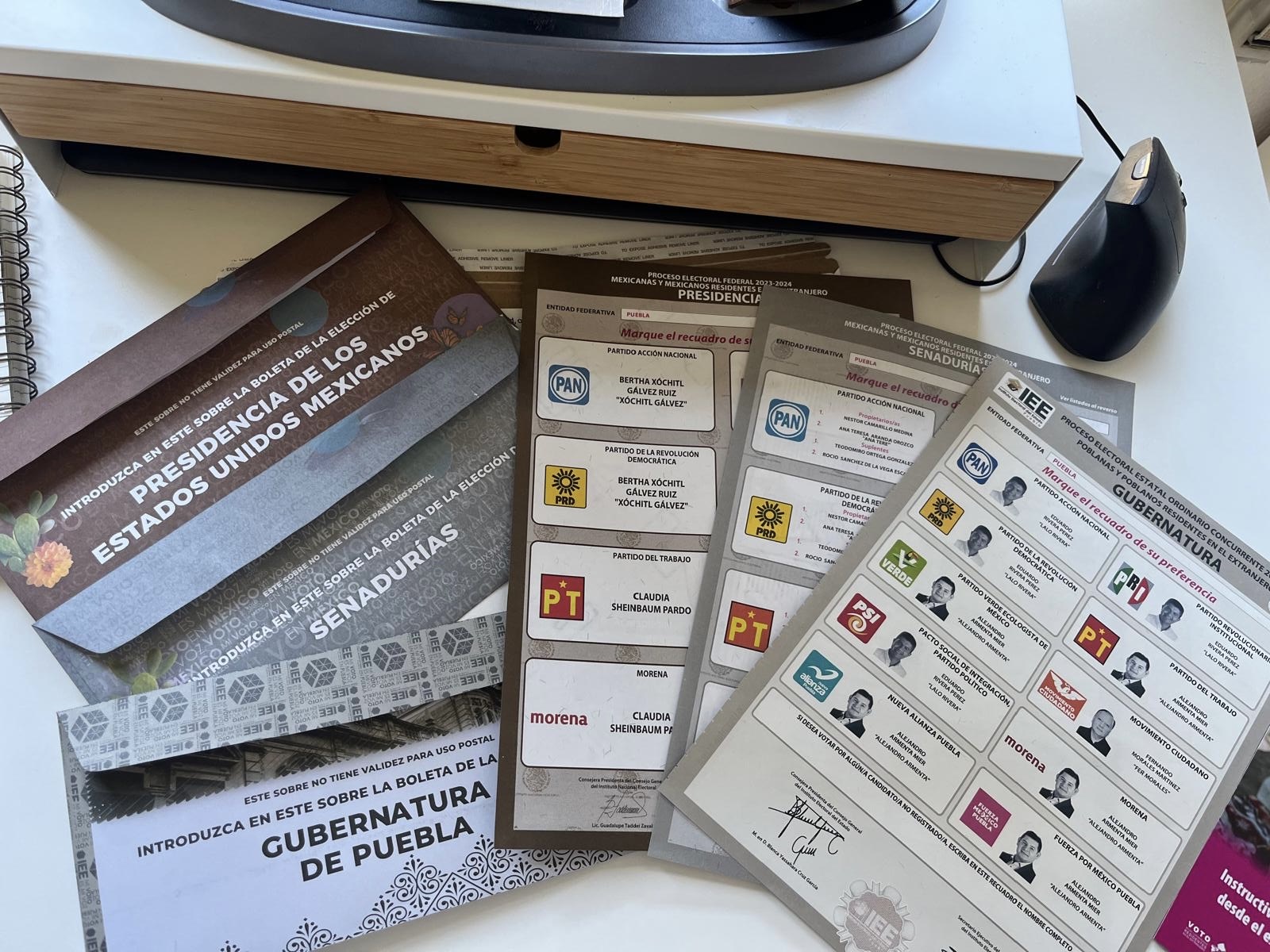
Verónica García Zenteno, Business Intelligence Project Manager, VISEO, a Mexican living in Valencia, Spain, tells MBN that, despite residing far from home, she opted for postal voting due to concerns about the reliability of online methods. However, she highlights the lack of promotion and misinformation surrounding the electoral process for expatriates, which relied mainly on social media rather than on official channels for information.
To register to vote from overseas, individuals have to take many steps and provide sensitive information like rental contracts. Despite successfully registering, García noted discrepancies in the delivery process, with lax identification requirements raising concerns about the integrity of the system. “I will vote, I have fulfilled my mission, whether it arrives or not is no longer up to me, but, I mean, do I trust the process 100%? The truth is, no,” says García.
Her decision to vote stems from a sense of responsibility toward her family and her homeland. García's experience reflects the complexities and challenges of engaging in democratic processes from afar. "I do not plan on returning to Mexico, but I feel very responsible because my whole family lives there. What I want most is for my nephew to grow up in a safe country," says García.
The Challenge of Digital Voting
On April 15, the INE reported an increase in registrations of Mexicans abroad using voting credentials processed in Mexico. This prompted a second review of the applications, especially given concerns raised by council members and political parties.
In this review of 42,436 applications, mostly with credentials processed in Mexico, 39,724 were deemed inadmissible. Among these, 1,830 had irregularities or inconsistencies in signatures, such as illegible signatures, photocopies instead of original signatures, or signatures that did not match those on the credential, MBN reported.
Irregularities related to problems with signatures in 18,203 cases, problems with proof of address in 861 cases, non-compliance with requirements in 12,574 cases, and registrations with multiple irregularities in 8,086 cases, says INE.
After facing national and international criticism, the INE informed that those who were rejected still have the opportunity to make the necessary clarifications and confirm their registration to the Electoral Roll of Voters Abroad before May 5. Arturo Castillo Loza, President of the Temporary Commission for the Vote of Mexicans Living Abroad, assured that the INE prioritizes "ensuring the integrity and reliability of the Nominal List of Voters and that those who genuinely applied to vote from abroad can rectify their registrations."
Gabriela Ocampo, a psychologist living in France, shared her experience of voting online with MBN. Ocampo moved to France just nine months ago. Before leaving Mexico, she updated her voter ID. She wanted to stay informed about the electoral process, so she registered on the "Voto en el Extranjero" platform and pre-registered to vote about three months ago.
"Two weeks after submitting everything, I got a response saying everything was fine. My wife went through the same process and received the same confirmation: we were both registered to vote abroad and should prepare for further instructions. Then, we received an email, like many other Mexicans abroad, saying there was an issue with the process, even though we had been told it was fine. We emailed to ask what happened and were told there was a problem with the signature authentication. I decided to go directly to the embassy to vote. I planned to go early and avoid further issues. But two days later, we received an email saying we could vote without any further action, however we never sent any information,” Ocampo tells MBN. “Eventually, I was able to vote without any problems, but the whole process was very strange and left me feeling uneasy. It made me question whether the process was really being taken seriously. The same thing happened to my spouse.”

Voting in Pretrial Detention
On Feb. 20, 2019, the Superior Court ruled that individuals in prison who have not been sentenced have the right to vote, as they are protected by the presumption of innocence principle.
In this electoral process, voting for individuals in pretrial detention took place in the federal entities and electoral districts where a penitentiary housing such individuals is located. This process involved early voting within the prisons, following a security protocol and with infrastructure to set up Voting Reception Tables, as informed by the relevant Ministry of Public Security. INE personnel prepared and delivered the invitations and requests as determined in the Nominal List, compiled secure election packet envelopes with the necessary documentation and collected the early votes from individuals in pretrial detention from May 6 to May 20, 2024.
The counting and tallying of votes will be conducted at tables approved by the District Councils. The INE and Local Public Organizations will then integrate the results into the electoral systems according to each type of election. According to El País, over 50,000 individuals in pretrial detention were able to vote for the first time.
A source close to MBN who works at the North Prison, Mexico City, reported that the voting process there was extremely discreet. “INE officials were present for two to three days, escorted by the army, with the ballot boxes heavily guarded by the National Guard, extremely armed. The voting took place in the North Prison, and the ballots will be counted on June 3 or 4 after the elections, as no one is allowed inside the prisons on election day. The exact details of the process, including where and how it was conducted, remain undisclosed,” said the source to MBN.
Democracy in Action
Political scientist Robert Dahl outlined five critical criteria for a democratic process in his book "On Democracy." These include effective participation, voting equality, enlightened understanding, control of the agenda, and the inclusion of adults. However, achieving a full democracy goes beyond merely holding free and fair elections, as highlighted by the Mexican Ministry of Foreign Affairs. It requires respecting fundamental rights, upholding the rule of law, striving for social equality, and combating poverty effectively.
The essence of democracy extends beyond electoral perspectives, fostering the unrestricted respect for individuals' rights and freedoms, equal opportunities for all, the rule of law, and the cultivation of values like equality, tolerance, and mutual respect, which are foundational for peaceful social relations, states the ministry.
This article was also written with the help of Journalist & Industry Analyst Paloma Durán.
You May Like





Most popular








