

THE G100 AND ITS GLOBAL RELEVANCE
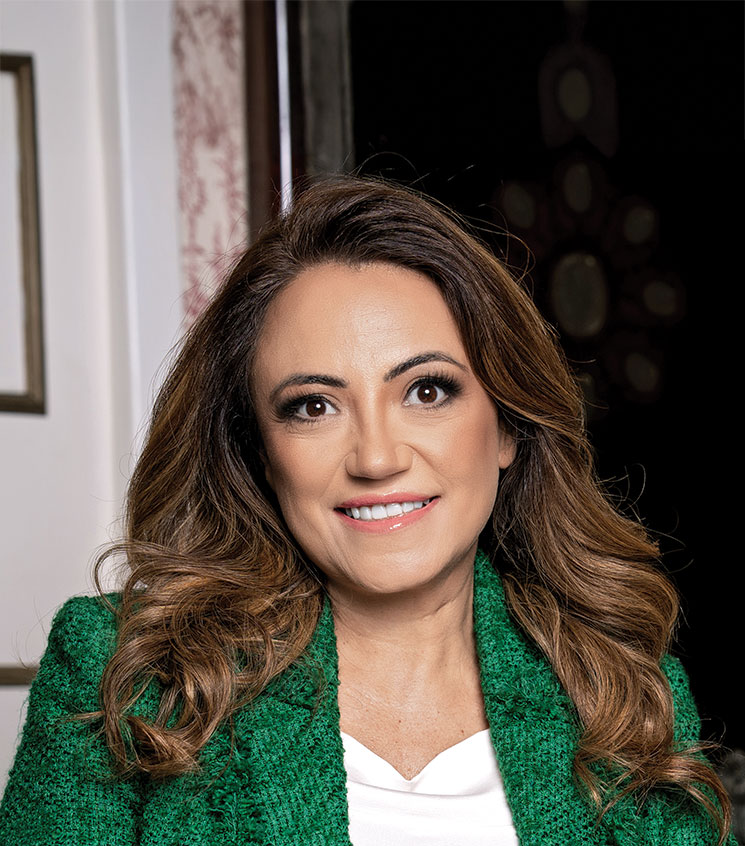




 By Concepcion Valadez Obregon | Country Chair in Communication, Advocacy and Mediation -
Mon, 07/07/2025 - 08:00
By Concepcion Valadez Obregon | Country Chair in Communication, Advocacy and Mediation -
Mon, 07/07/2025 - 08:00
In an increasingly interconnected yet profoundly unequal world, female leadership has emerged as a transformative force capable of shaping economies, influencing public policy, and strengthening communities. In this context, the G100 was founded by Dr. Harbeen Arora Rai, creating a global network of influential women at the highest levels working to promote female empowerment and build a more equitable and sustainable future for all.
But what is the G100? It is a global initiative that started in India, bringing together top-tier women leaders from different sectors — business, government, academia, technology, social, and cultural — with the goal of generating a positive impact and promoting gender equality at all levels. Inspired by the model of global economic forums, such as the G7 and G20, but with an inclusive and humanistic vision, the G100 represents a space where collaboration and sisterhood are the main tools for change.
This network is made up of 100 Circles of Influence, each focused on a key area, such as health, education, finance, technology, the environment, human rights, diplomacy, the arts, sports, and more. Each circle is led by a Global Chair, accompanied by a team of Country Chairs and a Male Liaison, under the fundamental principle of collaboration and shared leadership.
The G100's motto — “Leave No Woman Behind” — encapsulates its inclusive vision of a world where all women, regardless of their origin, have access to opportunities, visibility, training, and a voice. This vision is translated into concrete actions applied to diverse spheres through campaigns, international forums, strategic alliances, and local projects whose primary goal is to accelerate progress toward gender equality.
Despite global progress, gender inequality remains a critical issue across political, economic, and social spheres. Women are still underrepresented in leadership roles, face wage gaps, and often lack access to capital, education, and decision-making power. The G100 was created to address these imbalances through strategic collaboration, visibility, and leadership development.
This network works specifically to support and provide visibility to women in marginalized communities, rural areas, developing countries, and conflict-affected contexts, ensuring that opportunities reach those most in need. From business training to mentoring, including gender-responsive public policies, the G100 acts as a catalyst for global transformation.
One of the G100's greatest strengths is its multidisciplinary and cross-cutting global approach. Rather than focusing on a single agenda, it addresses multiple challenges affecting women's lives, from the gender pay gap and gender-based violence to lack of electricity or pavement in rural areas or access to credit, mental health, and low political representation.
But the G100 was envisioned not just as a network, but as an influential voice in shaping global agendas. With women leaders at the helm of 100 sectoral “Wings” (such as health, diplomacy, finance, education, and more), the organization brings women’s perspectives into public policy, economic frameworks, and cultural discourse. This approach is reflected in the many initiatives led by the organization, including:
-
Mission Million, one of the G100's most ambitious campaigns, which seeks to positively impact 1 million women through training, mentoring, and development opportunities.
-
International forums, such as the Women Economic Forum to the All Ladies League, held in cities around the world, which serve as spaces for dialogue, networking, and the exchange of best practices among women leaders.
-
Strategic alliances with institutions such as the United Nations, governments, NGOs, universities, and companies to develop joint policies, work opportunities and programs that will reach all geographic spaces.
Let’s keep in mind that the importance of the G100 cannot be understood without considering the global context. According to UN Women, at the current pace, it will take more than 130 years to close the global gender gap. The effects of the pandemic, climate change, and armed conflict have widened existing inequalities, disproportionately affecting women and girls.
In this context, the G100 presents itself as a proactive network with concrete solutions. Its strength lies in its capacity for global mobilization and its emphasis on collaborative and empathetic action. Female leadership is not just a matter of social justice, it is a requirement for sustainable development. Various studies have shown that when women have decision-making power, communities are more resilient, economies are stronger, and institutions are more transparent.
Furthermore, the G100 promotes a leadership model based on values such as empathy, inclusion, sustainability, and cooperation, which are essential for addressing the challenges of the 21st century.
It is important to mention that, although it is a women-led network, the G100 does not exclude men. On the contrary, it fosters strategic collaboration between genders through the He for She Champions, which invites influential men who actively support and give visibility to the equality cause from their trench and area of expertise. This mixed dimension breaks polarizing narratives and promotes a true alliance for structural change.
The G100 is not just a network, it is a global movement that recognizes the transformative power of female leadership and puts it at the service of urgent causes. With presence in more than 100 countries, its impact is already being felt in public policies, community projects, educational processes, and decision-making spaces.
At a time when the world needs more cooperation, social innovation, and purposeful leadership, the G100 represents a powerful response: women united, leading with conscience, and building a world where everyone can flourish.
Most popular








