

Iran–Israel Conflict: Markets Speak Louder Than Missiles




STORY INLINE POST







 By Erez Saf | CEO & Founder -
Tue, 06/24/2025 - 08:30
By Erez Saf | CEO & Founder -
Tue, 06/24/2025 - 08:30
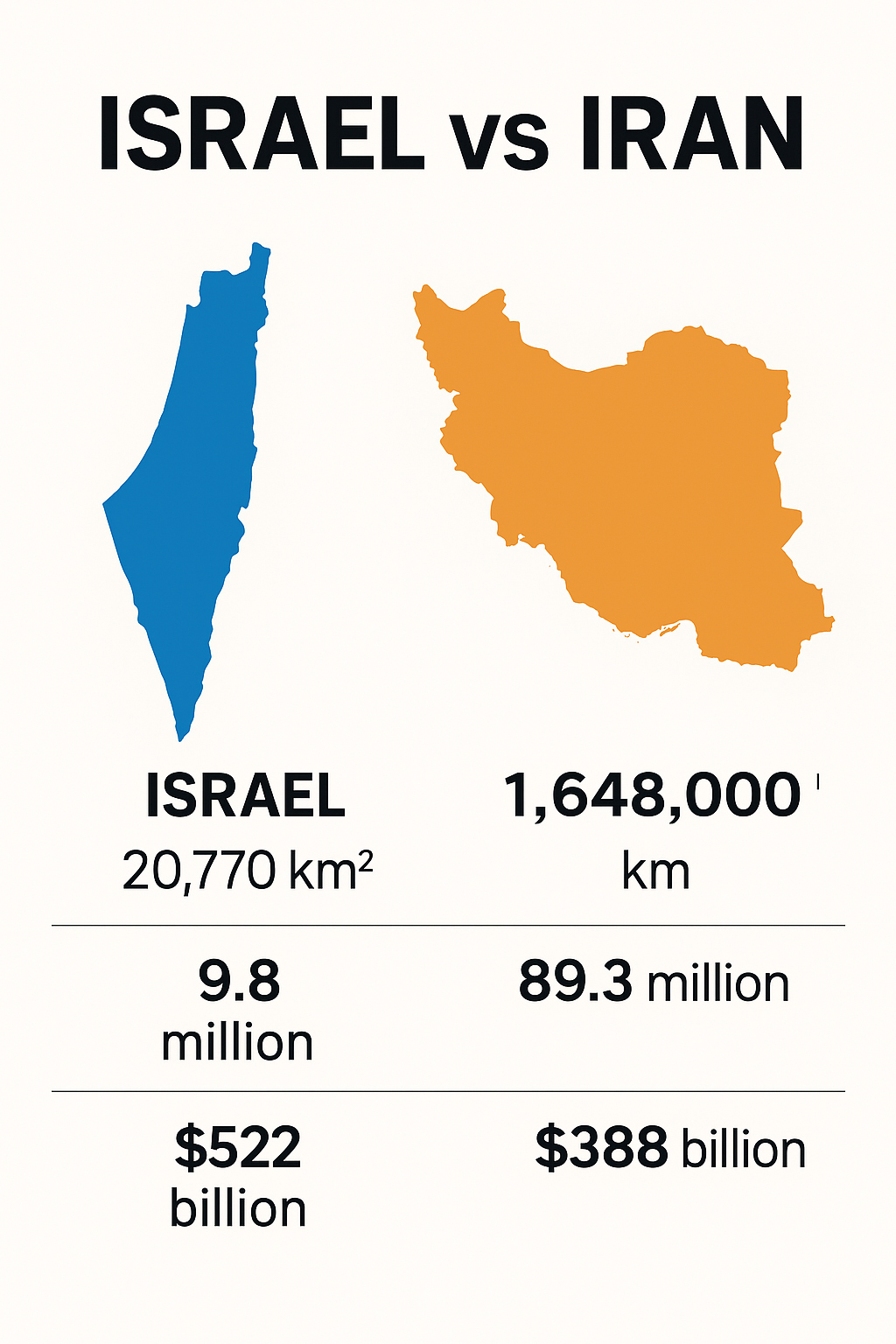
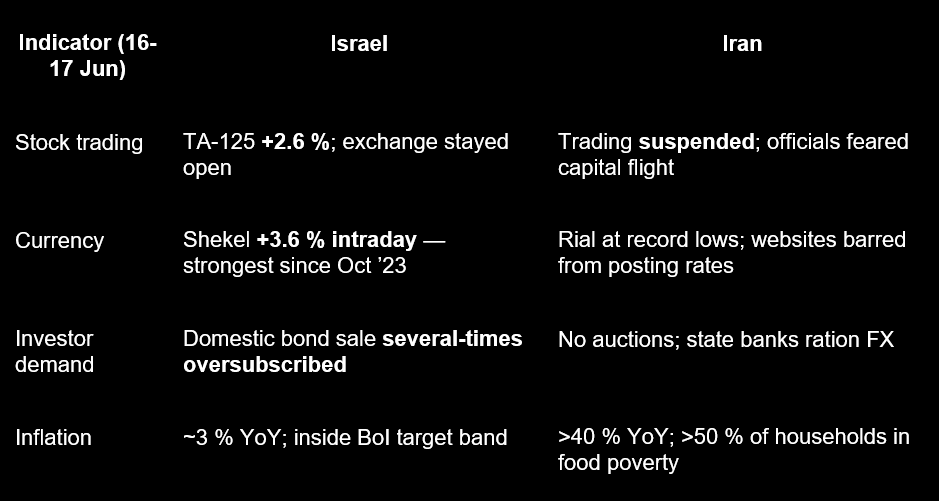
Israel remains open for business. Despite rocket barrages and missile exchanges, the Tel Aviv 125 index rose 2.6% on June 16 after an initial dip, while the shekel surged 3.6% to its strongest level since October 2023. Capital flowed in, bond auctions were oversubscribed, and international credit metrics stayed stable.
Iran shuts down. In contrast, Tehran’s stock exchange was closed for three days — a desperate effort to stave off financial collapse and prevent capital flight. Iran’s inflation hovers above 40%, unemployment is rampant, energy shortages persist, and fuel lines symbolize a crumbling social fabric.
How did we get here?
On June 13, 2025, Israel struck Iran’s Natanz and Isfahan nuclear sites, saying Tehran was “60 days from the bomb.” Iran fired back with hundreds of missiles that reached Haifa and Tel Aviv. Five days later, more than 220 Iranians and 24 Israelis are dead, oil has swung 7% in a single session, and two very different economic playbooks are on display.
The Rightful Defense vs. Totalitarian Threat
At its core, Israel’s military strikes — codenamed “Operation Rising Lion” — aim to neutralize a real nuclear threat from Iran. Prime Minister Benjamin Netanyahu emphasizes a national imperative: “The Israeli Air Force controls the skies over Tehran. We strike regime targets, as opposed to the criminal Iranian regime which targets civilians.” Israel is acting defensively to protect its citizens and broader Western civilization, threatened by potential nuclear-armed Iranian expansionism.
In stark contrast stands Iran’s regime — a theocratic, totalitarian system that openly calls for the destruction of Israel, the United States, and Western values. Iran’s Revolutionary Guards launched over 300 ballistic missiles and over 200 drones, targeting civilian centers including Tel Aviv and the U.S. Embassy, murdering civilians at their homes, driven by revolutionary zeal rather than legitimate security concerns.
Iran’s Economy: Nearing Collapse
-
Stock Market Locked Down: Tehran’s exchange has been shut for three days to avoid financial collapse and prevent mass capital flight — a clear sign of panic.
-
Severe Economic Crisis: Inflation above 40%, rampant poverty (up to 57% malnourished), rampant corruption, and crippling sanctions have already devastated Iran’s economy.
-
Energy and Currency Shock: Israeli strikes disrupted Iran’s energy capacity, spiking oil prices 7–11%, pushing the rial to record lows, triggering lines for basic goods and fueling public unrest.
-
The regime’s totalitarian grip exacerbates every failure, punishing citizens through isolation and repression as the economy implodes.
Israel’s Economy: Steadfast Under Fire
-
Markets Open — and Rising: The Tel Aviv 125 index has not only remained open, it jumped 2.6% on June 16, with earlier rebound from initial dips.
-
Currency Strength: The Israeli shekel surged 3.6% — its strongest move since October 2023 — reflecting renewed investor trust and optimism.
-
Robust Fundamentals: Q1 growth was revised upward to 3.7%, inflation is under control at around 3.1%, and bond auctions were oversubscribed. International ratings remain stable.
-
Israel’s markets tell a story of resilience: open, confident, and dignified, even amid missile exchanges.
Scoreboard: Two economies, two mindsets
-
-
What the numbers shout: Open information and trusted institutions let Israel price risk even under rocket fire; Iran’s blackout deepens distrust and accelerates collapse.
A Personal Snapshot
Monday, June16 — the third day of missile sirens — I jumped on a call with our R&D center in Tel Aviv. Developers were coding between shelter runs. That afternoon, the team shipped a major upgrade for our Mexican clients: faster underwriting pipelines, richer invoice analytics.
The Moral and Strategic Verdict
Israel fights a defensive war to protect itself, its people, and shared democratic values. Its open markets and firm institutions underscore a society ready for conflict, but not hostage to crisis.
Iran’s totalitarian ideology, fixated on annihilation of the West, has driven economic ruin and social breakdown. Its closure of financial markets is both symbolic and real: a regime desperate to maintain control over a collapsing state.
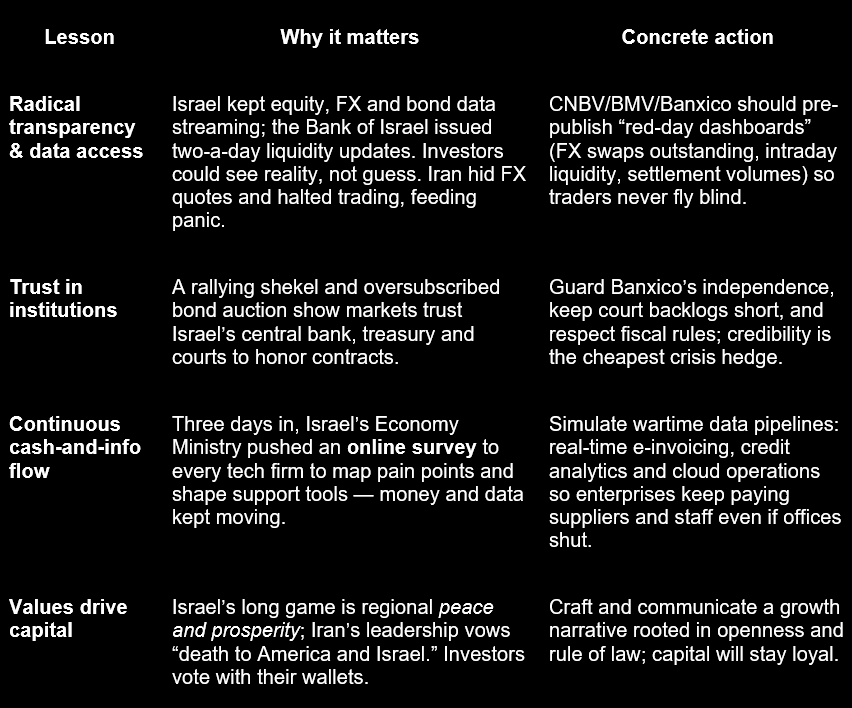
Four take-aways for Mexico’s financial community:
-
Bottom Line for Mexico
Geopolitical shocks are inevitable. The real choice is structural: Do we answer crisis with data, trust, and digital rails or with blackouts and silence? Israel shows how transparency and institutions can keep an economy functioning under bombardment. Iran shows the price of opacity.
Erez Saf leads CRiskCo, an AI-driven credit-risk platform helping banks and fintechs across Latin America keep capital flowing — preferred in peace time.
Most popular








