


Mexico’s Path to 2025: Reforms, Evolving Relations
 By Paloma Duran | Journalist and Industry Analyst -
Mon, 01/06/2025 - 10:48
By Paloma Duran | Journalist and Industry Analyst -
Mon, 01/06/2025 - 10:48
The year 2025 is poised to be a defining period for Mexico, marked by significant transformations across political, economic, and social spheres. Key developments include evolving US-Mexico relations under Donald Trump’s return to the White House, judicial elections, ambitious infrastructure projects like passenger train expansions and preparations for the 2026 FIFA World Cup.
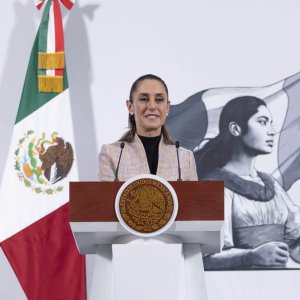
January will witness the launch of judiciary election campaigns, where debates will center on candidates’ qualifications, priorities, and judicial philosophies. In a historic first, citizens will vote for Supreme Court justices, district judges, and magistrates. President Sheinbaum has emphasized that this reform aims to strengthen judicial independence and rebuild public trust in Mexico's legal system.
Concurrently, Mexico will adapt to shifting dynamics with the United States following Donald Trump’s inauguration. His administration’s policies are expected to affect trade agreements, immigration strategies, and border security measures, compelling Mexico to recalibrate its diplomatic and economic approaches. While tensions have risen due to Trump’s controversial proposals involving military intervention and large-scale deportations, both leaders have expressed mutual respect and a commitment to collaborative efforts on shared priorities.
In February, President Sheinbaum’s administration will introduce a legislative package focusing on electoral reforms, restrictions on GMO corn, and updates to procurement regulations. These initiatives aim to modernize electoral processes, safeguard the nation’s biodiversity, and enhance transparency in public spending.
April will see the commencement of passenger train projects connecting Mexico City to Queretaro and Pachuca. These projects promise to improve regional connectivity, reduce travel times, and boost economic development. Additionally, the Chalco–Santa Martha elevated trolleybus system will be inaugurated, offering an environmentally friendly solution to urban congestion and enhancing the daily commute for thousands of residents.
In June, the FIFA Club World Cup will take center stage, offering Mexico an opportunity to demonstrate its readiness to co-host the 2026 FIFA World Cup. This tournament will test the nation’s infrastructure, logistics, and security protocols while showcasing its capacity to manage large-scale international events. The influx of fans and tourists will stimulate the economy, particularly benefiting sectors like hospitality, transportation, and retail.
On Sept. 1, President Sheinbaum will deliver her first State of the Union address, reflecting on her administration’s achievements and outlining priorities for the remainder of her term. Key themes are expected to include advancements in renewable energy policies, judicial reforms, and the expansion of social welfare programs. In October, the administration will mark its first anniversary by showcasing key achievements in public services, transparency, and infrastructure projects. The month will also feature crucial discussions on migration policies, with a particular focus on adapting to the evolving deportation strategies implemented by the United States under the Trump administration.
As the year concludes, Mexico City’s 2026 budget will be finalized, accompanied by an announcement of a minimum wage increase effective January 2026. These measures reflect the government’s commitment to balancing fiscal responsibility with social equity.
You May Like


Most popular





