

Emerging Infrastructure Trends to Watch

STORY INLINE POST


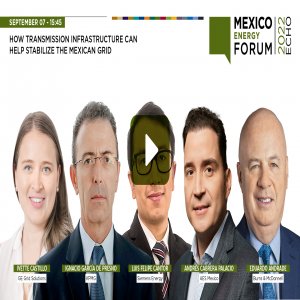


 By Ignacio García de Presno | Lead Partner, Deal Advisory and Strategy -
Mon, 07/10/2023 - 11:40
By Ignacio García de Presno | Lead Partner, Deal Advisory and Strategy -
Mon, 07/10/2023 - 11:40
2023 may represent an era like no other. Future generations will see this year either with profound admiration or profound disapproval. They will either praise leaders for their foresight or condemn them for their inaction.
Leaders of today have a great responsibility. The consequences of their decisions may have a large-scale impact on future generations. The risk lies in allowing the worst of human nature to govern the decision-making process during this period of massive social, political, economic, and environmental change, since collaboration may fail, as well as globalization. As a consequence, society would fracture.
In contrast, the opportunity lies in allowing the best of human nature to succeed. Society can unite in the face of danger, adapt to change, and innovate in adversity.
The willingness to leave the past behind will dictate, to a great extent, the manner in which societies move forward. There will be no progress if societies are chained to sunk investments and to deep-rooted systems; they will not innovate if they cannot open their minds to new ideas and approaches and they will not adapt if they do not look ahead.
According to the KPMG study of Emerging Trends in Infrastructure, there are 10 trends to consider this year. However, we think that there are three trends that are essential to our country:
-
Inflation, prices, and increased risk
A health crisis, followed by a supply chain crisis, leads to an inflation crisis. The great concern for the actors of the infrastructure is that the next stop might be a bankruptcy crisis.
Certainly, the continuous volatility and financial disruption of recent months have not been easy for infrastructure representatives. Infrastructure developers and owners struggle to budget projects that will take years to be executed, and decades in being funded. As costs increase, the return of investment equations change rapidly. As inflation erodes, completing a project seems to be increasingly far away.
The concern of infrastructure owners and investors is, in the majority of cases, that the pricing risk in current agreements flow toward developers and contractors. For years, costs have been fairly steady and the pricing risk was generally considered as a symptom of poor cost management.
Today, the link between risk and discipline is out of control. No cost or price discipline can protect margins in times of inflationary crisis, supply restrictions, and volatile price fluctuations of raw materials.
Over the coming year, owners and investors are expected to start rethinking who should be assuming the cost and pricing risk of their assets and investments. Having strong confidence and cooperation between public and private sectors, owners and contractors, developers and operators, as well as buyers and suppliers, will be a key factor. This can, for some people, lead to a contracting style that may be more similar to an “open book.” The challenge could be maintaining the pricing discipline while permitting a proper risk distribution.
It is possible that governments need to find a tax space to invest in infrastructure to boost economic activities, as the supply chain collapse would be the worst-case scenario this year, but the risk of not constructing anything would be much, much worse in the long term.
-
To make the most of digital technology
Nobody denies the digital transformation can generate huge potential benefits for infrastructure owners, operators, and users. Use cases are multiple, value is quantifiable, and capabilities are numerous; so, why does it take so long for infrastructure to adopt digital technology?
Part of the challenge is that brownfield infrastructure is notoriously hard to digitalize. In many cases, the capacity to optimize the existing assets is limited by the regulatory restrictions that existed when the asset was planned and designed. However, many brownfield owners keep finding opportunities to greatly improve their asset management through efficient use of data analysis tools and adopting new technologies, such as smart meters, predictive maintenance systems, and optimization tools.
On the greenfield side, where projects start from scratch, there is no excuse. Here, digital technology must be incorporated in all aspects and phases of the infrastructure development, from the design and planning through operation and eventual closing. It is necessary to connect all actors in the value chain and the ecosystem based on reliable data sources, and to encourage performance, follow-up, and report generation, in order to become the de facto cornerstone of any physical asset.
This requires data to flow throughout the asset life cycle, among operating silos and through each node of the value chain. To do this, designers, contractors, and developers need to act jointly.
The big question is whether the infrastructure owners, contracting authorities, investors, and operators are willing to pay for it, and whether they can offer the proper incentives in the supply chain to foster digital design and cooperation. The next big question is whether the actors will have the proper skills and required experience to translate their digital capabilities into actual knowledge and value creation.
This year, it is expected that there will be significant pressure on contractors and developers to improve their digital capabilities and incorporate them into the broader value chain.
-
Dealing with sunk costs and abandoned assets
Infrastructure assets are expensive. And they are made to last decades. So, there is an obvious reluctance to abandon them early. Yet, society's needs and expectations have changed. Climate change has rewritten the value equation in many markets, and technological change has upped the risk of obsolescence.
Humans are sentimental creatures. We don't like to throw things away. The problem is that an obsession with sunk costs is slowing the ability to transform. Some hold on to assets that no longer meet value equations. Others formalize processes that no longer work. Many cling to models that no longer reflect reality and subscribe to schools of thought that only reinforce the past.
The potential risks of trying to solve new problems within an old context and mindset are huge. It limits the imagination. It stifles innovation. It slows investment from flowing into new ideas and technologies. It increases costs, encourages waste and creates redundancy.
The transition may be the tricky bit. Rather than trying to replace the current kit with lower-carbon alternatives, people should be asking what it is we are actually trying to achieve. And carbon is only one of the important variables. Electric cars offer a good case in point. There may be a point where the damage caused by manufacturing the electric car outweighs the damage being done by the combustion engine it is replacing. Perhaps a better question is do we all still need to own cars to move around? But few are asking if we still need cars. The sunk costs embedded in road systems, fuel stations, traffic technologies and vehicles force us to cling to cars.
This year, expect to see infrastructure planners and investors start to think more creatively about the problems they face and the outcomes they hope to achieve. Continuously polishing the status quo will not get us where we need to be. Infrastructure owners and investors need to be willing to walk away from our sunk costs and assets in order to find a better way.
The purpose of having chosen these emerging trends in infrastructure is to inspire a mindset change, as well as to try to predict future trends. Instead of simply complaining about the state of the world, we should look forward to possible approaches and technological solutions to propose new ideas and explore new opportunities. We firmly believe that the best of human nature will prevail. Humankind can unite in the face of danger, adapt to change, and innovate in adversity.
You May Like








Most popular





