

2026: Economy, Politics and the Implications for Travel, Tourism





 By Rodrigo Esponda Cascajares | Managing Director -
Tue, 12/16/2025 - 07:30
By Rodrigo Esponda Cascajares | Managing Director -
Tue, 12/16/2025 - 07:30
After a total stabilization of travel post-COVID-19, this year is closing with mixed results. During the year, several geopolitical situations affected the travel intentions of the main outbound markets, with a patent downturn into the United States from Canada (−17.7% Jan–Jun), Germany, and other countries. On the other hand, places in the Caribbean, Asia, and Europe continued to present an incremental number of international arrivals from the main feeder markets.
In addition to the political scenario, the economy has been conditioning how, where, and when different demographic segments travel. The upper-end market continues the pursuit of increasingly sophisticated, curated, and personalized travel experiences around the globe, while the middle-income population struggles to fulfill their leisure expectations.
In 2026, some of these challenges will accelerate key travel trends, such as the micro-personalization of the experiences, the search for value no matter the budget, the pursuit of wellness and well-being, and the need to be in contact with nature. According to the OECD, most economies will improve their performance versus 2025, which could benefit the tourism industry, as travelers will have the means to travel more as their disposable income increases. However, consumer sentiment in the United States, Canada, the United Kingdom, and most European countries shows declines.
According to the University of Michigan's Consumer Sentiment Survey, a benchmark for the mood of US households, 2025 has been turbulent. Preliminary survey data for the period ended November 2025 showed the index at 51.0 (slightly up to 53.3 in early December), but a dramatic slide from 74.0 at the start of 2024.
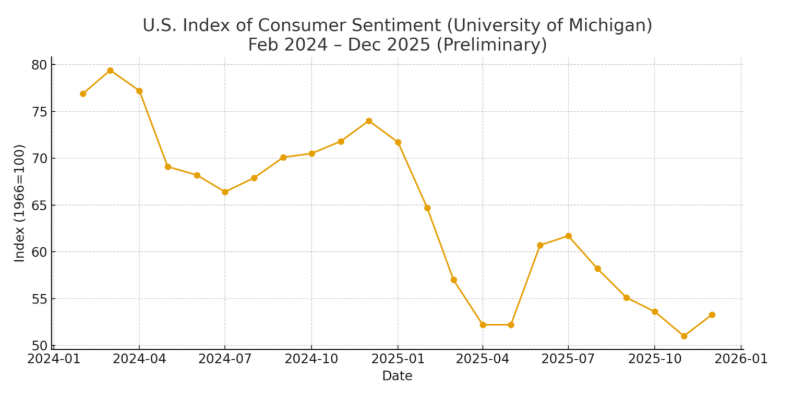
The near-30-point drop reflects growing unease over inflation, tariffs, and what many households see as uncertain economic prospects for 2026. As US consumers tighten their belts, leisure travel becomes more selective. Demand may shift away from long-haul, long-stay, or high-spending trips; instead, travelers may shorten vacations, opt for destinations that offer value or perceived safety, or postpone travel altogether.
Exchange-Rate Dynamics: The Dollar’s Global Reach
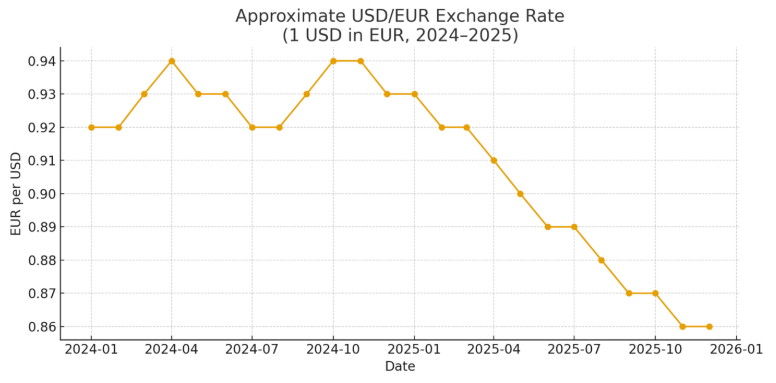
Another economic indicator to watch in 2026 is the exchange rate fluctuations among currencies. As the exchange rate of the main currencies varies in leisure markets, the relative cost of travel changes in global terms. With the US dollar (USD) relatively strong against many currencies, outbound travelers from the United States enjoy greater purchasing power, but incoming tourists to dollar-priced markets face comparatively more expensive pricing.
In practical terms for US travelers, the strong dollar presents a window of opportunity making destinations in Latin America (including Mexico), and parts of Asia more affordable. Travel becomes cheaper in real terms, especially for accommodation, food, and services priced in weaker currencies.
For inbound tourism into dollar-linked or dollar-priced markets (as with many high-end resorts around the world), this strength may deter some travelers worried about total cost, emphasizing the need for “value proofs:” quality, fair price, and experiences.
What This Means for 2026 Travel Trends Globally
Putting together the geopolitical issues and the economic indicators with earlier identified megatrends (micro-personalization, wellness, nature, value), we can outline likely scenarios:
Value- and budget-conscious travel gains momentum: As households in the United States, Europe, and elsewhere try to optimize spending, demand for “value-luxury hybrids,” quality experiences at accessible price points, will grow. Shorter stays, midrange accommodations, bundled deals (air, hotel plus experience), off-peak travel, and dynamic pricing will become key.
Selective long-haul international travel, but rising regional and nature-based tourism: International trips will not diminish, but travelers will prefer destinations offering affordability, meaningful experiences (wellness, nature, culture) and reliability. For US travelers, Europe, Latin America, and Asia become more attractive. For Europeans and Canadians, regional travel or closer international destinations may dominate over expensive long-haul routes.
Premium segment remains resilient: Affluent travelers, less sensitive to sentiment swings or currencies, will continue to spur demand for high-end, curated and exotic offerings. A strong dollar only boosts their purchasing power abroad.
Shift in source markets and diversification become essential: Given uneven sentiment and economic pressure in traditional source markets (United States, Europe, Canada), 2026 will likely accelerate diversification: targeting emerging economies in Latin America, Asia, and the Middle East. These markets may emerge as growth engines, especially if exchange rates and local economies stabilize.
Value-driven competitiveness for destinations like Mexico: For destinations such as Mexico, with its natural, cultural, and price advantages, 2026 presents a strategic opportunity. The combination of a strong dollar, budget-conscious travelers, and global fatigue with overly expensive vacations could lead to a renewed flow of demand.
The 2026 FIFA World Cup as a Global Demand Trigger
The World Cup, hosted jointly by Mexico, the United States, and Canada represents one of the most influential tourism accelerators of the decade for the region, with a massive increase in visibility.
Strategic Imperatives for Mexico’s Tourism Industry
Given the macroeconomic backdrop and evolving travel behavior, Mexico’s tourism sector should consider:
- Developing and marketing value packages, from budget-friendly value offers to high-end bespoke experiences. This caters to mid-budget value seekers as well as affluent travelers.
- Highlighting value and currency advantages, positioning Mexico as “a destination where a dollar goes far,” especially compared to Europe, North America, or parts of Asia.
- Promoting experiential, wellness, and nature-based tourism, capitalizing on global desire for meaningful, restorative travel rather than mere “checklist tourism.”
- Diversifying source markets beyond North America, engaging Europe, Latin America, Asia, and other emerging markets to reduce reliance on any single region.
- Building agility in pricing and offers, using real-time data on exchange rates, consumer sentiment, and booking trends to create dynamic deals or targeted promotions.
- Investing in sustainable infrastructure and community-based tourism, to ensure long-term competitiveness, resilience, and appeal to value- and environmentally conscious travelers.
A Reality-Check Forecast for 2026
While the travel euphoria is behind us, 2026 may offer a more nuanced, resilient, and stable path, one built on value, experiences, diversification, and adaptability.
For global tourism in general, growth should be expected, but not evenly. Demand will fragment according to different traveler segments (affluent versus middle income), region (strong versus weak currency), and traveler expectations (value-seeking versus experience-seeking).
For Mexico, this environment is not a threat, but an opportunity. A strong dollar, global economic uncertainty, and shifting consumer sentiment might tilt demand toward destinations that offer affordability combined with authentic cultural and natural experiences.
If Mexico’s tourism stakeholders act with foresight, by offering flexible pricing, diversified products, and sustainability, 2026 could mark not just recovery, but the beginning of a more balanced, inclusive and value-driven era of tourism growth.
Most popular








