

Mexico Primed to Become Carbon Offset Leader




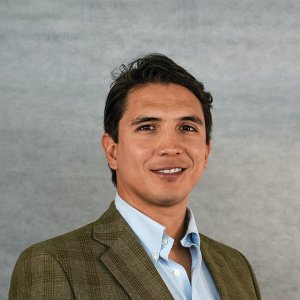
 By Duncan Randall | Journalist & Industry Analyst -
Tue, 10/28/2025 - 16:05
By Duncan Randall | Journalist & Industry Analyst -
Tue, 10/28/2025 - 16:05
Q: How has the international carbon market evolved over the past few years, and what trends are shaping its development?
A: I see a ton of positive momentum in global carbon markets. However, it is important to note that this is not a new development—early efforts at buying and selling carbon began as far back as 1989. While there were lessons along the way, the market has now matured, both internationally and within Mexico, creating the right conditions to operate effectively and with high integrity. As such, when the voluntary carbon market began to expand six years ago, Mexico was well positioned to benefit. The main buyers of these credits are in the United States—our closest neighbor and largest trading partner—followed by European countries. Previously, buyers looked to Africa or Southeast Asia for projects, but geographic proximity has become increasingly important.
In the past few years, the nature of buyers has also evolved. They are now more technically skilled and better informed, no longer relying solely on intermediaries to guide their purchasing decisions. Today, they demand the highest standards of quality and integrity, and that is precisely what Mexico can offer. Mexican projects stand out for their environmental additionality, strong social co-benefits, and the community-based ownership of much of the country’s rural land through ejidos. Many local developers have also prioritized transparency and integrity from the start.
Like any market, the carbon sector experiences ups and downs. But six years ago, Mexico set an important precedent by proving that this mechanism can succeed independently—without relying on government programs or philanthropy, as was often the case with restoration projects in the past. These markets can thrive on their own, provided they maintain high quality and integrity standards. The number of projects in Mexico has steadily increased, raising the overall standard of excellence and yielding positive outcomes. More than 300 projects are now either operational or in development, performing well in international markets.
Over the past decade, Mexico has advanced its emissions trading system, concluding a successful voluntary phase and approaching the start of the mandatory stage.At the subnational level, several states have taken the lead in advancing carbon initiatives. It is clear that the current federal government considers this a priority. Recent statements suggest that the administration aims to use carbon markets as a tool to position Mexico’s ecosystems more prominently on the global stage.
Q: Can you walk us through Carbonof’s process for developing carbon credit projects? How do you differentiate your offerings from other carbon offset providers?
A: Each phase of our project follows a standardized process, and we are currently in the process of obtaining ISO 9001 certification. This ensures that everything we develop meets the quality standards we have set from the beginning.
Our projects are divided into several stages, and from the earliest stage, we define clear objectives—both in terms of environmental additionality and positive social impact. These structured yet flexible processes allow us to adapt to local contexts while maintaining our quality criteria. We have specific parameters for when a project can or cannot be developed, and clear guidelines for how to address issues when standards are not met. This balance between standardization and adaptability has become a key differentiator for us.As part of these processes, we have also developed technology to strengthen transparency and trust—what we see as the backbone of every project. While there are technical challenges in environmental management, Mexico has highly skilled forestry engineers who know exactly where, when, and what to plant. The real complexity lies in the social and governance aspects—ensuring that a project remains stable for 30 to 100 years, involving multiple stakeholders who must all stay aligned.
To support this, we built a governance model centered on transparency. Managing so many participants—often in remote areas with limited connectivity—requires innovative tools. We created a platform called Clear Carbon, which provides real-time access to all project information: investments, financial transactions, and progress updates. Every penny can be tracked, and this data is displayed on an online dashboard linked to a WhatsApp chatbot. This way, even communities in remote mountain regions can access the information directly.
We also developed the “Academia del Carbono,” another WhatsApp-based chatbot that offers continuous training on carbon projects and related topics, including additionality, climate change, and governance. Some communities that were initially skeptical have, within three years, become knowledgeable enough to present their projects at national and international forums. By collecting these best practices and embedding them in the chatbot, we can scale learning across regions. Internally, we use additional digital platforms, and another aspect that distinguishes us is our geographical diversification.
On the commercial side, we organize projects into “pools,” or grouped portfolios. This structure protects project owners, Carbonof, and clients by mitigating risks—if one project underperforms, others in the pool compensate. We rarely sell single projects; instead, we establish multi-year contracts that guarantee a set annual volume from a group of projects. This long-term, diversified approach ensures financial and operational stability across our entire portfolio. As developers, identifying and mitigating risks is central to our work, and this model is one of our most effective tools to do so.
Q: How does Carbonof ensure the integrity and credibility of its carbon offset projects, protecting clients from reputational risk? Specifically, how do you guarantee that forest conservation projects are real, permanent, and additional?
A: We only develop projects that meet the most recognized and rigorous international standards. Currently, we are working with Climate Action Reserve and Verra, and we are evaluating additional protocols that we believe have strong potential. These protocols are either already recognized by the Integrity Council for the Voluntary Carbon Market (ICVCM) under the Core Carbon Principles, or are in the process of being accredited. This provides us with assurance that our projects follow the highest quality standards and comply with global best practices.
For those unfamiliar with how these projects work, the first step is to establish what exists on the land before any intervention begins. We define a baseline—an essential element for determining what additional environmental benefits the project will create. The protocols we use apply rigorous methodologies that combine on-site field measurements with satellite data. Field data is collected annually to verify results, while remote sensing adds another layer of accuracy and transparency.
Beyond these minimum requirements, we conduct additional analyses, including georeferenced studies and dynamic baseline modeling. These allow us to assess activity in nearby, non-project areas to confirm that the environmental benefits we claim are truly additional and measurable. Regarding permanence, there is both a technical and social dimension. On the technical side, governance protocols are established to ensure that the project can respond effectively to any natural or human disturbances that may occur. But the most important factor is maintaining the shared commitment among all stakeholders involved. Long-term success depends on a governance model grounded in transparency and clearly defined roles.
Q: Who are your primary clients, and how do you tailor your solutions to different industries or company sizes?
A: Our clients have evolved significantly. In the past, carbon credits were treated more like a commodity—buyers didn’t pay much attention to where the credit came from, whether it was from a landfill, a wind farm, or a forest restoration project. Today, that has changed. Buyers are now more discerning, seeking projects that align with their sustainability goals and corporate values.
Some companies, for example, prefer credits generated within the same region where they operate. One of our clients specifically asked for projects located near their operations in the United States—particularly around Texas. We were able to offer them credits from reforestation projects in Durango, which are geographically close in relative terms.
Other buyers are diversifying their carbon portfolios by supporting a mix of project types—some focusing on ecosystem restoration and others on improved forest management. Across the board, companies are prioritizing high-integrity credits that comply with the latest protocol versions and carry recognized labels or certifications.
Our success has come from offering a diversified pool of projects through long-term, multi-year contracts that help mitigate risks. This model provides stability and transparency for both landowners and buyers. We’ve seen positive results with clients in the energy sector and beyond. One notable example is Netflix, which included us in its 2023 global ESG report. We were the only Mexican project developer that sold credits directly to the company—though other Mexican credits were sold through international intermediaries.
Ultimately, transparency is central to everything we do. It applies not only to landowners but also to buyers. Our digital platform ensures 360-degree visibility for all stakeholders involved in the project, reinforcing trust and accountability throughout the process.
Q: What are the financing challenges for carbon offset developers in Mexico, and how does Carbonof help them secure the capital needed to launch their projects?
A: When we created Carbonof, one of our main goals was to remove the barriers that prevented the true value of nature—and of the people who care for it—from being recognized and integrated into a viable business model. We wanted that value to be acknowledged within the global economic system. In every project we develop, we finance the initiative ourselves and form long-term partnerships with landowners. Together, we design a work plan that ensures the project’s financial sustainability over time.
There are, of course, various risks involved, but they all share a common root: failing to identify existing risks and to present a credible, practical plan to mitigate them. When that happens, regardless of how many options may exist, the project is unlikely to succeed.
The market has also evolved. Four years ago, we completed some sales through pre-purchase agreements, but today, this mechanism has become less common. Instead, we’re seeing more transactions structured as forward or spot contracts, where payments are made upon credit delivery.
Ultimately, success depends on a combination of creativity and professionalization. Each project must analyze its position and potential in the market and structure itself accordingly. Professionalization is key—not only in generating carbon credits but also in every aspect surrounding the project: social impact strategy, governance, additionality strategy, commercialization, and communication.
Q: How do you identify landowners with carbon offset potential, and what is your approach to forming equitable partnerships with them and local communities?
A: Fortunately, in our more advanced projects, we’ve had very positive results. In fact, many of the projects we’ve taken on have come through word of mouth—landowners who are satisfied with their projects share their experiences with others in rural areas, who then reach out to us. That has been one of the main ways new projects have emerged.
We also take a proactive approach to outreach. For example, we offer free online training courses and participate in major national and international events so that more people can learn about what we do and connect with us. Our website and WhatsApp channel are open contact points for anyone interested.
In addition, we have a structured program of strategic partners who help us identify and connect with landowners across Mexico. These partners, often people with access to forested lands in different regions, become part of the project and share in its benefits while helping us reach new communities.
These strategies have been very effective, though the real work begins once that initial contact is made. From there, we focus on a thorough process of community engagement—ensuring that social safeguards are met, that landowners have access to complete and transparent information, and that they fully understand and agree to the terms of the project before moving forward.
Q: Why should companies invest in carbon offset projects in Mexico rather than in other countries with more developed carbon markets?
A: Part of Mexico’s advantage lies in its natural and cultural wealth. The country’s history, biodiversity, and variety of ecosystems make it truly unique—Mexico is recognized as one of the world’s “megadiverse” nations. That alone is an incredible asset.
Many of the projects here are located in areas with exceptionally high ecological value. In addition, there’s the social and cultural impact these initiatives can generate within local communities. Mexico’s geographic proximity to major markets is another strength—closer to Europe than much of Southeast Asia, and right next to the United States—making collaboration and trade more accessible.
Finally, the quality of project development in Mexico is very high. Compared to other countries where similar projects are being implemented, Mexico benefits from better infrastructure, stronger connectivity, and a highly skilled workforce. As a result, it’s possible to develop projects that meet the same standards of quality as those in the U.S. or Europe, but at a far more competitive cost.
Q: Applicable ESG standards in Mexico–such as CINIF and ISSB reporting standards—focus on emissions tracking rather than actual decarbonization. What real business incentives exist for companies in Mexico to go beyond reporting and invest in carbon offsets?
A: I’d say we need to see this as a business opportunity—for everyone: for ecosystems, local communities, and companies alike. That’s precisely what has been missing from the equation. I came to this work after being an environmental activist since I was fifteen. But when I turned thirty, I realized that while I loved what I had done, it wasn’t truly sustainable or scalable. I saw that most environmental efforts were dependent on temporary funding—projects would stall the moment the next check didn’t arrive. So I thought: we need to integrate these initiatives into the economic model itself, to make them financially self-sustaining. Economic sustainability is, after all, a core part of true sustainability—not just the environmental side.
If we understand these as self-sustaining businesses, then companies should also see them as business opportunities. Because when companies look ahead—whether near or distant—they know they’ll eventually be required to cut emissions, either by investor pressure or, more likely, government regulation. The longer they wait to act, the more expensive and compressed that investment will become.
From a business standpoint, if you look at abatement curves comparing technologies and costs, nature-based solutions are among the most competitive. They’re far more cost-effective than many advanced technologies that haven’t yet reached commercial deployment but are often touted as the future of emission reduction. So why invest in something more expensive or uncertain, when we can invest in something that already works—something that makes economic sense and delivers environmental, social, and financial impact all at once?
Q: How do you measure success for Carbonof beyond financial returns—for example, in environmental impact, social impact, or client outcomes?
A: Customer retention is a key indicator of success for us. Most of our clients have worked with us for several years, and we continually expand agreements to maintain and deepen those relationships. From a commercial perspective, that long-term engagement is a strong measure of performance.
For our projects, success is measured by scale and impact. The more hectares we manage and the more real, verifiable actions we implement, the clearer our progress. Each project follows a plan for additionality and long-term maintenance, and seeing these plans come to fruition is a concrete sign of achievement.
Community engagement is another critical measure of success. For example, we have seen communities go from knowing nothing about carbon projects to presenting their initiatives at international forums within three years. Their technical understanding and active participation reflect meaningful involvement, which we consider a strong indicator of project success.
We also closely monitor economic impact. We track the proportion of revenue these projects generate and the percentage change compared to the period before project implementation. Our goal is to ensure these projects produce measurable improvements for the communities involved, delivering both environmental and socio-economic benefits.
Q: What trends do you expect will shape the carbon offset landscape over the next three to five years, both in Mexico, but also in the United States, where many of your clients are located?
A: Uncertainty in any sector tends to discourage investment, activity, and overall dynamism. This uncertainty can stem from internal sector issues, such as earlier carbon market challenges that have gradually been addressed, as well as external factors, including public policies. Clear and supportive policies are crucial; uncertainty or opposing regulations create a less than ideal environment.
Looking at historical data, even during US administrations with varying approaches to carbon initiatives, growth and investment in mitigation and carbon capture projects did not stop. While the pace may have fluctuated, the sector continued to expand. The science behind the climate crisis is undeniable, and corporations and society increasingly recognize the need for results. This creates an opportunity to prepare for present and future regulatory and market developments.
A key consideration for nature-based projects is that they operate on the timeline of natural processes, which differs from the faster pace of human systems. Unlike technological solutions, nature cannot be accelerated or rushed. This makes it an opportune moment to invest in projects that require time to mature, ensuring they are fully developed and operational when regulatory frameworks become more favorable.
Most popular








