


Trump Pulls US from UN Climate Deal as Extreme Losses Mount
 By Duncan Randall | Journalist & Industry Analyst -
Sun, 01/18/2026 - 13:54
By Duncan Randall | Journalist & Industry Analyst -
Sun, 01/18/2026 - 13:54
This week in sustainability news: President Donald Trump ordered the United States to withdraw from the UN Framework Convention on Climate Change (UNFCCC), marking the most far-reaching US retreat to date from the international system governing global climate action. Meanwhile, a new report by Christian Aid found that extreme weather events in 2025 caused more than US$120 billion in economic losses and affected millions of people worldwide. In other developments, the government of Colima launched a new regulatory framework to incentivize private-sector greenhouse gas (GHG) mitigation across the state, introducing the Low-Carbon Seal of the State of Colima and a State Emissions Compensation System.
More news below:
Trump Withdraws US From Landmark Climate Treaty, 65 Other Bodies
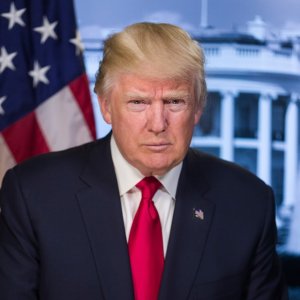
President Donald Trump has ordered the United States to withdraw from the UN Framework Convention on Climate Change (UNFCCC), marking the most far-reaching US retreat yet from the international system governing global climate action. Trump’s Executive Order 14199 also obliges the United States to withdraw from 65 other international organizations, including 30 other UN bodies and 35 non-UN entities, as part of a broader pullback from multilateral institutions tied to climate, energy, and environmental policy. The decision makes the US the first and only country to leave the UNFCCC, the 1992 treaty that serves as the legal and institutional foundation for global climate negotiations involving 198 countries.
Climate Disasters in 2025 Top US$ 120 Billion
According to a new report by Christian Aid, extreme weather events in 2025 caused more than US$120 billion in economic losses while affecting millions of people worldwide. The costliest event of the year was the Palisades and Eaton wildfires in California, which caused more than US$60 billion in damage. The fires directly killed 31 people, with later studies estimating roughly 400 additional deaths connected to the disaster indirectly. The events highlighted how prolonged drought, extreme heat, and urban development patterns have increased vulnerability even in advanced economies. Reconstruction efforts have also been uneven, exposing pre-existing social gaps.
Colima Introduces Low-Carbon Framework with Emissions Seal
The government of Colima has launched a new regulatory framework to incentivize private-sector greenhouse gas (GHG) mitigation across the state, introducing the Low-Carbon Seal of the State of Colima and a State Emissions Compensation System. The rules were published in the Official State Gazette on Dec. 26, 2025, and entered into force immediately. The framework builds on reforms approved by the Colima state congress in November 2024, which introduced ecological taxes aimed at reducing GHG emissions. These taxes, which apply to emissions from fixed sources, took effect in January 2025.
Mexico Updates Sovereign Sustainability Finance Reference Framework
Mexico has updated its Sovereign Sustainable Finance Reference Framework, strengthening the rules that govern how the federal government will access international capital markets through environmental, social, and sustainability-linked instruments. Published on Jan. 8 by the Ministry of Finance and Public Credit (SHCP), the framework also tightens standards on transparency, taxonomy alignment, and impact reporting. The updated framework replaces the original version published in 2020 and aligns Mexico’s sustainable financing strategy with the National Development Plan (PND) 2025–2030. As with the previous framework, it establishes the rules under which Mexico may issue green, social, sustainability, and sustainability-linked bonds, while also outlining what qualifies as sustainable spending. For the first time, it fully integrates the criteria of the Mexican Sustainable Taxonomy, aiming to prevent greenwashing and improve comparability with international sustainable finance standards.
Tamaulipas Seeks Climate Law Reform to Prioritize Carbon Capture
Tamaulipas state lawmaker Ana Laura Huerta Valdovinos (Morena) has introduced a proposal to reform the state’s Climate Change Law in line with Mexico’s General Climate Change Law. The initiative seeks to position the state as a regional hub for carbon capture, use and storage (CCUS). The proposed reform would introduce a legal definition of CCUS aligned with international standards. It would recognize CCUS as a priority mitigation strategy and establish a State Program for Carbon Capture, Use and Storage, including targets, lines of action, pilot projects and evaluation mechanisms. The initiative would also mandate coordination on mitigation efforts among state public agencies, including the ministries of energy, environment and economy. In addition, the reform would further formalize the role of academia and research centers in scientific projects, geological mapping, data development and technological innovation, while fully harmonizing state law with national climate policy and the UN 2030 Agenda.
You May Like






Most popular








