

Hybrid Work: Balancing Flexibility, Trust, and Performance






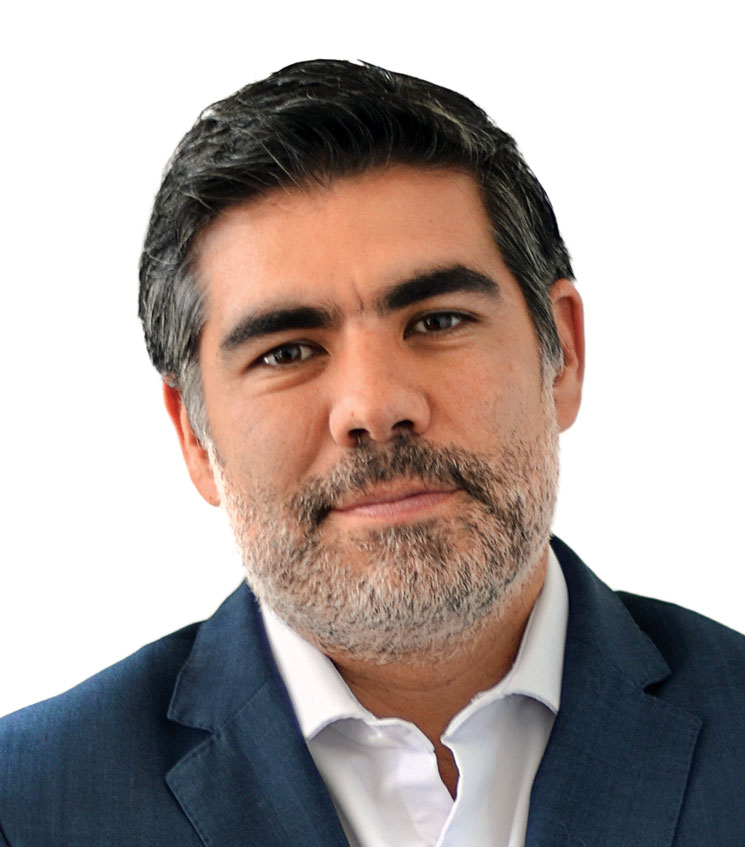 By Javier Torre Alcaraz | Managing Director Mexico and Central America -
Thu, 07/17/2025 - 06:00
By Javier Torre Alcaraz | Managing Director Mexico and Central America -
Thu, 07/17/2025 - 06:00
Work is no longer the same as before, because commuting to the office every day is no longer the only option, although working from home or with flexible hours doesn't solve everything either. There is still a gap between what people want and what companies offer, and this impacts how people work and how they feel.
The hybrid model seems to be the middle ground; however, striking a balance isn't easy. While many employees associate flexibility with greater focus, mental health, and personal balance, companies aren't always convinced that these benefits are fully realized.
Self-management isn't the same across all teams, and not everyone manages to organize their time when working outside the office. Furthermore, distractions at home are numerous and constant. On the other hand, the physical commute to an office clearly marks the beginning and end of the workday, so this routine, which is sometimes criticized, may be what many people need to sustain themselves emotionally.
Michael Page's Talent Trends study indicates that professionals increasingly value well-being. Although 60% of employees say they prefer flexible work arrangements, burnout is still a strong perception. Sixty-three percent of respondents say their work affects their mental health, while 41% say they feel unheard when expressing their needs.
In this context, flexibility is not just a matter of schedules or locations, but part of a broader conversation that includes work culture, leadership, and the way we measure performance. The reality is that neither home office nor in-person work arrangements are good or bad in and of themselves, as some workers perform better from home, while others also see clear declines when daily contact disappears. Added to this are the emotional challenges, as those who remained at home after the pandemic often developed anxiety related to the lack of boundaries between work and personal life. There used to be a line, at least a symbolic one, between leaving home for work and returning at the end of the day; that line is blurred today.
The study's data also shows that leaders have a key role to play in this new environment, especially when 50% of workers say their managers are not trained to manage flexible work arrangements. The problem isn't the format, but the way we use it, and leadership with vision, empathy, and clear objectives can make a difference regardless of where the team connects.
Another finding from the study is that 52% of people believe their company lacks a defined policy on work arrangements, which creates uncertainty and reduces engagement. While 60% of employees say they prefer flexible work arrangements, a significant percentage say they feel unheard when expressing their needs, so unilateral decisions about in-person or home office work can open gaps between talent expectations and business strategy.
In addition to communication, trust plays a decisive role. Today, trust isn't based on seeing people sitting in front of a screen, but on trusting that they will deliver results. This represents a challenge for many organizations that historically associated productivity with physical presence, so the change also involves updating the criteria by which performance is evaluated.
In some sectors, on-site work remains essential, whether due to the operational nature of the work or regulatory requirements, but in others, the ability to choose where to work has become an advantage. Just as some companies strive to attract talent by offering higher salaries, others succeed through flexible arrangements that promote autonomy and reduce turnover.
The challenge, therefore, is not deciding which model is better, but rather, designing work environments that respond to people's real needs and business objectives. This requires reviewing internal policies, measurement systems, leadership training, and access to tools that allow people to work from anywhere without losing efficiency or a sense of belonging.
We are facing a cultural shift that cannot be resolved with a standard formula, as what works for one company may be counterproductive for another. Instead of imposing a fixed model, we must build measurable and flexible agreements that adapt to the time and type of work being done, because in this new world of work, there is no single way to be present.
You May Like




Most popular








