The Impact of AI on Human Decision-Making



STORY INLINE POST
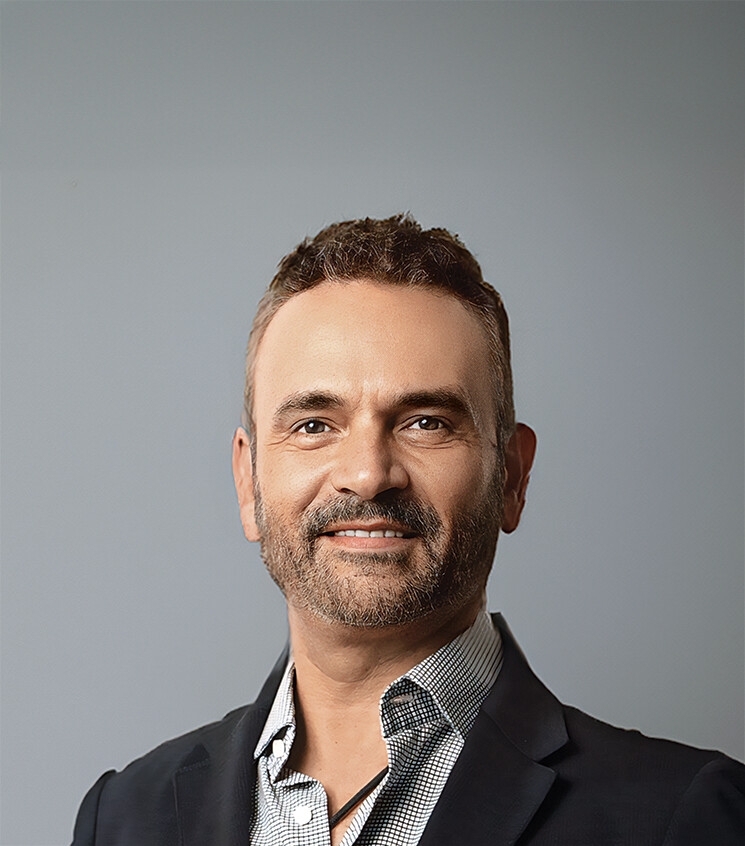
 By Rafael Navarro | CEO at Human Quality & member of AMECH -
Thu, 11/06/2025 - 07:00
By Rafael Navarro | CEO at Human Quality & member of AMECH -
Thu, 11/06/2025 - 07:00
It's not a far-off promise anymore: Artificial intelligence is here now, and it's changing the way businesses run, compete, and grow.
Artificial intelligence has started to have a big influence on strategic thinking in human resources, especially in talent management. Intelligent tools provide accurate analysis, data-driven projections, and unprecedented automation, from recruiting through workforce planning. But the true task is not just taking on technology, but incorporating it in an ethical and human way alongside professional judgment.
Shifting From Instinct to Analytics
HR decisions are based on the experience, gut instinct, and contextual knowledge of a talent leader. Those skills are as important as ever, but today’s context requires decisions that can be made quickly, are measurable, and based on hard data. In this way, AI helps organizations in recognizing patterns, associations, and indications of trends that are not easily seen by the human eye. For example, in hiring, algorithms can go through thousands of résumés in a matter of seconds and determine fit with high performers and flag the presence of turnover markers or long-term retention. Regarding people development, AI is able to map an organization’s skill gaps and identify personalized paths of development. And in workforce planning, it can predict future needs from economic scenarios, attrition rates, and shifts in business demand.
One of the most commonly claimed virtues of AI is its potential to mitigate risk in decision-making. Algorithms do not get tired, or bogged down by feelings, or possess conscious biases like humans. Yet, this view should be taken with caution, since this is modeled on historical data, and if that data includes past discrimination and imbalanced outcomes, the algorithm could systemically repeat those same mistakes. As a result, design, training, and assessment of AI tools should be up to high ethical standards with ongoing monitoring.
AI as Co-Pilot Rather Than Pilot
Technology is not the guarantor of objectivity. Rather, it needs to be properly created by those creating and deploying it. AI as co-pilot, not pilot. To fully grasp what AI can accomplish, it needs to be viewed as an assistive technology, not a replacement for human judgment. The best decisions are made when technology augments, not obviates, human judgment, empathy and strategic vision.
In other words, AI can tell us what is happening, or even what might happen. But it remains leadership’s job to decide what should be done, and how. In complex decisions, such as those involving promotions, reductions in headcount, succession planning, or cultural interventions, context and sensitivity are things that no machine has yet come close to emulating.
Ethics as the New Cornerstone of the Era of Algorithms
The rise of AI in talent management also demands that we reconsider the ethical structures underlying our work. How much is OK to automate in terms of someone’s career? When data categories or profiles workers, what rights do they have? What is the role of transparency in AI-powered systems?
There are no easy answers to these questions, and yet they have to be at the heart of any strategy for cascading technology. Ethical concerns should not be seen as a limit to creativity, but rather, as the best enabler. Responsible AI builds trust, improves employee experience, and ensures companies are organizations that care about the lives of their people. The ascent of AI is also changing the skills that HR professionals should develop. But they also need to be critical thinkers about how data will be used, understanding how to interpret predictive models, and above all an openness to journey new paths. But the need is not just to know how AI works, it’s also to reinforce our uniquely human skills that tech can’t reproduce: strategic thinking, empathetic collaboration, change management, and value-based decision-making.
In an increasingly automated world, what is most human becomes the differentiator. Many businesses are already leveraging AI’s advantages to optimize their talent management. For example:
Faster hiring processes: Employers with extensive hiring needs, leverage chatbots and automated screening for pre-qualifying candidates, accelerating time-to-hire in a more candidate-friendly way.
Turnover prediction: Machine learning models can flag the employees at risk of leaving and be used to design tailored retention strategies.
Personalized growth: Adaptive learning platforms recommend content based on an employee’s performance and learning style profile.
Diversity and inclusion: Some tools spot imbalances in hiring or promoting diverse talent, guiding empirical efforts to set things right.
AI is transforming decision-making in human resources. It helps us become more proactive and responsive to situations and optimizes critical business processes. Yet, its true value comes when it is used consciously, harmonizing ethical and human aspects in all of its applications. The future of talent management is bound to be technological, but it will also be profoundly human. That balance is where AI’s true impact lies: Not in replacing our decisions but in enhancing their quality, depth, and purpose.
In the end, artificial intelligence should be considered as a true partner in people management, reinforcing the efficiency, precision, and proactiveness of decision-making. But it can never substitute for the judgment, empathy, and strategic vision of humanity. The future of HR is about using AI to enhance efficiencies, but not at the expense of putting people first in every decision.
You May Like
Most popular