

Investing in Talent is Investing in the Future: Rosetta Stone
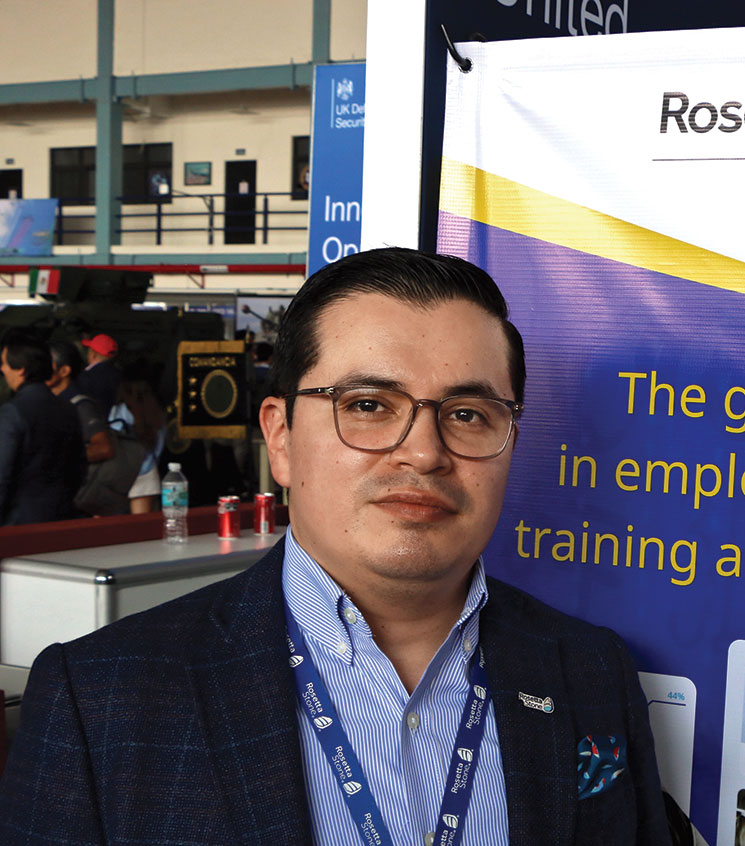





 By Teresa De Alba | Jr Journalist & Industry Analyst -
Mon, 06/09/2025 - 12:50
By Teresa De Alba | Jr Journalist & Industry Analyst -
Mon, 06/09/2025 - 12:50
Q: What is the core mission of Rosetta Stone?
A: Rosetta Stone has been a global leader in language learning for over 30 years, transforming education through innovative technology and world class instruction. With offices in London, California, Virginia, Brazil, Beijing, and Germany, and a strong international team, we bring a global perspective to everything we do. As part of IXL Learning — one of the world’s largest edtech companies — we contribute to a wide range of learning areas, including math and other disciplines. Our mission is to transform lives through education.
Q: How has the company leveraged AI and emerging technologies to enhance its educational offer?
A: AI and machine learning have enabled us to scale our language learning solutions without losing the human touch, which is essential when learning a second language. We refer to our model as “AI plus human interaction.” This hybrid approach is why learners enjoy our platform: it combines smart technology with meaningful instruction.
Q: What challenges and opportunities has Rosetta Stone identified in Mexico and Latin America?
A: Mexico and Latin America are fast-growing markets, especially in terms of workforce development. Mexico, for example, is working hard to attract foreign investment, but sustaining that momentum, requires a workforce with stronger language skills. English has become a basic requirement but also see growing interest in other languages like Mandarin, Korean, German, and Portuguese.
For example, South Korean companies setting up operations in Mexico need their employees to learn Spanish, while local teams want to learn Korean. This kind of cross-language need is becoming more common. At the same time, the need for certifiable language skills is growing, driven by deeper global integration. Communication has become the centerpiece of international competitiveness.
Many companies choose Mexico for its talent, but language barriers can hinder operations. If expatriates and local teams cannot communicate effectively, performance suffers. Language is often underestimated, but critical to running seamless, successful businesses.
Q: What projects regarding language preservation or revitalization does Rosetta Stone support?
A: We are proud to support endangered languages through partnerships with Native American tribes. In many cases, these languages are spoken only by elders and are at risk of disappearing. We partnered with tribes in the United States, like the Chickasaw Nation, to preserve their language and culture. The projects involve thousands of hours of audio and video recordings, photography, and cultural documentation. It is inspiring to see children in these communities now entering school and learning their ancestral language. Through this collaborative effort, they become the next generation of language keepers.
Q: What social initiatives is Rosetta Stone leading in Latin America?
A: One initiative that stands out involved more than 20 public schools in high-risk areas. Many had low academic performance and were located in violent neighborhoods. In some cases, our team had to navigate dangerous environments, even encountering gang-related violence. Despite these challenges, schools saw major academic and social gains. That is when you know you have made a difference. Education truly transforms societies.
Q: What trends are shaping the language learning market in Latin America?
A: Public sector efforts to promote bilingualism and English proficiency continue, though they are often challenged by scalability and political transitions. Still, multilingualism is gaining traction. Colombia is revamping its national multilingual plans. Paraguay is reinforcing its bilingual policy, which focuses on Guarani, and exploring how to integrate English into its national education strategy.
There is growing demand across the board – from primary schools to higher education to corporate training. In the corporate world, the need is even more urgent. Factories in cities like Queretaro in Mexico are not just looking for general English skills — they need job-specific language skills, delivered through microlearning and backed by certification.
Q: What sets Rosetta Stone apart from other providers?
A: We are more than a software provider — we are a true partner in education. We take a long-term view and work closely with each client to design a learning strategy that meets their goals. Nothing we do is “one-size-fits-all.” Instead, we create the “recipe” each company needs to make their learning strategy effective.
Q: What motivated Rosetta Stone to attend FAMEX?
A: While it is our first time at FAMEX, we have already worked with many participating organizations and supported the aerospace and defense sectors globally for years. This event opens the door to deepening relationships with companies investing in Mexico, especially as the country’s demand for upskilling and reskilling grows. Some Mexican states are even shaping public policy around multilingualism. Beyond the business opportunity, there is a real chance to help people secure better jobs and advance professionally. Acquiring a second or third language makes individuals more competitive while contributing to national development.
Q: How is Rosetta Stone impacted by current global trade tensions?
A: Trade tensions are not a threat, but an opportunity to enhance the competitiveness of Mexico, Latin America, and the Caribbean. We are also seeing growth in the business process outsourcing (BPO) sector, with many regional hubs being managed from Mexico. While some markets are affected by tariffs, regions without such restrictions are becoming more attractive, and it is time to seize the opportunity.
Q: What advice would you give to business leaders?
A: Organizations should invest in their people, because when you invest in talent, you invest in your company’s future. Some organizations still view upskilling as a cost. In reality, it is the best investment they can make. The classic question is: What if we invest in people and they leave? But the real risk is: What if they stay and we do not?
Rosetta Stone, a division of IXL Learning, is dedicated to changing people's lives through the power of language education. Its innovative digital solutions drive positive learning outcomes for the inspired learner at home and in schools and workplaces around the world.
Most popular








