


Mexico Expands Technical Education, Student Support Programs
 By Sofía Garduño | Journalist & Industry Analyst -
Thu, 12/04/2025 - 11:17
By Sofía Garduño | Journalist & Industry Analyst -
Thu, 12/04/2025 - 11:17
Mexico is updating its upper-secondary education system, with federal authorities introducing new technical programs and expanding funding for school infrastructure and student support. The measures, presented during the federal government’s daily briefing, outline a coordinated effort to align education with national development priorities.
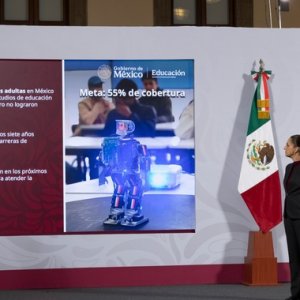
Mario Delgado, Minister of Public Education, says the federal government is introducing 15 new technical programs for the National Baccalaureate, aimed at fields tied to innovation and technology. The areas include AI, robotics and automation, semiconductors, cybersecurity, business intelligence, and sustainable urban development. The expansion responds to the country’s labor needs and the interest of students in strategic fields. Delgado says the new programs will begin to reach more public schools next year under a plan authorized by the president.
The initiative comes at a time when Mexico faces a growing shortage of specialized talent, which is limiting its capacity to meet rising industrial demand. “Mexico presents a paradox in talent development,” says Gabriel Aparicio, Country Manager, Kelly Services, to MBN. “While we have a demographic advantage, with 2 million young workers entering the labor force every year over the next five years, nearly 50% do not have the adequate skills for today’s jobs.”
This skill mismatch is particularly acute in technical and engineering roles, which are essential to operating high-efficiency production environments. According to ManpowerGroup, Mexico is on track to face a 77% deficit in IT talent by 2025, exceeding the national average for all industries. Shortages in AI, data analytics, automation, and software development are limiting companies' ability to integrate advanced technologies into their nearshored operations.
The updated curriculum will be supported by modernized workshops and laboratories equipped with high-performance computers and robotics modules to strengthen technical learning. Delgado says the broader initiative seeks to create comprehensive educational environments by integrating sports and cultural activities to support students’ personal and professional development.
The government also reported advances in school infrastructure through the program La Escuela es Nuestra (LEEN). Pamela López, Director, LEEN, says that 8.1 million students benefited this year from a budget of MX$25 billion (US$1.37 billion). The resources supported improvements at 68,011 public basic education schools. Of these funds, MX$5.1 billion (US$279 million) was allocated among 16,796 secondary schools, representing half of the schools in this stage of the program.
López adds that LEEN began serving upper-secondary education this year, reaching 6,239 schools with MX$4.5 billion (US$246 million), or 52% of all schools in this level nationwide. She says that the final disbursements for 2025, amounting to MX$238 million (US$13.0 million), will be allocated this month in Puebla and Veracruz to support 776 schools.
Student support initiatives also expanded. Julio León, National Coordinator, Benito Juárez Scholarships, says nearly 14 million students received support this year, backed by MX$128 billion (US$6.99 billion) in public investment. The program will begin distributing final payments for the November–December period starting Dec. 4, 2025, following an alphabetical schedule.
Advances have also been made on the new Gertrudis Bocanegra Scholarship, part of the Plan Michoacán for Peace and Justice, says León. This scholarship will provide transportation support to university students in the state. Of a total enrollment of 98,569 students, assemblies have been held with 41,336, or 41%. Registration will take place online from Dec. 15 to 21, and students will receive MX$1,900 (US$104) every two months. He adds that 461,685 of 744,476 required card replacements have been completed to ensure uninterrupted payments.
The announcements reflect the administration’s effort to connect education programs, school infrastructure, and financial support as part of a broader strategy to strengthen learning outcomes and access across the country.
You May Like





Most popular




